Chuck Schuldiner Project

Showing posts with label Classic Rock. Show all posts

Tuesday, March 7, 2023

The Golden Grass - Life Is Much Stranger

The Golden Grass have long been one of my favorite bands in the underground simply because their version of 70s rock revival is perhaps the most authentic of anyone going. If you're looking for a band with the guitar tones and sonic nods to early 70s greats, then this is the band for you. The golden Grass don't lean into any of the boring 'proto metal' pentatonic misery that the scene has forced us to choke on for years. Instead, this is a band who understand prog wizardry and pop songwriting, and whose new record Life Is Much Stranger comes across as a goddamn masterpiece. 

Those in the know have been following The Golden Grass for years now. This latest offering is the first new full album from the band in 5 years, but it has been very worth the wait. While there have been a few intermittent releases, it's been far too long since we could really get lost in the hippy magic of this band. The songs are anthemic, the multi part harmonies addictive and the riffs wonderfully groovy. The band consistently manages to get you singing along and in awe of their high quality production. This is music that really lives and breathes classic rock magic and finds a way to add to the canon without being derivative. 

For years I've felt that The Golden Grass should be much bigger than they are. They are a one of a kind force in the underground and none of their peers can really compare to the vision that they bring to the table. Life Is Much Stranger captures the imagination time and time again with sprawling soundscapes and sonic wizardry that reminds listeners exactly why the classic bands were just better. The Golden Grass are definitively a head and shoulders above any of their peers in the US scene, and I'm desperately hoping we don't need to wait 5 years for another album. 

Pre-order the album!

https://heavypsychsoundsrecords.bandcamp.com/album/the-golden-grass-life-is-much-stranger

Thursday, April 8, 2021

Lucid Sins - Cursed


In the wake of Ghost blowing up something very interesting has been happening in the world of rock. Suddenly you're starting to see bands who REALLY know their 70s rock. Who proudly cite Wishbone Ash and Blue Oyster Cult as influences. I'm not saying Lucid Sins are doing this in a direct response to Ghost, but the similarities are certainly there, and Ghost paved the way for that. The point being - their new record, Cursed is a goddamn treasure and the sort of thing that you can't help but to be charmed by and fall in love with. 

Cursed has a very real and strangely sublime poetry behind it, a direct product of really digesting their core influences. The keys that shimmer over the entire record are particularly entrancing. They provide a real depth to the music that I think a lot of the bands peers can't really compare too. I just am in love with the airy execution and unique ideas that help to make this such a compelling record and one that continually outdoes itself. There are just so many layers of Cursed to pick apart and really immerse yourself in. It's the sort of psychedelic trip that only the greatest bands can really pull off and draw you into. 

Lucid Sins have really captured my attention with this record. Yes there are Ghost-isms and moments that feel a bit too close to their influence,s but honestly that's the appeal. Few bands pull of this 70s sound as well as these guys so really embracing the magic of that is a delight and will keep you coming back time and time again. Cursed is an exciting and masterful record and one that classic rock fans will love. While there are clear next steps for Lucid Sins, as a whole, this is a titanic offering that makes me curious to dig deeper.

Pre-order the album!

https://lucidsins.bandcamp.com/

Sunday, January 3, 2021

Heavy Feather - Mountain Of Sugar


About two songs into Heavy Feather’s new album, Mountain Of Sugar I said to myself, “Yeah this might be the heavy rock album of the year.” Now admittedly it’s only the 3rd day of 2021 but still – this is a really goddamn good album from a band with a boatload of talent. Mountain Of Sugar is complex, interesting and above all literate. It’s a record that kicks off with a Humble Pie reference of all things and maintains that same level of depth and intricacy for the rest of the album. Proudly and accurately paying tribute to the classic rock masters, The Sign Records has uncovered a rare gem. 

The guitar work and tone on this record is gorgeous. The songs are composed in a riveting way with layers upon layers and clear direction throughout. There is a breadth to the execution that serves to make it a delight for anyone who digs into the might and magic of the album. Mountain Of Sugar is a treasure in the way it evokes the old gods but delivers in a way that is distinctly modern. There was so much work that went into this record though. Every time I think I can't be more impressed they broke out another stunner, like the backing vocals on 'Love Will Come Easy' which perfectly accentuate the stunning blues vocals of Lisa Lystam. 

It's such a delight to lose yourself in the elegant poetry of Heavy Feather. This is a band who built on classic ideas and found a way to make themselves unique and powerful. The execution here is delicious and the performances nothing short of stunning. Mountain Of Sugar is from front to back a thrilling record that will leave classic rock lovers scraping their collective jaws off the floor. Heavy Feather are a one of a kind force. If you love heavy music then this is going to be a record you are going to wind up obsessed with. 

Find them on Facebook!

https://www.facebook.com/HeavyFeatherRock/

Monday, May 25, 2020

King Gorm - S/T


There aren't a ton of records that claim to worship classic rock that are actually good. Most of the time you just get bland rehashings of Black Sabbath through the lens of a devastatingly drunk High On Fire jam session. King Gorm however manage to distill a variety of exciting elements, ranging from Rush and King Crimson to Crosby, Stills, Nash and Young by way of Blue Oyster Cult. In other worlds, King Gorm have the talent to sit among the greats and do something truly special and endlessly interesting.

The inherent bombast of this record is very much intentional. The record tells epic and bardic tales, transcending time and space to capture the imagination of the listener. King Gorm have gone far above and beyond here to unleash something that fascinates. The epic journey of a song like 'The Witch Of Irondale' is something that only the truly talented can pull off. Meanwhile the dark almost Sabbathian magic of 'Slaughter Of The King' proves that King Gorm can hang with all the heavier bands too. It's hard not to get lost in the magic of what unfolds here, as the band only seem to grow and embrace bold new heights.

It makes sense that this project might come from the mind behind Old Man Wizard. There are clear overtones of bands like Ghost but also a sense of power metal magic. This is a fun record that any fan of classic rock is really going to find something to sink their teeth into. It's rare that I find an album that is quite as fun as this one and which seems to so eagerly leap from peak to peak. King Gorm are far too much fun to listen too and their deep passion behind this music is exciting, clearminded and over the top.

Find them on Facebook!
https://www.facebook.com/king.gorm.usa/

Wednesday, March 7, 2018

The Golden Grass - Absolutely


There are few bands who truly understand the power of retro rock and most of those groups are silly knock offs of groups that have already been. Few acts have the same grand vision that The Golden Grass has. Willing to lay down three part harmonies at a drop of a hat, ready to stun you with songwriting and continually building on the magic of the early prog rock scene, The Golden Grass are the type of perfectly put together rock and roll band that fans of all ages can find themselves grooving along too.

When it comes down to it - this is a band defined by great musicianship and excellent songwriting. The fact that they borrow from tropes of their forefathers literally doesn't matter because they put together music that is just that goddamn good. As one digs through the musical wonderland that is Absolutely one gets the sense that these guys could play literally any type of music and it would rule. There is nothing too weird, nor nothing too banal for The golden Grass to come in and lay their magic on. It's the sort of transcendent and poetic music that made so many people so obsessed with the 70s in the first place, but remains of high enough quality that it doesn't feel like a self serving imitation.

There's something for everybody with Absolutely. This is an album that is going to make you want to twist and shout, but it's also a record that is going to dig in deep to the sheer musical power of rock and roll to craft something timeless. The Golden Grass understand the beauty of the genre and the way they craft songs, never self serving but always driving towards a goal has made for something endlessly addictive. Undeniably fun and chock to the brim with memorable hooks, I dare you not to dance.

Find them on Facebook! 
https://www.facebook.com/thegoldengrass

Monday, March 20, 2017

Interview with Ian Anderson (Jethro Tull)


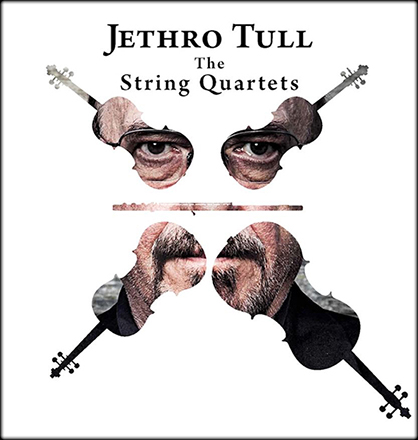
From humble beginnings in the northeastern town of Luton, England to its rightful place in the anthology of rock music, Jethro Tull’s name has come to bare a legacy synonymous with the bands’ uncompromising nature. Amidst the ever-changing lineup and through stylistic choices persevering through the scrutiny of ephemeral trends, the group led by Ian Anderson has made its indelible mark on the genre on its own terms. With Jethro Tull nearing five decades of musical history under its name, frontman and main songwriter Ian Anderson has embarked upon a new musical endeavour, one that combines his rich musical legacy with his love for the classical music repertoire. Recorded in Worcester Cathedral and St Kenelm’s Church in the UK, Jethro Tull - The String Quartets gathers a magnificent set of rearrangements of the bands’ back catalog, performed by the Carducci String Quartet. 


It’s been 3 years since the last release bearing the Jethro Tull name. How did this project come about?

The repertoire of Jethro Tull can be realised and performed in different ways, whether it be in their original form or through reworked arrangements, like in a “concert” setting. This String Quartet project came about because, although I had worked with string quartets before, I had never really done a dedicated album with a string quartet and no rock band instruments. This was looking at the far more poignant, sparsely instrumented classical string quartet with a judicious degree of involvement by me in terms of flute, acoustic guitar or vocals from my end. It was about avoiding the temptation of having bass and drums and electric guitars. We got the sessions on the way in September when my preferred string quartet, the Carducci Quartet, John O’ Hara and I were available for 3 days. 

This current release is listed solely as a “Jethro Tull” record, whereas certain of your solo releases were listed as “Jethro Tull’s Ian Anderson”…
(Laugh) Oh dear, we’re back on the old “Ian Anderson vs. Jethro Tull” story are we? I don’t really need to comment on it. You decide what YOU want to call it. Jethro Tull is a band of some 32 musicians variously involved in the recordings over a period of 49 years. I’m the guy who’s written almost all of the music, produced the records, organised things, the tours… YOU decide what you want to call it (laugh). I have little interest in the marketing and the billing. The music of Jethro Tull is the repertoire, it’s not necessarily about a specific group of musicians. They’ve all been an important part of the band. Some members were involved for only a few months or sometimes a few years. 

Do you see this record as a retrospective record or rather a new chapter for the “band”?
Well it’s not about the “band”. There’s no “band” involved in this. It’s a string quartet and Jethro Tull’s repertoire. It’s like when you come across Beethoven string quartets. It’s not Beethoven playing the violin or cello, it’s his compositions that are being played by string quartets. We’re talking about the repertoire of Jethro Tull here. If you say to me “I love the Beatles”, I don’t think you mean you love John, Paul, George or Ringo. What you really mean is that you love the music of the Beatles. When you look at the historical perspective, when you express admiration or joy and a pleasure of listening, it’s not about the individuals but rather about the music that was created and left behind, which is part of their legacy. So it is for the music of Jethro Tull.

How did the arranging process come about? How did this all come together?
Well I started by looking up my list of songs on my laptop computer. I refer to this file containing over a hundred song titles quite often, namely when I put together a tour or a one-off concert. I went through them and sorted out those who would work in this new context. Some of them didn’t seem to work and others were chosen because I had already done them in a similar context; certain songs already had strings in the original arrangements for instance.

John O’ Hara, our keyboard player, came up with a few suggestions of his own and I came up with a few suggestions that maybe he wasn’t so keen on but seemed to me like more of a challenge. I also didn’t want it to be too “esoteric” or clever, we needed to have a few straightforward songs that aren’t too different from the feel of the original recordings. I tried to mix things up a bit.

Each song had to have a different approach. It’s not a factory production line where you come up with a methodology and apply it to all of the songs. I wanted each song to have a different starting point, a different rationale and a different way of being developed as an alternative to the original performance. Above all, what I wanted to do, was to prove to me first and to our fans second that the elements of music, harmony, melody and rhythm, are the crucial element of any piece of music, and you can preserve them whilst presenting the music in a completely different genre and styling. It’s not beyond the bounds of reason that I could jump on a plane to Nashville, book a studio and embark upon “Jethro’s Best of Country Hits”.I don’t want to do it, I’m not a fan of the country music genre, but I could. Classical music, Folk music, Jazz or Blues or other forms that I do have a greater affinity could also accommodate to my music. It may not ALWAYS work but usually it would. I’ve proved that time and time over the years. I mess around with my own songs and sometimes rearrange them for live stage performances. Some songs have 3 or 4 different arrangements to pick from. I always have to be sure, when I put on a setlist, to remind the band which version we’re playing, or else they might embark upon the wrong arrangement (laugh).

Were there any particular challenging parts when it came to revisiting or re-arranging some parts of your back-catalog?
I occasionally tried to avoid the obvious. Sometimes the violin would carry the melody line that would typically have been sung or played by the flute on the original version. It’s not about me and a string quartet in the background, that was never the idea. I really wanted this to focus on the string quartet. They came first; If there was any “accompaniment”, it would be from me rather than them. 
The first violin usually carries the melody lines and key lines, and the second violin typically constructs the harmonies. The viola has its own solo and pieces along with the cello, supporting it in a more rhythmic fashion. I’d find alternative and counter-melodies that might work a little differently to the harmonies for the second violin and viola. I had to sit and work out some ideas, some of which were worked out at the time of doing the arrangements with John O’ Hara, others were deliberately left until the very end when it came to adding my parts and doing the mixing. 

Can you tell as bit about the choice of location for the recordings?

I was looking for something that had a little more ambience than a sterile contemporary recording studio. I wanted to capture some kind of a feel. I had a concert coming up in support of Worcester Cathedral, one of our great medieval cathedrals and they were kind enough to give me the use of the crypt underneath the main body to record for a day. After searching many churches in the countryside of Southwest England, I found the church that offered the best chance of not being interrupted by either the public or any extraneous noise. Even so, both in the cathedral crypt and in the historic churches in the countryside you will find the occasional aeroplane flying overhead or at a distance, the sound of a train, a truck or just the wind rattling the windows. There were many times where we would be in the middle of the take and we would have to stop because of the noise that was being picked up by the microphones. We’d have to stop, wait for it to go away and start again. We had a few interruptions like that which were frustrating but we ended up with two or three takes of each of the songs to choose from. We got it done on time thankfully, as we didn’t have any “spare time”.

The Jethro Tull repertoire has seen a number of reinterpretations and covers versions. Are there any in particular that struck your attention in particular?
I’ve heard lots of people doing the music, from tribute bands in far away countries through to famous artists like Iron Maiden for instance. My preference is for when someone does it in a completely different way. I think it’s much more interesting if they take a piece of my music and really make it their own, not just using the same arrangements and copying the way I did it. 

I’m much more interested in doing something really radical with it. I’ve heard bits of Jethro Tull music that have been sampled and put into hip-hop records and I’ve heard people do my music where they really deconstruct it and put it back together again. I’m more interested in that, because I think that would be my approach. If you asked me to work out an arrangement for a piece by Iron Maiden, what I would do would sound nothing like original; I would see no point in doing that because they’ve done it much better than I ever could do it in that style.

When somebody else does my music I want to hear it done a different way, just as I would hope that mister Bach would be more interested in hearing me play a couple of his pieces of music in a 
very different to the way he originally wrote them for classical musicians. I could be wrong; maybe Bach would be really angry, pissed off and insulted that I would take his music and change some notes and harmonies. However, my gut feeling is that Bach, along with Beethoven and Mozart for example, who were great improvising musicians, would have maybe been appreciative and understanding of the fact that there are no real absolutes in music. Bach could have been feeling very different one morning and done a piece of music in a different way. In that sense, the way I might hear his piece of music and retranslate it to suit me is what I hope he would be appreciative of. We get bored of hearing the music of Bach, Mozart or Beethoven again and again in the same way in every classical venue. They’re simply performing it the way it was written at the time. If Bach heard me playing one of his pieces, he would at least go “oh! What’s that? That sounds like a bit of my music!”. My gut feeling is he might go along with it, at least for the first couple of minutes.

Speaking of reception: have you noticed an evolution in the reception of Jethro Tull’s music over the years?
I don’t think much changes over the years. It just depends where you’re playing and what you’re doing. If I’m playing outdoors in the summer, the audiences look the same as they did back in 1969, it’s a mixture of people of my age and people a lot younger. If it’s an indoor concert hall, the audience will generally be much older and behave in a much more calm and disciplined way. It’s the same in Germany, Switzerland, Britain the US…
I try to avoid national stereotypes when I think about the audience reaction, and I also try to avoid the stereotypes that we would associate with age-ism. The stereotypes exist and perhaps with some good reason, but I don’t think it’s appropriate to dwell on that and just assume that all young people are a bit more silly and louder whereas older people fall asleep halfway through in their chairs and have to be woken up by their wives to be told it’s time to go to the toilet during the intermission.I think there’s a danger that we create and reinforce these stereotypes unnecessarily. Overall, I wouldn’t say there’s a huge amount of difference. When I cast my mind back to one of our very first concerts in the USA, playing at a Jazz festival in 1969, the audiences there were basically aged from 15 to 60. Jethro Tull’s audience was always quite broad demographically. It’s always been very mixed. 
Interestingly, I was at one of Black Sabbath’s last shows in London at the O2 a few weeks ago, and while I wasn’t surprised to see that the audience was 90% male, I was surprised to see a lot of people in their late 30s. I expected the audience to be people in their 50s or 60s along with some people in their teens and 20s. I was quite surprised to find that missing middle group, as they’re not so often at my concerts. We tend to have the old and the young and they tend to be a full generation apart, with a missing generation in the middle: those who grew up listening to music in the 80s and 90s who wouldn’t have picked up on Jethro Tull. The younger folks look at the history of pop and rock and get excited about the origins of the genre and are more appreciative of the classic rock bands from the 60s or 70s, so it’s not unusual to see them in the audiences, especially in the outdoor shows and in the mediterranean and latin countries. When we do an outdoor show there it seems like everyone in the audience is aged 20, the old folks are all at the back.

What is next for Ian Anderson and Jethro Tull?
We’re starting rehearsals and then recording the first 6 songs for a new studio album for 2018. All of it is written, we just have time to do the first piece of the recording before we head off to Australia and New Zealand on tour. When we get back, we’ll soon head off for the first of 3 US tours this years. Later on this year there will be a few days here and there where I can carry on working on the new album. So that’s the main project at the moment. I also have all of the master tapes from several concerts of the Jethro Tull Rock Opera which we filmed during a few shows last year in Europe. At some point during the year I will attend my attention back to that to piece together a live DVD. It will include 5 new songs which have never been released, which is something some of the fans will find interesting to listen to.

To finish off : could you name one of your favorite albums, movies and books?
It’s a bit of a boring answer I suppose, but one piece that entertains me the most and is the most inspirational is Beethoven’s 9th Symphony. It’s so magnificent, it contains such huge dramatic expression of melody and powerful ensemble playing. It’s the complete Beethoven “album”. It would have been wonderful to have known what the 10th Symphony would have turned out, but as it turned out we’ve only got the 9th. That would probably be my favorite album. Close behind that might be a compilation album of Muddy Waters’ music as recorded live towards the latter part of his performing by Johnny Winter (note: Ian is most likely referring to Muddy "Mississippi" Waters – Live from 1979). Winters recorded some of Muddy Waters’ greatest hits live in the studio and this release is an album I tend back to because it’s the opposite of Ludwig Van Beethoven. However, it has the same swagger, the same overt sexuality that I find in some of Beethoven’s music. There’s something almost a little “cock-rock” about some of the key melody ensemble pieces from Beethoven, it’s a little bit “macho” (laugh).
I suppose one of my favorite books, which is about to be made into a movie again, is by my favorite author John Le Carré. He’s known as the thinking man’s thriller writer. I think his first classic novel of the genre that achieved commercial success is The Spy who Came in from the Cold. It’s a book that really defines the cold war years of the early 60s. In a way, we are moving back to that kind of uneasy status quo, an almost cold-war relationship with Putin’s Russia. I think it’s quite ‘a propos’ that we reexamine the genres of that era. So I guess you could also pick the movie starring Richard Burton and you could pick the book.
Besides that, if I get bored I can always watch my son-in-law in The Walking Dead, which I sometimes tune in to and watch, just to connect to what’s happening in that weird Zombie thriller genre (laugh). When my son-in-law is away making another season of the series, I can always wave at the television screen and say “Hi, are you doing Andy!”.

Special thanks go out to Ian Anderson and HIM Media for making this interview possible!

Jethro Tull / Ian Anderson
Official Website
Facebook
Twitter
Youtube
Instagram
Soundcloud

Sunday, September 11, 2016

Interview with Raveneye


One thing is for sure, UK based rock trio Raveneye certainly got themselves a solid headstart for the release of their upcoming debut record. Bearing the mark of frontman Oli Browns’ award winning talent, the band has quickly earned itself a hefty touring resume unlike any other band having self-released their first set of songs, playing alongside Deep Purple, Slash and on world renowned festivals such as Hellfest Open Air and Download. Furthermore, the bands’ debut record ranked up second in Loudwires’ polls for “Most Anticipated release” alongside Airborne and Opeth. The band, who’ve have promised to perform “Hero” on Ghost Peppers were they to reach one of the top positions in the polls, were glad to find that I happened to have more than a few to spare for their undertaking. After having warned the Oli and Aaron about their entertaining but poor decision-making regarding Ghost Peppers, we jumped right into the main subject of the interview that is NOVA, the bands’ widely anticipated debut.

Since this is your debut release. What can audiences expect from this first album?
Oli: Well first off they’re all new songs. We didn’t regurgitate the songs from the EP. We wanted it to be an wholesome experience from start to finish, all written for the purpose of the record. We worked on 25 songs and had them all ready to record in the studio, so we picked the ones that we thought fit the whole color of the record, in order to have the whole story and order that we really wanted.

So there’s certain overarching narrative to the record? Is it a concept record.
O: In some ways. We didn’t so far with it that you can’t listen listen to it on shuffle. We didn’t want it to be that thing where you’re stuck listening to it a certain way some songs always connect with people differently. We didn’t want songs to be crossing over to the next because we didn’t want it to be a disorientating listen when you listen to each track separately. Originally we did want to do a more tied-together concept but for this record we eventually realised that we wanted it to be about each individual song, but the whole record still paints the same picture.

What kind of subject matter do you deal with on this record?
Aaron: Well we kind of cover everything: death, love, hate… the basic emotions
O: The peaks of them though. All of the things that move us in life basically.
Aaron: … breaking people’s ideas of you, breaking the barriers of what people think of you, breaking your own boundaries…

The title of this first record, NOVA, obviously refers to its original latin meaning but also evokes a cosmic vibe that I feel is reflected in the music. Was an atmosphere that you were working with during the writing process or did the title and labelling come afterwards?
A: I think it was kind of serendipitous. We decided on the word but then when we looked at it a little closer we realised that it did all relate so intrinsically to everything.
O: We had no idea that it was latin for “New” at first, like you said.
Aaron: Then you’ve also got Nova as an explosion.
O: We originally thought of calling the record Supernova but it would’ve put too much focus on one song. Plus I don’t really like the long album names, some of them really work but for our first record we wanted something short.
A: And like you said the term reflected the size of the sound that we wanted to go for. We wanted to go for something that was massive. The room that we recorded in was huge, we had mics up in every corner and we used every channel on the desk to make sure that it sounded massive for a three piece. So that was the spatial concept that we were going for as well yeah.

Oli, This debut record as Raveneye comes after the release of a few solo blues records of your own. Do you see Raveneye as a “next step” or rather a complementary project in your career?
O: It definitely is a next step. When we went into this, I was with a label and management agency and I just didn’t want to do that anymore. I wanted to start again, I wanted a band to start things from scratch: no agency, no management, doing it ourselves. We still are pretty DIY; we drive everywhere ourselves, we tour manage ourselves, we’ll sleep in the van… That was something that we wanted when we started this out, this would be our next step to build our own lives, with people that really believe in our choices rather than just going “Oh ok, you’re the artist, we’ll have you do this”. We’re involved in every part of this business as well as in the music. We wanted to be independent and work with people that respect our work.

Has this changed some of the dynamic when it came to writing or your way of operating as an artist as a whole?
O: Totally, and this was the intention as well. I enjoy being a solo artist but there’s a certain disconnect that you get with your musicians. I mean there is a connection, but they’re still hired people, whereas in a band there is a relationship and a lifestyle that we live. We live and breathe Raveneye. It’s not just doing the gig and learning the songs, this is our lifestyle now. The best way to describe it is when we’re writing our songs, we’ll all work on building the tracks to where they need to be, at the finishing point we envisioned. It’s not for ego or saying “my part is better!”, we all want to work on delivering the best song.

When you first started playing together, was there a specific idea as to the sound you were going for? How did the sound of Raveneye come to shape itself?
A: We were lucky that at the start of Raveneye we had some tunes that Oli had already written, he wrote the EP. So we had these songs as a template to come from and got the vibe straight away; the riffing, the killer guitar solos… so we kind of developed what Oli had set in place to write the new material on the road and tour this stuff. 

In the two years since your inception you’ve already stacked up an impressive resume: shows at Hellfest, Download, opening slots for Deep Purple, Slash with Myles Kennedy… How did this all come about, given that you’re only just releasing your first record?
O: (laugh) Well the Slash thing was pretty incredible because he had gotten a hold of our single Breaking out. Someone had sent it to him and so they got in touch with us and offered us some european shows. He books his bands, which is really cool, he’s really involved in it, he really cared.  We work hard on moving our stuff on and off stage and being the easiest band supporting. We try to be like ghosts, you can barely notice us, which I think is what helped us get the US tour with Slash as well, because we’re so low maintenance !(laughs) They were really lucky experiences. At that point we started developing a team that believed in us as well, a good management that put the word for us and keeps an eye on these things. Deep Purple was a really lucking thing; their supporting band were not able to play two of the shows and we found the spot. It’s been an incredible ride. The EP was just for the UK, we just were trying to get noticed. We sent out hundreds of emails, made so many phonecalls, contacted everyone and pretty much no one replied (laughs). We didn't care though, we knew what we wanted to do and we went to achieve it. We’re really proud that it allowed us to make this record.

What are the plans beyond the release of this record?
A: Well we’ve got a busy year coming up. We’ve got a tour through Germany and France supporting Zodiac. We then go back to the UK and do another headline tour for a month. Then we’ve got a couple of weeks in Spain. We’ll head to america in January, back to Europe in February/March in time for the festival season around April through June. We’ve got the next year planned ahead for some heavy touring. We’re super excited and we’re so glad that we’ve got the album coming out now so that we can get back on the road and get playing again. We miss playing
O: We miss the music! (laughs).

You’ve kept pretty busy since the start of the band though!
O: That’s true
A: And it’s always sort of cold-turkey. This is probably the longest time that we haven’t actually toured. We finished the record on June 1st and got back and we haven’t really played a tour since then. We’ve done shows here and there but we live for touring. When we realised that yesterday we thought “That’s why we’re going crazy!”.
O: “We haven’t played for 3 months!” (laughs)

So you’ve come to crave for this routine after a while.
A: Absolutely, yeah.
O: Totally. We do a lot of work on our computer and we look after so much of everything that the bit that keeps us motivated is the touring and playing the music. The admin is so important to us but we can do that on the road as well. The more on the road we are, the happier we’ll be. We’re happy to be away for as long as we can.
A: There’s also something kind of sickening in that I love the whole routine of touring. You know you’ve got to get up, get on the road, drive a couple of hours, find coffee (laughs)…

It’s not the healthiest routine, might I add!
(Oli and Aaron bust out laughing)
O: Totally! You’re totally right! We try though! We stopped having McDonalds now.
A: We try and eat as healthy as we can, make sure we’re fit and healthy before we even get on the road. But yeah, we really love touring. 

Certain artists need a certain time and space for the writing process. How about you guys? Were you able to write parts of the album on the road or solely in between tours?
O: It was kind of a combination of both. At the start of the year we were hitting a bit of a dry period and at that point we didn’t really have enough songs either. We had a few songs that worked and a few songs that could work, but that wasn’t good enough so we got a hold of ourselves and wrote 20 songs and kept on pushing ourselves. But then afterwards we went to… Las Vegas? 
A: Yeah! We had our list of tunes, the album was ready and we had the short list of what we thought we were going to have. We flew to America and had a couple of days to adjust, and in those few days Oli would tune his guitar and play a riff and we’d be like “hey, that’s something! Let’s work on that!”. We had this day off in Vegas which we spent locked in a hotel room, writing this song. We finished the song on our day off in Vegas when we could’ve been gambling… (laughs)
O: … going to strip clubs… (laughs)
A: I think in an ideal world I would like to have some time off to write. I kind of like the idea of getting in a headspace. When we started writing, things were moving kind of slowly but then we ended up building a momentum and by the end of it, our first single “Hero” happened in a day. It was the last song we wrote and it just came out. Having the time is really nice but it’s not always a reality so … We’re happy to write on the road as well.

… or in Hotel Rooms in Las Vegas.
A: Yeah ! (laughs)
O: Instead of enjoying ourselves! 
A: It was cool actually because we got hooked up by Slash’s guitar player Frank of the Conspirators, his old man works in Vegas and was able to get us a really nice room. Normally we’re on a budget deal where we sleep in really dingy, crappy motels.
O: We’ll sleep in the crack houses. (laughs)
A: Pretty much! But this was the one time in the whole tour that we actually had an amazing room, in this wicked hotel; 50th floor, looking out on Vegas. It was amazing… and we locked ourselves in a room and wrote a song. 

At least it was a nice room.
O: AND at least the song made the album.
A: AND it made the album yes! (laughs)
O: If it didn’t make the album, this would be a different story!

“Bloody hell, I missed Vegas for THIS?!!”
(laughs)
A: “Shit!”
O: It was “Walls” actually, the single that we’ve just released this week.

To touch upon my friend and colleague Matts’ trademark question. I’d like you to finish this sentence for me: “I’ve never told this to anyone before, and I probably shouldn’t… but…”
(Laughs)
O: Oh my god… My first concert was a Wheatus concert. (Laughs)
A: Well… Oli and I always end up sharing the same bed together on tour. (Laughs).

 Was the Wheatus concert around the time they had “Teenage Dirtbag” out?
O: Yeah! And I even wore the freshman’s hat and I was at the back going “Oh my gooood!”
A: Oh god…

Could you name one of your favorite albums, movies and books?
O: For albums I’ll go for Superunknown by Soundgarden. My favorite books are the Game of Thrones series, I’m obsessed with them. I know it’s not the most exciting answer though. For movies I’ll go with Saving Private Ryan, that intro is just devastating. 
A: Ok so my picks will be Grave Western Valkyrie by Rival Sons. My favorite book is Shogun by James Clavell. I recently read it again on an audiobook. It’s the size of the bible, it’s a massive book. It’s incredible. It’s about Japan, the Samurai and stuff like that.
I do love movies… I might go with the Lord of the Rings trilogy, it’s just so epic.

Any closing words? 
A: Be sure to check us out on our social media. You can find us there, it’s us at all times speaking to you. Get in touch!
O: We actually tweeted yesterday that we’d be in Paris and we had lunch with some fans today!

Interview by Robin ONO

A huge thank you goes out to the band and to the staff at Him Media for making this article possible!

Raveneye
Official Website
Instagram
Youtube
Bandsintown
Official Facebook
Twitter


Friday, August 28, 2015

Interview with Kevin Starrs of Uncle Acid and the Deadbeats

 Rejoice, fellow fans and readers! 2 years after the release of the bands’ mindcrushing Mind Control, Uncle Acid will be marking their return with their highly anticipated follow-up titled The Night Creeper, thus marking their 4th full-length album release. This upcoming album scheduled for a September release deals with crime, murder and mystery and will be sure to please any music fan with a thirst for old-school rock music with a vintage aesthetic. To prepare for the albums’ release, I was fortunate enough to catch up with none other than frontman Kevin Starrs to shed some light on this mysterious album.
 
- So this coming september will mark the release of your fourth full-length album "The Night Creeper". What can fans expect from this album?
Expect the unexpected (laughs)? To me it's a natural progression from what we've done so far, it's the next step. It sounds like Uncle Acid but at the same time it's different. There're different influences and different sounds, a different approach to it I think. It's darker, with maybe a slightly heavier feel to it. I think people will really like it.
- Could you tell us a bit about the lyrical themes that you touch upon with this album?
The album tells story from start to finish. I guess you could say it's a concept album, but it always sounds ridiculous when you say "I've made a concept album" (smile). To me it's just the easy way of writing lyrics. It's basically about a serial killer thats' on the loose in the city. It could happen in any city; London, New York, Paris... It's basically up to the listener to try and figure out who the serial killer is, but it's not who you'd expect. You're going to have to read in between the lines and discover it for yourself. Above the story it's kind of a look on the establishment and corruption between the police and the media and how they protect one another when things go wrong. So there's a story but there's also a meaning behind it all.

- So the lyrics basically takes the form of a mystery story
Yeah exactly, like the old pulp stories from the 40s' and 50s' that were made into Film Noir films like The Maltese Falcon. The idea was that it would’ve been a short story that would’ve developed into Film Noir.


- The album cover reminds me of the film poster for “Dawn of the Dead” with the title font, the colors and the art style. Was that an intentional reference?
Yeah I guess it does! I know what you mean. The guy that did it is a guy called Jay Shaw. He does poster work for films and he did the cover art for the last John Carpenter album. He’s a really good artist. I just gave him the story of the album and told him I wanted something really minimalist inspired by Polish film posters from the 60s’ so he came up with this, which is perfect.


-
Your music is known for its’ old-school approach to rock and heavy metal music. Could you explain what first drew you towards writing in this style?I think it’s’ just the music that grew up on really. I was really into Black Sabbath, Iron Maiden, Judas Priest… all of those classic metal bands. Then on the other side I was also into lighter stuff like Fleetwood Mac, Led Zeppelin … That’s all it is really, my influences coming out.- Some of these bands seem to carry a more “recent” sound than that of Uncle Acid though.
Yeah that is true. There’s also some 60s’ bands that I’m into as well, but it’s mainly the 70s’ stuff that really got me. I guess it’s just the combination of so many different things that makes it sound a certain way.


- What is your take on the more recent evolutions and subgenres in rock and metal music?
Well there’s’ some good bands; I really like Blood Ceremony for example. Then there’s’ a lot of other stuff that just, to me, is trying too hard to sound like something, you know? Certain bands get popular and so the other bands try to jump on the bandwagon to try and copy that. I think there’s’ a lot of that going on at the moment.
-
Regarding the sound production on your albums, was the old school approach something you chose as a rejection of modern productions or could there ever be an Uncle Acid & The Deadbeats album recorded digitally?
(Laugh). I mean to me it just doesn’t sound good. Modern production is not pleasing to me. We do use digital recording as well, it’s a mix and it’s mostly analog but there are digital parts to it. I think it’s more about the philosophy of the production that’s different. We just do very little production; we just put a mic in front of an amp, record it, maybe do a bit of EQ but that’s it, there’s’ no gloss applied to it. There’ no fancy ProTools shifting or whatever, it’s just a raw live band. That’s the day they used to do it in the 60s’ and 70s’ and that’s the way it should be done I think.
-
Some musicians tend to use these modern tools as crutches to compensate their performances also.
That’s true, yeah. People that can’t sing or whatever try to correct it on Protools. I can’t sing that well but it doesn’t matter. If you fuck up who cares, you know? As long as it feels good.


- So your band is from Cambridge, which is also home to Trinity College where …
(Kevin starts Laughing) Has this something to do with Pink Floyd?

- I was actually referring to the cities’ history with the occult, since Trinity College is where Aleister Crowley studied for a few years and some of your lyrics deal with this subject. Do you have any weird stories or encounters that happened in your town?

Not really actually, but the best thing that ever happened to me in Cambridge was that I saw Syd Barrett once, since he had obviously retired there. I spent years and years looking for him, asking “Where is he? How come I haven’t seen him?”. Then one day I saw Syd Barrett on his bike and I was like “Yeah! I finally saw him!”, but then he died about 6 month later.


Sid Barrett on his bike
Other than that, nothing really. Cambridge is a really strange place, it’s very academic but I guess a lot of it hasn’t really changed since Aleister Crowley would’ve been there; the buildings are still the same, they’ve still got the same traditions, the same uniforms. I guess it’s interesting in some ways. It looks cool when it’s dark and it’s just old street lamps. It looks pretty sinister sometimes.

- Have you ever been approached by any shady, occult organizations in your hometown or on tour? No weird handshakes?

Actually no. That sort of thing would happen in Glasgow more than anywhere else really. The weird masonic handshakes… yeah that does happen sometimes (laughs).


The Warriors (1979, by Walter Hill)
- If you could rearrange or reinterpret the soundtrack to a specific movie, which one would it be?
That’s’ a good question… I’d be tempted to say
The Warriors. It’s got a really good soundtrack but I think I’d make it more Synth-heavy and darker. I love those John Carpenter soundtracks, him and Alan Howarth, who worked together. I really like 70s’ and 80s’ synth music.
- Theres’ actually a great RetroWave scene in Paris that makes John Carpenter-inspired music.

Yeah! Theres’ was this one guy, Kavinsky.

-
Yeah he was featured on the soundtrack for the movie Drive.
Yeah, that’s right. A lot of that sounds really good to me! I really like that sort of thing.

- If you like that sort of thing there’s’ also a guy who goes by the name of Perturbator, another one called Carpenter Brut you might wanna check out. They’re heavily inspired by 80s’ synth soundtracks like John Carpenters’
Escape from New York.
Oh really? I love all of that stuff! I’m going to have to make a note of that. Perturbator… (Looking it up on his phone). This looks good! I’m going to have to look into that. I didn’t even know that !- Interestingly enough, a few of the guys and a fair deal of their audience consists of metal fans. A lot of fans show up with black metal shirts, when I saw Perturbator he was sporting a Black metal shirt and a Mr.Bungle cap.
Wow, that’s interesting. That’ really cool, I didn’t know about that. It’s funny that a lot of metalheads appreciate that sort of music as well.
- What if you were to rearrange or reinterpret the soundtrack in the style of Uncle Acid?

I’d probably say Witchfinder General (1968, by Michael Reeves), where Vincent Price plays the witchfinder. That was actually what kind of inspired Blood Lust partly, that kind of character. The Witchfinder general was an actual person back in the 1600s’ who would torture women because he’d claim they were witches. He made a living out of doing that. He would travel from city to city, accusing women of witchcraft, torturing them, get money for it. It’s crazy to think that it actually happened. Crazy times (laughs).


- To finish things off, could you name one of your favorite albums, movies and books? Maybe also recommend a few to our readers to prepare for the albums’ release?
My favorite album would probably be
On the Beach by Neil Young.
My favorite film would be
The Warriors (1979, by Walter Hill), that’s my all-time favorite film.
My favorite book would probably be The Maltese Falcon (1930 detective novel by Dashiell Hammett), which kind of ties in with the album as well, it’s very similar. It’s this sort of Film noir crime fiction.

Inteview by Robin ONO
PS: Special Thanks to Kevin and HIM Media for making this review possible!
Uncle Acid & The Deadbeats
Official website
http://acidcoven.com/
Official facebook
https://www.facebook.com/uncleacid


The Night Creeper, scheduled for release on Rise Above Records, Friday September 4th!


Sunday, August 9, 2015

An afternoon with Mabel Greers' Toyshop - Interview with Clive Bayley and Bob Hagger


In an age where band reformations have become such a common occurrence in the music scene, it seems as though we've grown accustomed to such otherwise celebrated occasions, to the point where little comes to surprise us in the mere fact it feels as though most of the major bands from the past 40 years seem to be still active. One band, however, which I, for one, was not expecting to reemerge into the music scene was Mabel Greers' Toyshop, one of the forgotten gems from Prog Rocks' history pages. Formed back in 1966 by Clive Bayley and Bob Hagger, the band would later go on to morph into the band "Yes", leaving their previous project behind with very little written or recorded traces... until the bands' recent reformation in 2014. (If you weren't already, I recommend you read back the last paragraph with some epic soundtrack playing).
Naturally, when one is presented with the opportunity to attend one of the bands pre-tour rehearsals and catch up with the band, one can only jump on the occasion with a firm and determined "Yes"!
Like I've said earlier, I've become rather dubious when it comes to longtime band reunions, but this band, however, seemed to have stood the test of time. The majestic and timeless melodies wrapped in an old-school yet thriving sound shined through the bands' locked-in, brilliant performance.
The band played a full set consisting of their newly released album, their at long last debut record
New Way of Life, released after nearly 50 years since the band's first inception. The album consists of a combination between reworked songs from the band's original catalog along with some newly composed material. The set flew by to the sounds of sunny chords, sweet melodies and synth soundscapes swelling up the room, each tune flowing very nicely one after the other with the newer compositions convincingly bridging the gap between 1968 and 2014. There is something undoubtedly very special about Mabel Greers' Toyshop; what it is exactly, I'm afraid I can't quite put my finger on it, let alone put into written words, but I've no doubt that you'll feel the same way if you get a chance to catch these lads' brilliant set. You'll understand that this reunion was no mere lackadaisical effort but the reemergence of something great, an artistic urge and a passion left intact even after all of these years.

After the bands' rehearsal ended, the band took the time to have a friendly discussion with their audience and Bob stepped out from behind his drum kit to meet up with us and to give a brief history of the band. I took this occasion to catch up with both Bob and Clive to ask some questions about the bands' history and its latest developments in hopes to shed a bit more light unto this bands' unjustly forgotten tale.

How did the band get back together after all of these years?
Clive: Bob tracked me down after 45 years on Facebook.
Bob: It was when Peter Banks had died. Of course Peter was in the band with us in the old days.
I was on an airplane reading the newspaper when I read that Peter Banks had died. When I got off the plane I called Clive, got a hold of him to discuss and talk about it and that’s' when we decided to meet up. We met in Nice, at a restaurant called "La Petite Maison" and that’s' when the idea came up. We got a hold of Hugo and Alex and we went to a studio in Nice where we practiced. We wanted to see if it was do-able.
When we finally did the album, once we had finished laying down the tapes (which we did here in Paris), we got a hold of some friends; Billy Sherwood and Tony Kaye, who live in Los Angeles. We asked them if they would help us with the production of the album. We sent our tapes to them and of course they got very excited about it. So the album actually has Billy Sherwood playing some keys, and some bass and Tony Kaye playing Hammond Organ. Billy also did some of the production work for us. We've got TWO albums in fact: we've got the Paris tapes, which is the original set that we did with just the three of us (Hugo, Clive and myself) and then we've got the one that we released, which is the one with Billy Sherwood and Tony Kaye on it.

Clive: It was a tiny little rehearsal room and we thought "Let's go in there and make some noise" and it was good.

Bob: We just played the old stuff all over again.

How did it feel when you first started playing these songs again for the first time in 45 years?
Bob: Aaah, magic!

Clive: Great, yeah!
Bob: It never goes away you know? Maybe we were teenagers when we wrote them and played them originally but it stays with you. It doesn't go away. It's quite a sensation playing it again.

Clive: It was nice improving on them too, giving them a twist. It was never about copying it exactly, that would have been a disaster. So there are very strong elements that are in there but it's definitely rearranged.

Bob: We hardly listened to anything; we just did it from memory... which had advantages and disadvantages.

Clive: ... yeah, since we left bits out. But it shows we still have a memory, which is good (both burst out laughing).

How did you come about writing songs that fit the rest of the material that you had written back in the day?
Bob: It was quite natural actually.
 
Clive: The idea was to take 5 or 6 of the original songs and then flip them a bit, not playing them the way we used to play them, although we were playing some from memory. On one song in particular we just left a major bit out (laugh) and after we recorded the album we thought "There's something wrong here... oh yeah, we've messed up! We've missed up the most important bit of the song!» So now we've put the section in on the live set but obviously it's not on the album. Other than that, we've got lots of songs and we've got enough songs for the next album. The last one you've heard which we're still playing around with is one of the new songs. We've got another albums' worth of songs, we just need to get together and put them down.

Bob: The way we do it is that Clive usually comes up with the idea and he puts down the chords and the structure, we try it out like we did today, he goes back to write the lyrics and then we put it all together afterwards. Clive has written just about all of the material.

Clive: Except for "Oceans", which we came up with in the studio. We were just mucking about and recorded that in Paris and luckily Alex put "record" on. The whole psychedelic thing was actually just freewheeling and then afterwards we tacked on an old song I wrote about 5 years ago "Singing to your Heart".
We also like adlib-ing a lot, because in the old days we used to adlib the whole time, just get up on stage and play anything and it kind of worked. Maybe it wouldn't work so well today.

Bob: It was different then, we had a lot of Bluesy Jazz influence and so we would tend to have a theme. So we'd start with the theme and then go into the solos and then come back to the theme again, but off course things have become a lot more structured these days. (laughs)

Were there any songs from the old days that you've left out?
Bob: Yeah…

Clive: Actually, I've found a tape recently, which I’ve sent out to copy, it hasn't come back yet but it's basically a reel-to-reel quarter inch old Grundig tape in a suitcase which is going to be 50 years old. It's either got a load of our songs on, or it's got a load of nonsense on it. One or the other (laugh)!

Bob: There are a couple of songs of which we can only remember the titles and we've tried to get the memory going since and trying to play it, but it just won't come. So some of it is gone. Then we also used to do some cover versions in an original way. On the first Yes album, you remember "I See you" from Byrds. We used to play that. We also used to play "8 Miles High" from Byrds. We played "Eleanor Rigby" by the Beatles, and Yes did it again afterwards. We always did it our own way. We'd never sit and learn the music, we just listened to it and say "we can do something like this!" and that's what we did. You have even heard it incorporated into some of the songs we've got now, there's a little bit of theft from some classical music that Clive has incorporated. It just fits so nicely, and we'd probably be sued for stealing peoples' music! (laugh) We don't actually learn it, we just hear it and play it the way we knew it.

How would you compare your recent experience in the studio with your previous recordings back in the early days of the band?
Bob: It's totally different, completely different. There are some old tapes out there, there are actually two sets of tapes: one that were the BBC recordings that we did live and then there were some demos that we did for MCA records with Mike Leander, there's 2 or 3 of those out there with "Beyond and Before", "Electric Funeral"...
But the recording process is totally different now. In fact, when we went into the studio, Alex was kind of surprised "We've got computers here! Why do it like that??" (laugh).

Clive: It's dangerous, because on the album on some of the songs there are four guitar tracks, because when you're in the studio you can hear something else with every new layer you add. On the album it's fantastic, you've got at least four guitars plus the bass or sometimes even two bass lines. You just keep adding, but when you get to play it live you're like "... hang on a minute! I can only play one guitar!" (laughs). So you need to decide what to leave out and it's really hard.

Bob: That's something we didn't do in the old days. You wouldn't think of doing triple guitars on one track unless you had three guitarists.

Clive: It's annoying, because you hear it. When you're singing and playing lead, it's pretty much impossible. I can play rhythm and sing, but when you're playing lead guitar and singing and there are bits you hear that you wanna do, what happens is that you think "I'm gonna put that in". You start singing rubbish and out of tune because you're focused on the guitar. So it's one or the other. So that's the difference, because in the studio, we made that sound happen.

Bob: Alex didn't actually play in the studio, he was our engineer. When we finished and we had the three layers of guitars and we were wondering how we were going to do it, we asked Alex to come and play the rhythm guitar parts and some of the leads (laugh).

Clive: We're still one guitar short (chuckle)... potentially. 

So these new possibilities actually influenced the writing process for this album then?
Clive: Definitely, a hundred percent.
 
Bob: There are more layers than we would've had in the old days.

Could you explain the title of the album and what it's all about?
Clive: Well it's about a new way of life (laugh).

Bob: We've both been doing business for 45 years.

Clive: Exactly, and we've had enough, let's start playing music again! (Laughs)

Bob: As for the album, we were looking for an album cover that would represent a "new way of life", and we struggled to find something. We asked an artist to come up with some ideas and we saw the indian head (the one that is on the cover) and we went "wow! THAT represents change!", because if there's one set of people in the world that went through massive changes, it's the American Indians. So that's the link basically.

Clive: That last song we played today was written after the album was released. We thought "now we've got an Indian head on the cover, we better write another song about it". So that American Indian rhythm should be on the first album but it didn't exist yet (laugh). We're bit late on parade on that one.

Bob: Maybe we can call the new album "Old way of Life" (Laugh)

Clive: Yeah, that’s' not bad! (laugh)

Could you explain where the band name comes from?
(Clive looks intently towards Bob)
Bob: ... Sorry! (Laughs)

Clive: It's his fault!

Bob: You know... in those days everybody had crazy names, the wildest possible names the better. We used to play with "The Crazy world of Arthur Brown", "Jethro Tull", "Wishbone Ash", "Big Brother and the holding company"... all of these wild and wonderful names... We thought "We've got to come up with something" and... (laughing) We just came up with "Mabel Greers' Toyshop".

Clive: There is no Mabel, and there is no Toyshop.

Bob: ... and we’ve regretted it ever since (laughs).

Clive: There must have been someone called Mabel Greer.

Bob: There is a Mabel Greer. She was American, and there's a book about her and her legacy. I don't remember the story, I'll have to check it out again, but it's something about a will, and there's a whole story about her last testament.

Clive: That’s' interesting. It's been in your subconscious for some time.

Bob: It must have been, yeah. We'll have to check that.

So she never owned a Toyshop?
Bob: No, she didn't, not as far as I know (laugh). We thought toys were a great metaphor for music at the time...

Clive: and the world currently today is a toyshop, and then Mabel could be the American Indian... there are lots of different spins on it. You came up with a name in 1966 and we thought we'd use the same old name this time round.

Bob: Peter Banks hated it, and that’s' why they changed their name to Yes when we left. He HATED it with a vengeance (laugh).

Clive: ... not his kind of thing.

So that’s' why they changed it after you guys left?
Bob: Yeah... "So Clive’s' gone we can do it now!" (laughs)

Were there any influences from more recent bands with this latest record?
Bob: I'm very very bad at modern music. If it was released after 1972 I've never heard of it! (laugh)

Well we were discussing about Porcupine Tree earlier on though, right?
Bob: Yeah, they were really good! They played some really good stuff.

Clive: I was into Genesis a lot, so after I left the band I was hanging out with Genesis a bit at Christmas cottage when they were starting. In the area where I lived in Kingston, there were a lot bands : Moody Blues, The Yardbirds, Clapton.. they were all from that area, so we would just meet up anyway and see what’s' going on. My favorite band was Genesis though, I thought they were brilliant.

Could you name one of your favorite albums, movies and books?
(answering with little to no hesitation)
Bob : Dark Side of the moon is my favorite. But I've also always been a big Clapton fan...
Clapton and Hendrix. There's also jazz... I always talk about Mose Allison, he's one of my all-time favorites, please check him out! He's a white guy who was born in the Deep South in a cotton field and I think his father was a Foreman in the cotton fields. He grew up with black guys, learning and singing the blues. He also learned the piano by himself, he plays Jazz Blues. My Hero!

Clive: The Lamb Lies Down on Broadway by Genesis probably, that's a good one... Seconds Out by Genesis!

Bob: Films? Oh because of “Sweetness” Buffalo 66! (Laughs)... Oh gosh, we're not used to answering those type of questions!

Clive: My favorite book is probably Siddhartha by Herman Hesse and to contrast that nicely, one of my favorite movies would probably be Ronin with Robert DeNiro, a sort of French gangster movie. I love action films, I actually like bizarre action films but when it comes to reading I like eastern philosophy and stuff like that. So Siddhartha by Herman Hesse is PROBABLY, in terms of a novel, one of my favorites, because it just sums up everything in one... and it's only about a 100 pages long so you don't lose the plot (laughs).
Bob: I don't have the same culture as Clive. The Day of the Jackal by Frederick Forsyth! I must've read it 50 times!
Clive: That's a great one! They also made it into a film, they made 2 films… the early one and the recent one with Bruce Willis.

Bob: The earlier film with that English actor Edward Fox is actually also one of my favorite films... I'm a bit of a James Bond fan as well (laugh).

Clive: You've got to be, man, you're British!

Bob: (still laughing) I have no choice!

Clive: It's like not liking the Queen if you don't like James Bond (laughs)

Any preferences?
Bob: Casino Royale has got to be the best. The first one. 

Clive:… Dr.No was the first one though, the one with Sean Connery.

Bob: Yeah… he was the only real Bond for me!

What's your take on the newer ones by the way?
Bob: I like it up to the point where they go to Scotland. I think that film falls to bits when they get to Scotland (Skyfall).

Clive: Craig is alright though, he's a hardboy Bond isn't he? He plays it well. I think Sean Connery wins, Roger Moore I didn't think he did it well but I think Daniel Craig does it well.

Bob: He's a brilliant actor!

Any closing words?
Both of them turn to each other with a smile on their face and start singing the James Bond theme and laugh.

Article and Interview by Robin ONO
A very special thank you goes out to the Staff at Him Media, and to the whole band for offering us this amazing opportunity!

Mabel Greers’ Toyshop