Chuck Schuldiner Project

Showing posts with label Prog Rock. Show all posts

Tuesday, September 28, 2021

Age Of Fable - Modern Logos

Now this is an interesting one. I've been following Age Of Fable for a few years now and their distinct take on post rock is interesting. Full of proggy elements and 90s flourishes, this is a band with a unique vision that you are going to keep coming back too. It's the sort of project that really understands some of the wonderfully weird parts of this music and which encourages listeners to really explore whats being done within the genre in the vibrant underground. Their new EP, Modern Logos is a delectable offering yo get lost in. 

What's compelling about this record is its willingness to just sit back and let you play it time and time again as you uncover the myriad layers. Everything from the multi layered production to the conceptual nature of the lyrics definitely bears revisiting. When you have a record htis short too it's easy to swing back around and really think your teeth into what the band has been doing and uncover fun new sides of the music. This is clearly a deep labor of love and there are simply so many sides that you can really dial into. It's just a hint of what's to come form the band though and has me curious to see what they do to evolve it going forward. 

There's a lot to love about this EP, short as it may be. It's another step forward for an exciting act and one which nicely showcases just how much work these guys are doing to really craft something that takes their brand of prog to the next level. With everything from interlocking male and female vocals and gorgeous soundscapes that spread as far as the ear can hear, Modern Logos is a delightful next part of the journey for this band. Join their quest and come to know the power of what prog and post rock can be when cleverly brought together!

Pre-order the album!

https://ageoffable.bandcamp.com/album/modern-logos

Wednesday, July 24, 2019

Merlin - The Mortal


For those in the loop, Merlin is sort of the stoner rock scenes best kept secret. this truly unique, rarely touring, yet always recording Kansas entity are one of the true masters of the genre. The Mortal is the bands fifth release since 2013, not counting a remix record and a live record. Suffice it to say, these guys like to put out cool music. The thing is, though Merlin sort of fall loosely into the stoner rock sphere of influence they also bring a lot more to the table. With weird instrumentations and kooky songwriting Merlin is as much a prog metal act gone mad as they are anything else.

Tracks like 'Mindflayer' really hint at the madness of Merlin. This is a band who not only are breaking all the rules of normal stoner rock, but who are doing so with glee. This is the sort of band for whom to have a kazoo part wouldn't be a gimmick but rather par for the course. Merlin expertly manipulate cascading waves of sound and the more time you spend with The Mortal the more clear it becomes that these guys truly 'get it.' In an era of bands who all sound the same, Merlin shine forth with unique production, deranged saxophones and the ability to turn a song on its head at the drop of a hat.

The Mortal will probably sit in a similar place for me as its two predecessors, The Wizard and Electric Children do. It's a record that is wonderfully weird, inverting old ideas and hinting at so much more to come. Every next step the band takes makes them a little weirder but also a little more polished, they have become the kind of thing that you either totally get or will never understand. Merlin isn't for everyone, but as the weird dance-y bridge of 'Basilisk' suggests - I think that they like it that way.

Find them on Facebook!
https://www.facebook.com/MERLIN666/

Thursday, June 13, 2019

Thenighttimeproject - Pale Season


Y'know - I never would have anticipated a label like Debemur Morti putting out what is essentially a prog rock record, but here we are. Thenighttimeproject is a supergroup featuring current and former members of Katatonia, October Tide and The Lost Colony. Their debut offering, Pale Season is an emotionally powerful release benefiting from gorgeous production and some very well put together songs. In some ways a continuation on Fredrik and Mattias Norman's work in their fifteen years in Katatonia, Pale Season is a powerful listen.

Thenighttimeproject continues to fascinate because Pale Season embraces the lost moments in life. Those where we aren't operating at emotional extremes. This record is sort of a paean to the in betweens, the moments that we forget but that make so much of this life worth living. As you navigate the emotional journey that is Pale Season the more it becomes clear that Thenighttimeproject are tuned into some next level shit. This is a record that continually seeks new emotional depths and sits nicely alongside the work of their peers in bands like Haken or even Dream Theater.

I love this type of prog rock with all of its layers and goodness to sink your teeth into. Pale Season is very aware of its Porcupine Tree-esque expressiveness. The grandiose messaging of a track like Anti Meridian is guaranteed to get your head moving in time with the music. These are potent tunes, with solid rock licks being coated in glorious synthesizer ecstasy. Pale Season continues to impress simply because the band are tapped into a particular type of overarching beauty and emotional power that only prog rock can invoke.

Find them on Facebook!
https://www.facebook.com/Thenighttimeproject/

Wednesday, May 3, 2017

Anathema - The Optimist


My first words after finishing this record for the first time were "That was an amazing record," my roommates replied, "It was". Anathema have always been a band who understood the power and depth of their compositions and had a strong understanding of how to push their music to exciting new boundaries. They are the kind of group who exist on the cutting edge of progressive music creating something beautiful and immaculately put togeter but never failing to surprise or innovate, somethin clear from the first on The Optimist.

A record that makes daring leaps and uses weird electronic bears to counteract powerful and emotional melodies you find yourself frequently plumbing the depths of what this band is capable of. There's something strangely charming about The Optimist, you find yourself consistently delving into weird twists and turns of the sort that only a band of this magnitude can embrace. The irony of this record is how wonderfully sad so much of it is, contrasting the title of the work, but staying in line with the bands general ethos. The Optimist is a record that begs to be returned to again and again, inspiring constant curiosity and engaging the ears time and time again.

At the end of the day, every performance on thsi record is consistently impressive and reminds you just how Anathema became one of the biggest bands in their genre in the first place. They insist on a certain magical realism that keeps you utterly entranced. The Optimist breathes powerfully, reaching for the stars and often expanding beyond with lush soundscapes and overwhelming song structures. This is what progressive, symphonic and epic rock music was meant to be about and I simply can't get enough of it.

Find them on Facebook!
https://www.facebook.com/anathemamusic/

Monday, March 20, 2017

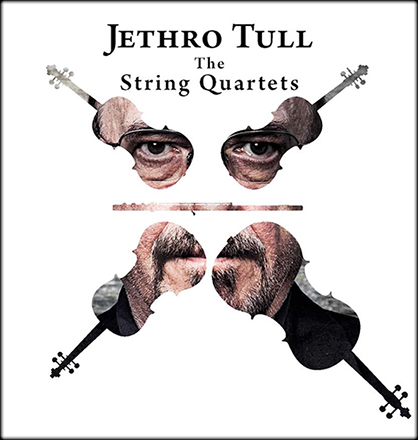
Interview with Ian Anderson (Jethro Tull)


From humble beginnings in the northeastern town of Luton, England to its rightful place in the anthology of rock music, Jethro Tull’s name has come to bare a legacy synonymous with the bands’ uncompromising nature. Amidst the ever-changing lineup and through stylistic choices persevering through the scrutiny of ephemeral trends, the group led by Ian Anderson has made its indelible mark on the genre on its own terms. With Jethro Tull nearing five decades of musical history under its name, frontman and main songwriter Ian Anderson has embarked upon a new musical endeavour, one that combines his rich musical legacy with his love for the classical music repertoire. Recorded in Worcester Cathedral and St Kenelm’s Church in the UK, Jethro Tull - The String Quartets gathers a magnificent set of rearrangements of the bands’ back catalog, performed by the Carducci String Quartet. 


It’s been 3 years since the last release bearing the Jethro Tull name. How did this project come about?

The repertoire of Jethro Tull can be realised and performed in different ways, whether it be in their original form or through reworked arrangements, like in a “concert” setting. This String Quartet project came about because, although I had worked with string quartets before, I had never really done a dedicated album with a string quartet and no rock band instruments. This was looking at the far more poignant, sparsely instrumented classical string quartet with a judicious degree of involvement by me in terms of flute, acoustic guitar or vocals from my end. It was about avoiding the temptation of having bass and drums and electric guitars. We got the sessions on the way in September when my preferred string quartet, the Carducci Quartet, John O’ Hara and I were available for 3 days. 

This current release is listed solely as a “Jethro Tull” record, whereas certain of your solo releases were listed as “Jethro Tull’s Ian Anderson”…
(Laugh) Oh dear, we’re back on the old “Ian Anderson vs. Jethro Tull” story are we? I don’t really need to comment on it. You decide what YOU want to call it. Jethro Tull is a band of some 32 musicians variously involved in the recordings over a period of 49 years. I’m the guy who’s written almost all of the music, produced the records, organised things, the tours… YOU decide what you want to call it (laugh). I have little interest in the marketing and the billing. The music of Jethro Tull is the repertoire, it’s not necessarily about a specific group of musicians. They’ve all been an important part of the band. Some members were involved for only a few months or sometimes a few years. 

Do you see this record as a retrospective record or rather a new chapter for the “band”?
Well it’s not about the “band”. There’s no “band” involved in this. It’s a string quartet and Jethro Tull’s repertoire. It’s like when you come across Beethoven string quartets. It’s not Beethoven playing the violin or cello, it’s his compositions that are being played by string quartets. We’re talking about the repertoire of Jethro Tull here. If you say to me “I love the Beatles”, I don’t think you mean you love John, Paul, George or Ringo. What you really mean is that you love the music of the Beatles. When you look at the historical perspective, when you express admiration or joy and a pleasure of listening, it’s not about the individuals but rather about the music that was created and left behind, which is part of their legacy. So it is for the music of Jethro Tull.

How did the arranging process come about? How did this all come together?
Well I started by looking up my list of songs on my laptop computer. I refer to this file containing over a hundred song titles quite often, namely when I put together a tour or a one-off concert. I went through them and sorted out those who would work in this new context. Some of them didn’t seem to work and others were chosen because I had already done them in a similar context; certain songs already had strings in the original arrangements for instance.

John O’ Hara, our keyboard player, came up with a few suggestions of his own and I came up with a few suggestions that maybe he wasn’t so keen on but seemed to me like more of a challenge. I also didn’t want it to be too “esoteric” or clever, we needed to have a few straightforward songs that aren’t too different from the feel of the original recordings. I tried to mix things up a bit.

Each song had to have a different approach. It’s not a factory production line where you come up with a methodology and apply it to all of the songs. I wanted each song to have a different starting point, a different rationale and a different way of being developed as an alternative to the original performance. Above all, what I wanted to do, was to prove to me first and to our fans second that the elements of music, harmony, melody and rhythm, are the crucial element of any piece of music, and you can preserve them whilst presenting the music in a completely different genre and styling. It’s not beyond the bounds of reason that I could jump on a plane to Nashville, book a studio and embark upon “Jethro’s Best of Country Hits”.I don’t want to do it, I’m not a fan of the country music genre, but I could. Classical music, Folk music, Jazz or Blues or other forms that I do have a greater affinity could also accommodate to my music. It may not ALWAYS work but usually it would. I’ve proved that time and time over the years. I mess around with my own songs and sometimes rearrange them for live stage performances. Some songs have 3 or 4 different arrangements to pick from. I always have to be sure, when I put on a setlist, to remind the band which version we’re playing, or else they might embark upon the wrong arrangement (laugh).

Were there any particular challenging parts when it came to revisiting or re-arranging some parts of your back-catalog?
I occasionally tried to avoid the obvious. Sometimes the violin would carry the melody line that would typically have been sung or played by the flute on the original version. It’s not about me and a string quartet in the background, that was never the idea. I really wanted this to focus on the string quartet. They came first; If there was any “accompaniment”, it would be from me rather than them. 
The first violin usually carries the melody lines and key lines, and the second violin typically constructs the harmonies. The viola has its own solo and pieces along with the cello, supporting it in a more rhythmic fashion. I’d find alternative and counter-melodies that might work a little differently to the harmonies for the second violin and viola. I had to sit and work out some ideas, some of which were worked out at the time of doing the arrangements with John O’ Hara, others were deliberately left until the very end when it came to adding my parts and doing the mixing. 

Can you tell as bit about the choice of location for the recordings?

I was looking for something that had a little more ambience than a sterile contemporary recording studio. I wanted to capture some kind of a feel. I had a concert coming up in support of Worcester Cathedral, one of our great medieval cathedrals and they were kind enough to give me the use of the crypt underneath the main body to record for a day. After searching many churches in the countryside of Southwest England, I found the church that offered the best chance of not being interrupted by either the public or any extraneous noise. Even so, both in the cathedral crypt and in the historic churches in the countryside you will find the occasional aeroplane flying overhead or at a distance, the sound of a train, a truck or just the wind rattling the windows. There were many times where we would be in the middle of the take and we would have to stop because of the noise that was being picked up by the microphones. We’d have to stop, wait for it to go away and start again. We had a few interruptions like that which were frustrating but we ended up with two or three takes of each of the songs to choose from. We got it done on time thankfully, as we didn’t have any “spare time”.

The Jethro Tull repertoire has seen a number of reinterpretations and covers versions. Are there any in particular that struck your attention in particular?
I’ve heard lots of people doing the music, from tribute bands in far away countries through to famous artists like Iron Maiden for instance. My preference is for when someone does it in a completely different way. I think it’s much more interesting if they take a piece of my music and really make it their own, not just using the same arrangements and copying the way I did it. 

I’m much more interested in doing something really radical with it. I’ve heard bits of Jethro Tull music that have been sampled and put into hip-hop records and I’ve heard people do my music where they really deconstruct it and put it back together again. I’m more interested in that, because I think that would be my approach. If you asked me to work out an arrangement for a piece by Iron Maiden, what I would do would sound nothing like original; I would see no point in doing that because they’ve done it much better than I ever could do it in that style.

When somebody else does my music I want to hear it done a different way, just as I would hope that mister Bach would be more interested in hearing me play a couple of his pieces of music in a 
very different to the way he originally wrote them for classical musicians. I could be wrong; maybe Bach would be really angry, pissed off and insulted that I would take his music and change some notes and harmonies. However, my gut feeling is that Bach, along with Beethoven and Mozart for example, who were great improvising musicians, would have maybe been appreciative and understanding of the fact that there are no real absolutes in music. Bach could have been feeling very different one morning and done a piece of music in a different way. In that sense, the way I might hear his piece of music and retranslate it to suit me is what I hope he would be appreciative of. We get bored of hearing the music of Bach, Mozart or Beethoven again and again in the same way in every classical venue. They’re simply performing it the way it was written at the time. If Bach heard me playing one of his pieces, he would at least go “oh! What’s that? That sounds like a bit of my music!”. My gut feeling is he might go along with it, at least for the first couple of minutes.

Speaking of reception: have you noticed an evolution in the reception of Jethro Tull’s music over the years?
I don’t think much changes over the years. It just depends where you’re playing and what you’re doing. If I’m playing outdoors in the summer, the audiences look the same as they did back in 1969, it’s a mixture of people of my age and people a lot younger. If it’s an indoor concert hall, the audience will generally be much older and behave in a much more calm and disciplined way. It’s the same in Germany, Switzerland, Britain the US…
I try to avoid national stereotypes when I think about the audience reaction, and I also try to avoid the stereotypes that we would associate with age-ism. The stereotypes exist and perhaps with some good reason, but I don’t think it’s appropriate to dwell on that and just assume that all young people are a bit more silly and louder whereas older people fall asleep halfway through in their chairs and have to be woken up by their wives to be told it’s time to go to the toilet during the intermission.I think there’s a danger that we create and reinforce these stereotypes unnecessarily. Overall, I wouldn’t say there’s a huge amount of difference. When I cast my mind back to one of our very first concerts in the USA, playing at a Jazz festival in 1969, the audiences there were basically aged from 15 to 60. Jethro Tull’s audience was always quite broad demographically. It’s always been very mixed. 
Interestingly, I was at one of Black Sabbath’s last shows in London at the O2 a few weeks ago, and while I wasn’t surprised to see that the audience was 90% male, I was surprised to see a lot of people in their late 30s. I expected the audience to be people in their 50s or 60s along with some people in their teens and 20s. I was quite surprised to find that missing middle group, as they’re not so often at my concerts. We tend to have the old and the young and they tend to be a full generation apart, with a missing generation in the middle: those who grew up listening to music in the 80s and 90s who wouldn’t have picked up on Jethro Tull. The younger folks look at the history of pop and rock and get excited about the origins of the genre and are more appreciative of the classic rock bands from the 60s or 70s, so it’s not unusual to see them in the audiences, especially in the outdoor shows and in the mediterranean and latin countries. When we do an outdoor show there it seems like everyone in the audience is aged 20, the old folks are all at the back.

What is next for Ian Anderson and Jethro Tull?
We’re starting rehearsals and then recording the first 6 songs for a new studio album for 2018. All of it is written, we just have time to do the first piece of the recording before we head off to Australia and New Zealand on tour. When we get back, we’ll soon head off for the first of 3 US tours this years. Later on this year there will be a few days here and there where I can carry on working on the new album. So that’s the main project at the moment. I also have all of the master tapes from several concerts of the Jethro Tull Rock Opera which we filmed during a few shows last year in Europe. At some point during the year I will attend my attention back to that to piece together a live DVD. It will include 5 new songs which have never been released, which is something some of the fans will find interesting to listen to.

To finish off : could you name one of your favorite albums, movies and books?
It’s a bit of a boring answer I suppose, but one piece that entertains me the most and is the most inspirational is Beethoven’s 9th Symphony. It’s so magnificent, it contains such huge dramatic expression of melody and powerful ensemble playing. It’s the complete Beethoven “album”. It would have been wonderful to have known what the 10th Symphony would have turned out, but as it turned out we’ve only got the 9th. That would probably be my favorite album. Close behind that might be a compilation album of Muddy Waters’ music as recorded live towards the latter part of his performing by Johnny Winter (note: Ian is most likely referring to Muddy "Mississippi" Waters – Live from 1979). Winters recorded some of Muddy Waters’ greatest hits live in the studio and this release is an album I tend back to because it’s the opposite of Ludwig Van Beethoven. However, it has the same swagger, the same overt sexuality that I find in some of Beethoven’s music. There’s something almost a little “cock-rock” about some of the key melody ensemble pieces from Beethoven, it’s a little bit “macho” (laugh).
I suppose one of my favorite books, which is about to be made into a movie again, is by my favorite author John Le Carré. He’s known as the thinking man’s thriller writer. I think his first classic novel of the genre that achieved commercial success is The Spy who Came in from the Cold. It’s a book that really defines the cold war years of the early 60s. In a way, we are moving back to that kind of uneasy status quo, an almost cold-war relationship with Putin’s Russia. I think it’s quite ‘a propos’ that we reexamine the genres of that era. So I guess you could also pick the movie starring Richard Burton and you could pick the book.
Besides that, if I get bored I can always watch my son-in-law in The Walking Dead, which I sometimes tune in to and watch, just to connect to what’s happening in that weird Zombie thriller genre (laugh). When my son-in-law is away making another season of the series, I can always wave at the television screen and say “Hi, are you doing Andy!”.

Special thanks go out to Ian Anderson and HIM Media for making this interview possible!

Jethro Tull / Ian Anderson
Official Website
Facebook
Twitter
Youtube
Instagram
Soundcloud

Monday, May 9, 2016

Suns Of Thyme - Cascade


So one of the most exciting trends in modern heavy music has to be the genres newfound penchant for weirdness. The truly bizarre tones captured on wax for Napalm Records artists alone is monumental. The latest in this new and proud wave of bands is Suns of Thyme, a tripped out psych prog band who are reminiscent of acts like Hawkwind, but who manage to maintain a certain degree of separation such that their music tends to go more for pure beauty than alienating acid eating madness.

Of course - no psych prog record would be complete without its weirder moments, and Suns Of Thyme certainly understand the significance of that aspect of their musical heritage. The quality of the compositions is stunning, the gentle guitars and washed out synths perfectly compliment each other and make Cascade an album that you can come back to again and again. Sure, it's not super dense, but it uses its open soundscapes and unique song structures to entice the listener and remind them why this type of music owns the hearts of thousands. Simply put - Cascade is chicken soup for the soul.

So come join me - Cascade certainly leaves room enough for two. The band has embraced all the dorkiness that makes them great but simultaneously infuses their sound with a sense of forward momentum that keeps you coming back for more. Few can imitate what these guys have done stylistically and as they evolve I get the impression that they will only dive further down their very unique rabbit hole. Suns Of Thyme have cultivated something truly special here - and where they go now could change the future of rock.

Find them on Facebook!
https://www.facebook.com/SunsofThyme

Sunday, August 9, 2015

An afternoon with Mabel Greers' Toyshop - Interview with Clive Bayley and Bob Hagger


In an age where band reformations have become such a common occurrence in the music scene, it seems as though we've grown accustomed to such otherwise celebrated occasions, to the point where little comes to surprise us in the mere fact it feels as though most of the major bands from the past 40 years seem to be still active. One band, however, which I, for one, was not expecting to reemerge into the music scene was Mabel Greers' Toyshop, one of the forgotten gems from Prog Rocks' history pages. Formed back in 1966 by Clive Bayley and Bob Hagger, the band would later go on to morph into the band "Yes", leaving their previous project behind with very little written or recorded traces... until the bands' recent reformation in 2014. (If you weren't already, I recommend you read back the last paragraph with some epic soundtrack playing).
Naturally, when one is presented with the opportunity to attend one of the bands pre-tour rehearsals and catch up with the band, one can only jump on the occasion with a firm and determined "Yes"!
Like I've said earlier, I've become rather dubious when it comes to longtime band reunions, but this band, however, seemed to have stood the test of time. The majestic and timeless melodies wrapped in an old-school yet thriving sound shined through the bands' locked-in, brilliant performance.
The band played a full set consisting of their newly released album, their at long last debut record
New Way of Life, released after nearly 50 years since the band's first inception. The album consists of a combination between reworked songs from the band's original catalog along with some newly composed material. The set flew by to the sounds of sunny chords, sweet melodies and synth soundscapes swelling up the room, each tune flowing very nicely one after the other with the newer compositions convincingly bridging the gap between 1968 and 2014. There is something undoubtedly very special about Mabel Greers' Toyshop; what it is exactly, I'm afraid I can't quite put my finger on it, let alone put into written words, but I've no doubt that you'll feel the same way if you get a chance to catch these lads' brilliant set. You'll understand that this reunion was no mere lackadaisical effort but the reemergence of something great, an artistic urge and a passion left intact even after all of these years.

After the bands' rehearsal ended, the band took the time to have a friendly discussion with their audience and Bob stepped out from behind his drum kit to meet up with us and to give a brief history of the band. I took this occasion to catch up with both Bob and Clive to ask some questions about the bands' history and its latest developments in hopes to shed a bit more light unto this bands' unjustly forgotten tale.

How did the band get back together after all of these years?
Clive: Bob tracked me down after 45 years on Facebook.
Bob: It was when Peter Banks had died. Of course Peter was in the band with us in the old days.
I was on an airplane reading the newspaper when I read that Peter Banks had died. When I got off the plane I called Clive, got a hold of him to discuss and talk about it and that’s' when we decided to meet up. We met in Nice, at a restaurant called "La Petite Maison" and that’s' when the idea came up. We got a hold of Hugo and Alex and we went to a studio in Nice where we practiced. We wanted to see if it was do-able.
When we finally did the album, once we had finished laying down the tapes (which we did here in Paris), we got a hold of some friends; Billy Sherwood and Tony Kaye, who live in Los Angeles. We asked them if they would help us with the production of the album. We sent our tapes to them and of course they got very excited about it. So the album actually has Billy Sherwood playing some keys, and some bass and Tony Kaye playing Hammond Organ. Billy also did some of the production work for us. We've got TWO albums in fact: we've got the Paris tapes, which is the original set that we did with just the three of us (Hugo, Clive and myself) and then we've got the one that we released, which is the one with Billy Sherwood and Tony Kaye on it.

Clive: It was a tiny little rehearsal room and we thought "Let's go in there and make some noise" and it was good.

Bob: We just played the old stuff all over again.

How did it feel when you first started playing these songs again for the first time in 45 years?
Bob: Aaah, magic!

Clive: Great, yeah!
Bob: It never goes away you know? Maybe we were teenagers when we wrote them and played them originally but it stays with you. It doesn't go away. It's quite a sensation playing it again.

Clive: It was nice improving on them too, giving them a twist. It was never about copying it exactly, that would have been a disaster. So there are very strong elements that are in there but it's definitely rearranged.

Bob: We hardly listened to anything; we just did it from memory... which had advantages and disadvantages.

Clive: ... yeah, since we left bits out. But it shows we still have a memory, which is good (both burst out laughing).

How did you come about writing songs that fit the rest of the material that you had written back in the day?
Bob: It was quite natural actually.
 
Clive: The idea was to take 5 or 6 of the original songs and then flip them a bit, not playing them the way we used to play them, although we were playing some from memory. On one song in particular we just left a major bit out (laugh) and after we recorded the album we thought "There's something wrong here... oh yeah, we've messed up! We've missed up the most important bit of the song!» So now we've put the section in on the live set but obviously it's not on the album. Other than that, we've got lots of songs and we've got enough songs for the next album. The last one you've heard which we're still playing around with is one of the new songs. We've got another albums' worth of songs, we just need to get together and put them down.

Bob: The way we do it is that Clive usually comes up with the idea and he puts down the chords and the structure, we try it out like we did today, he goes back to write the lyrics and then we put it all together afterwards. Clive has written just about all of the material.

Clive: Except for "Oceans", which we came up with in the studio. We were just mucking about and recorded that in Paris and luckily Alex put "record" on. The whole psychedelic thing was actually just freewheeling and then afterwards we tacked on an old song I wrote about 5 years ago "Singing to your Heart".
We also like adlib-ing a lot, because in the old days we used to adlib the whole time, just get up on stage and play anything and it kind of worked. Maybe it wouldn't work so well today.

Bob: It was different then, we had a lot of Bluesy Jazz influence and so we would tend to have a theme. So we'd start with the theme and then go into the solos and then come back to the theme again, but off course things have become a lot more structured these days. (laughs)

Were there any songs from the old days that you've left out?
Bob: Yeah…

Clive: Actually, I've found a tape recently, which I’ve sent out to copy, it hasn't come back yet but it's basically a reel-to-reel quarter inch old Grundig tape in a suitcase which is going to be 50 years old. It's either got a load of our songs on, or it's got a load of nonsense on it. One or the other (laugh)!

Bob: There are a couple of songs of which we can only remember the titles and we've tried to get the memory going since and trying to play it, but it just won't come. So some of it is gone. Then we also used to do some cover versions in an original way. On the first Yes album, you remember "I See you" from Byrds. We used to play that. We also used to play "8 Miles High" from Byrds. We played "Eleanor Rigby" by the Beatles, and Yes did it again afterwards. We always did it our own way. We'd never sit and learn the music, we just listened to it and say "we can do something like this!" and that's what we did. You have even heard it incorporated into some of the songs we've got now, there's a little bit of theft from some classical music that Clive has incorporated. It just fits so nicely, and we'd probably be sued for stealing peoples' music! (laugh) We don't actually learn it, we just hear it and play it the way we knew it.

How would you compare your recent experience in the studio with your previous recordings back in the early days of the band?
Bob: It's totally different, completely different. There are some old tapes out there, there are actually two sets of tapes: one that were the BBC recordings that we did live and then there were some demos that we did for MCA records with Mike Leander, there's 2 or 3 of those out there with "Beyond and Before", "Electric Funeral"...
But the recording process is totally different now. In fact, when we went into the studio, Alex was kind of surprised "We've got computers here! Why do it like that??" (laugh).

Clive: It's dangerous, because on the album on some of the songs there are four guitar tracks, because when you're in the studio you can hear something else with every new layer you add. On the album it's fantastic, you've got at least four guitars plus the bass or sometimes even two bass lines. You just keep adding, but when you get to play it live you're like "... hang on a minute! I can only play one guitar!" (laughs). So you need to decide what to leave out and it's really hard.

Bob: That's something we didn't do in the old days. You wouldn't think of doing triple guitars on one track unless you had three guitarists.

Clive: It's annoying, because you hear it. When you're singing and playing lead, it's pretty much impossible. I can play rhythm and sing, but when you're playing lead guitar and singing and there are bits you hear that you wanna do, what happens is that you think "I'm gonna put that in". You start singing rubbish and out of tune because you're focused on the guitar. So it's one or the other. So that's the difference, because in the studio, we made that sound happen.

Bob: Alex didn't actually play in the studio, he was our engineer. When we finished and we had the three layers of guitars and we were wondering how we were going to do it, we asked Alex to come and play the rhythm guitar parts and some of the leads (laugh).

Clive: We're still one guitar short (chuckle)... potentially. 

So these new possibilities actually influenced the writing process for this album then?
Clive: Definitely, a hundred percent.
 
Bob: There are more layers than we would've had in the old days.

Could you explain the title of the album and what it's all about?
Clive: Well it's about a new way of life (laugh).

Bob: We've both been doing business for 45 years.

Clive: Exactly, and we've had enough, let's start playing music again! (Laughs)

Bob: As for the album, we were looking for an album cover that would represent a "new way of life", and we struggled to find something. We asked an artist to come up with some ideas and we saw the indian head (the one that is on the cover) and we went "wow! THAT represents change!", because if there's one set of people in the world that went through massive changes, it's the American Indians. So that's the link basically.

Clive: That last song we played today was written after the album was released. We thought "now we've got an Indian head on the cover, we better write another song about it". So that American Indian rhythm should be on the first album but it didn't exist yet (laugh). We're bit late on parade on that one.

Bob: Maybe we can call the new album "Old way of Life" (Laugh)

Clive: Yeah, that’s' not bad! (laugh)

Could you explain where the band name comes from?
(Clive looks intently towards Bob)
Bob: ... Sorry! (Laughs)

Clive: It's his fault!

Bob: You know... in those days everybody had crazy names, the wildest possible names the better. We used to play with "The Crazy world of Arthur Brown", "Jethro Tull", "Wishbone Ash", "Big Brother and the holding company"... all of these wild and wonderful names... We thought "We've got to come up with something" and... (laughing) We just came up with "Mabel Greers' Toyshop".

Clive: There is no Mabel, and there is no Toyshop.

Bob: ... and we’ve regretted it ever since (laughs).

Clive: There must have been someone called Mabel Greer.

Bob: There is a Mabel Greer. She was American, and there's a book about her and her legacy. I don't remember the story, I'll have to check it out again, but it's something about a will, and there's a whole story about her last testament.

Clive: That’s' interesting. It's been in your subconscious for some time.

Bob: It must have been, yeah. We'll have to check that.

So she never owned a Toyshop?
Bob: No, she didn't, not as far as I know (laugh). We thought toys were a great metaphor for music at the time...

Clive: and the world currently today is a toyshop, and then Mabel could be the American Indian... there are lots of different spins on it. You came up with a name in 1966 and we thought we'd use the same old name this time round.

Bob: Peter Banks hated it, and that’s' why they changed their name to Yes when we left. He HATED it with a vengeance (laugh).

Clive: ... not his kind of thing.

So that’s' why they changed it after you guys left?
Bob: Yeah... "So Clive’s' gone we can do it now!" (laughs)

Were there any influences from more recent bands with this latest record?
Bob: I'm very very bad at modern music. If it was released after 1972 I've never heard of it! (laugh)

Well we were discussing about Porcupine Tree earlier on though, right?
Bob: Yeah, they were really good! They played some really good stuff.

Clive: I was into Genesis a lot, so after I left the band I was hanging out with Genesis a bit at Christmas cottage when they were starting. In the area where I lived in Kingston, there were a lot bands : Moody Blues, The Yardbirds, Clapton.. they were all from that area, so we would just meet up anyway and see what’s' going on. My favorite band was Genesis though, I thought they were brilliant.

Could you name one of your favorite albums, movies and books?
(answering with little to no hesitation)
Bob : Dark Side of the moon is my favorite. But I've also always been a big Clapton fan...
Clapton and Hendrix. There's also jazz... I always talk about Mose Allison, he's one of my all-time favorites, please check him out! He's a white guy who was born in the Deep South in a cotton field and I think his father was a Foreman in the cotton fields. He grew up with black guys, learning and singing the blues. He also learned the piano by himself, he plays Jazz Blues. My Hero!

Clive: The Lamb Lies Down on Broadway by Genesis probably, that's a good one... Seconds Out by Genesis!

Bob: Films? Oh because of “Sweetness” Buffalo 66! (Laughs)... Oh gosh, we're not used to answering those type of questions!

Clive: My favorite book is probably Siddhartha by Herman Hesse and to contrast that nicely, one of my favorite movies would probably be Ronin with Robert DeNiro, a sort of French gangster movie. I love action films, I actually like bizarre action films but when it comes to reading I like eastern philosophy and stuff like that. So Siddhartha by Herman Hesse is PROBABLY, in terms of a novel, one of my favorites, because it just sums up everything in one... and it's only about a 100 pages long so you don't lose the plot (laughs).
Bob: I don't have the same culture as Clive. The Day of the Jackal by Frederick Forsyth! I must've read it 50 times!
Clive: That's a great one! They also made it into a film, they made 2 films… the early one and the recent one with Bruce Willis.

Bob: The earlier film with that English actor Edward Fox is actually also one of my favorite films... I'm a bit of a James Bond fan as well (laugh).

Clive: You've got to be, man, you're British!

Bob: (still laughing) I have no choice!

Clive: It's like not liking the Queen if you don't like James Bond (laughs)

Any preferences?
Bob: Casino Royale has got to be the best. The first one. 

Clive:… Dr.No was the first one though, the one with Sean Connery.

Bob: Yeah… he was the only real Bond for me!

What's your take on the newer ones by the way?
Bob: I like it up to the point where they go to Scotland. I think that film falls to bits when they get to Scotland (Skyfall).

Clive: Craig is alright though, he's a hardboy Bond isn't he? He plays it well. I think Sean Connery wins, Roger Moore I didn't think he did it well but I think Daniel Craig does it well.

Bob: He's a brilliant actor!

Any closing words?
Both of them turn to each other with a smile on their face and start singing the James Bond theme and laugh.

Article and Interview by Robin ONO
A very special thank you goes out to the Staff at Him Media, and to the whole band for offering us this amazing opportunity!

Mabel Greers’ Toyshop