Chuck Schuldiner Project

Showing posts with label Robin. Show all posts

Tuesday, March 28, 2017

Darkest Hour - Godless Prophets and Migrant Flora

At this point in time, it is fair and safe to count Darkest Hour amongst the few acts to have survived the Metalcore era from which their mainstream success took root. As the band enters its 22nd year with this ninth full length-record, one can already measure in the factors that have set them apart from their lesser peers, not the least of which is their audacity to expand and experiment on their heavy melodic death metal formula. The last few efforts by Darkest Hour saw a progressive shift in the bands’ sound, from the often overlooked The Human Romance leading up to their Self Titled album, which saw the band edging towards Alternative Metal territory with angsty, clean sung metal core hooks and a sharp, digital production (courtesy of Sumerian Records). While competent and admirable in its delivery, fans and critics alike were beginning to grow concerned about the bands’ sound falling into a generic register. With Godless Prophets and Migrant Flora, the Washington-based quintet seem to have picked up these concerns.

As the record jumpstarts into the thrashy opener that is “Knife in the Safe Room”, we quickly come to understand that the band aimed for a different approach for this record. Godless Prophets and Migrant Flora is a heavy record, and a pretty intense one at that, the bursts of rapid-fire drumming and string-skipping-based riffs of the opener serving as a decent representation of a good deal of the record. The band returns to their old-school roots on this record, setting their modern metalcore leanings aside, in favor of a rawer, Swedish Melodic Death Metal sound.The most notable difference on this record may very well be John Henry’s vocals, undoubtedly the most distinguishable feature of Darkest Hour’s sound. Ditching the clean vocals, Henry’s ferocious saturated vocals reach a new level of intensity, adding to the album’s overall merciless sound. Another highlight feature for this ninth record is the lead guitar work, which also makes a triumphant return on this record, with flamboyant solo licks that seem to stem straight from a Megadeth or Metallica record. Wilder and flashier than on the previous record, the guitarists go full-on Kirk Hammett on the Wah pedal, providing for exceptional solos on tracks like “Another Headless Ruler of the Used” and “The Last of the Monuments”. 

Beyond the brilliant return to roots, the album does however score lower than its predecessors in terms of pacing and diversity. The album pummels you with track after track of feral thrashing for a solid half of its runtime, leaving little in the areas of breathing space and dynamic range. This comes as a particularly regretful realisation as the last few records which the band seems to shy away from were particularly well paced and diverse. The album does end up providing some variation towards its second half with an instrumental interlude and epic, slower tracks like “In the Name of Us All” and “Enter Oblivion being stuck at the end of the album.

Overall, despite its flaws, Godless Prophets and Migrant Flora is a incredibly effective album, one that will undoubtedly reclaim Hidden Hands of a Sadist Nation-era fans. While this ninth record may alienate newfound fans of the band, it does admittedly feel great to hear the band return to their roots at the height of their form. While some may call Godless Prophets and Migrant Flora a “return to form” for Darkest Hour, one must be weary of such accolades, as it undermines the brilliant consistency of the bands’ musical output. 

Robin Ono

Darkest Hour

Monday, March 20, 2017

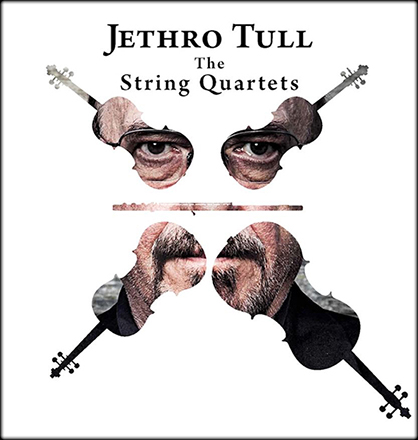
Interview with Ian Anderson (Jethro Tull)


From humble beginnings in the northeastern town of Luton, England to its rightful place in the anthology of rock music, Jethro Tull’s name has come to bare a legacy synonymous with the bands’ uncompromising nature. Amidst the ever-changing lineup and through stylistic choices persevering through the scrutiny of ephemeral trends, the group led by Ian Anderson has made its indelible mark on the genre on its own terms. With Jethro Tull nearing five decades of musical history under its name, frontman and main songwriter Ian Anderson has embarked upon a new musical endeavour, one that combines his rich musical legacy with his love for the classical music repertoire. Recorded in Worcester Cathedral and St Kenelm’s Church in the UK, Jethro Tull - The String Quartets gathers a magnificent set of rearrangements of the bands’ back catalog, performed by the Carducci String Quartet. 


It’s been 3 years since the last release bearing the Jethro Tull name. How did this project come about?

The repertoire of Jethro Tull can be realised and performed in different ways, whether it be in their original form or through reworked arrangements, like in a “concert” setting. This String Quartet project came about because, although I had worked with string quartets before, I had never really done a dedicated album with a string quartet and no rock band instruments. This was looking at the far more poignant, sparsely instrumented classical string quartet with a judicious degree of involvement by me in terms of flute, acoustic guitar or vocals from my end. It was about avoiding the temptation of having bass and drums and electric guitars. We got the sessions on the way in September when my preferred string quartet, the Carducci Quartet, John O’ Hara and I were available for 3 days. 

This current release is listed solely as a “Jethro Tull” record, whereas certain of your solo releases were listed as “Jethro Tull’s Ian Anderson”…
(Laugh) Oh dear, we’re back on the old “Ian Anderson vs. Jethro Tull” story are we? I don’t really need to comment on it. You decide what YOU want to call it. Jethro Tull is a band of some 32 musicians variously involved in the recordings over a period of 49 years. I’m the guy who’s written almost all of the music, produced the records, organised things, the tours… YOU decide what you want to call it (laugh). I have little interest in the marketing and the billing. The music of Jethro Tull is the repertoire, it’s not necessarily about a specific group of musicians. They’ve all been an important part of the band. Some members were involved for only a few months or sometimes a few years. 

Do you see this record as a retrospective record or rather a new chapter for the “band”?
Well it’s not about the “band”. There’s no “band” involved in this. It’s a string quartet and Jethro Tull’s repertoire. It’s like when you come across Beethoven string quartets. It’s not Beethoven playing the violin or cello, it’s his compositions that are being played by string quartets. We’re talking about the repertoire of Jethro Tull here. If you say to me “I love the Beatles”, I don’t think you mean you love John, Paul, George or Ringo. What you really mean is that you love the music of the Beatles. When you look at the historical perspective, when you express admiration or joy and a pleasure of listening, it’s not about the individuals but rather about the music that was created and left behind, which is part of their legacy. So it is for the music of Jethro Tull.

How did the arranging process come about? How did this all come together?
Well I started by looking up my list of songs on my laptop computer. I refer to this file containing over a hundred song titles quite often, namely when I put together a tour or a one-off concert. I went through them and sorted out those who would work in this new context. Some of them didn’t seem to work and others were chosen because I had already done them in a similar context; certain songs already had strings in the original arrangements for instance.

John O’ Hara, our keyboard player, came up with a few suggestions of his own and I came up with a few suggestions that maybe he wasn’t so keen on but seemed to me like more of a challenge. I also didn’t want it to be too “esoteric” or clever, we needed to have a few straightforward songs that aren’t too different from the feel of the original recordings. I tried to mix things up a bit.

Each song had to have a different approach. It’s not a factory production line where you come up with a methodology and apply it to all of the songs. I wanted each song to have a different starting point, a different rationale and a different way of being developed as an alternative to the original performance. Above all, what I wanted to do, was to prove to me first and to our fans second that the elements of music, harmony, melody and rhythm, are the crucial element of any piece of music, and you can preserve them whilst presenting the music in a completely different genre and styling. It’s not beyond the bounds of reason that I could jump on a plane to Nashville, book a studio and embark upon “Jethro’s Best of Country Hits”.I don’t want to do it, I’m not a fan of the country music genre, but I could. Classical music, Folk music, Jazz or Blues or other forms that I do have a greater affinity could also accommodate to my music. It may not ALWAYS work but usually it would. I’ve proved that time and time over the years. I mess around with my own songs and sometimes rearrange them for live stage performances. Some songs have 3 or 4 different arrangements to pick from. I always have to be sure, when I put on a setlist, to remind the band which version we’re playing, or else they might embark upon the wrong arrangement (laugh).

Were there any particular challenging parts when it came to revisiting or re-arranging some parts of your back-catalog?
I occasionally tried to avoid the obvious. Sometimes the violin would carry the melody line that would typically have been sung or played by the flute on the original version. It’s not about me and a string quartet in the background, that was never the idea. I really wanted this to focus on the string quartet. They came first; If there was any “accompaniment”, it would be from me rather than them. 
The first violin usually carries the melody lines and key lines, and the second violin typically constructs the harmonies. The viola has its own solo and pieces along with the cello, supporting it in a more rhythmic fashion. I’d find alternative and counter-melodies that might work a little differently to the harmonies for the second violin and viola. I had to sit and work out some ideas, some of which were worked out at the time of doing the arrangements with John O’ Hara, others were deliberately left until the very end when it came to adding my parts and doing the mixing. 

Can you tell as bit about the choice of location for the recordings?

I was looking for something that had a little more ambience than a sterile contemporary recording studio. I wanted to capture some kind of a feel. I had a concert coming up in support of Worcester Cathedral, one of our great medieval cathedrals and they were kind enough to give me the use of the crypt underneath the main body to record for a day. After searching many churches in the countryside of Southwest England, I found the church that offered the best chance of not being interrupted by either the public or any extraneous noise. Even so, both in the cathedral crypt and in the historic churches in the countryside you will find the occasional aeroplane flying overhead or at a distance, the sound of a train, a truck or just the wind rattling the windows. There were many times where we would be in the middle of the take and we would have to stop because of the noise that was being picked up by the microphones. We’d have to stop, wait for it to go away and start again. We had a few interruptions like that which were frustrating but we ended up with two or three takes of each of the songs to choose from. We got it done on time thankfully, as we didn’t have any “spare time”.

The Jethro Tull repertoire has seen a number of reinterpretations and covers versions. Are there any in particular that struck your attention in particular?
I’ve heard lots of people doing the music, from tribute bands in far away countries through to famous artists like Iron Maiden for instance. My preference is for when someone does it in a completely different way. I think it’s much more interesting if they take a piece of my music and really make it their own, not just using the same arrangements and copying the way I did it. 

I’m much more interested in doing something really radical with it. I’ve heard bits of Jethro Tull music that have been sampled and put into hip-hop records and I’ve heard people do my music where they really deconstruct it and put it back together again. I’m more interested in that, because I think that would be my approach. If you asked me to work out an arrangement for a piece by Iron Maiden, what I would do would sound nothing like original; I would see no point in doing that because they’ve done it much better than I ever could do it in that style.

When somebody else does my music I want to hear it done a different way, just as I would hope that mister Bach would be more interested in hearing me play a couple of his pieces of music in a 
very different to the way he originally wrote them for classical musicians. I could be wrong; maybe Bach would be really angry, pissed off and insulted that I would take his music and change some notes and harmonies. However, my gut feeling is that Bach, along with Beethoven and Mozart for example, who were great improvising musicians, would have maybe been appreciative and understanding of the fact that there are no real absolutes in music. Bach could have been feeling very different one morning and done a piece of music in a different way. In that sense, the way I might hear his piece of music and retranslate it to suit me is what I hope he would be appreciative of. We get bored of hearing the music of Bach, Mozart or Beethoven again and again in the same way in every classical venue. They’re simply performing it the way it was written at the time. If Bach heard me playing one of his pieces, he would at least go “oh! What’s that? That sounds like a bit of my music!”. My gut feeling is he might go along with it, at least for the first couple of minutes.

Speaking of reception: have you noticed an evolution in the reception of Jethro Tull’s music over the years?
I don’t think much changes over the years. It just depends where you’re playing and what you’re doing. If I’m playing outdoors in the summer, the audiences look the same as they did back in 1969, it’s a mixture of people of my age and people a lot younger. If it’s an indoor concert hall, the audience will generally be much older and behave in a much more calm and disciplined way. It’s the same in Germany, Switzerland, Britain the US…
I try to avoid national stereotypes when I think about the audience reaction, and I also try to avoid the stereotypes that we would associate with age-ism. The stereotypes exist and perhaps with some good reason, but I don’t think it’s appropriate to dwell on that and just assume that all young people are a bit more silly and louder whereas older people fall asleep halfway through in their chairs and have to be woken up by their wives to be told it’s time to go to the toilet during the intermission.I think there’s a danger that we create and reinforce these stereotypes unnecessarily. Overall, I wouldn’t say there’s a huge amount of difference. When I cast my mind back to one of our very first concerts in the USA, playing at a Jazz festival in 1969, the audiences there were basically aged from 15 to 60. Jethro Tull’s audience was always quite broad demographically. It’s always been very mixed. 
Interestingly, I was at one of Black Sabbath’s last shows in London at the O2 a few weeks ago, and while I wasn’t surprised to see that the audience was 90% male, I was surprised to see a lot of people in their late 30s. I expected the audience to be people in their 50s or 60s along with some people in their teens and 20s. I was quite surprised to find that missing middle group, as they’re not so often at my concerts. We tend to have the old and the young and they tend to be a full generation apart, with a missing generation in the middle: those who grew up listening to music in the 80s and 90s who wouldn’t have picked up on Jethro Tull. The younger folks look at the history of pop and rock and get excited about the origins of the genre and are more appreciative of the classic rock bands from the 60s or 70s, so it’s not unusual to see them in the audiences, especially in the outdoor shows and in the mediterranean and latin countries. When we do an outdoor show there it seems like everyone in the audience is aged 20, the old folks are all at the back.

What is next for Ian Anderson and Jethro Tull?
We’re starting rehearsals and then recording the first 6 songs for a new studio album for 2018. All of it is written, we just have time to do the first piece of the recording before we head off to Australia and New Zealand on tour. When we get back, we’ll soon head off for the first of 3 US tours this years. Later on this year there will be a few days here and there where I can carry on working on the new album. So that’s the main project at the moment. I also have all of the master tapes from several concerts of the Jethro Tull Rock Opera which we filmed during a few shows last year in Europe. At some point during the year I will attend my attention back to that to piece together a live DVD. It will include 5 new songs which have never been released, which is something some of the fans will find interesting to listen to.

To finish off : could you name one of your favorite albums, movies and books?
It’s a bit of a boring answer I suppose, but one piece that entertains me the most and is the most inspirational is Beethoven’s 9th Symphony. It’s so magnificent, it contains such huge dramatic expression of melody and powerful ensemble playing. It’s the complete Beethoven “album”. It would have been wonderful to have known what the 10th Symphony would have turned out, but as it turned out we’ve only got the 9th. That would probably be my favorite album. Close behind that might be a compilation album of Muddy Waters’ music as recorded live towards the latter part of his performing by Johnny Winter (note: Ian is most likely referring to Muddy "Mississippi" Waters – Live from 1979). Winters recorded some of Muddy Waters’ greatest hits live in the studio and this release is an album I tend back to because it’s the opposite of Ludwig Van Beethoven. However, it has the same swagger, the same overt sexuality that I find in some of Beethoven’s music. There’s something almost a little “cock-rock” about some of the key melody ensemble pieces from Beethoven, it’s a little bit “macho” (laugh).
I suppose one of my favorite books, which is about to be made into a movie again, is by my favorite author John Le Carré. He’s known as the thinking man’s thriller writer. I think his first classic novel of the genre that achieved commercial success is The Spy who Came in from the Cold. It’s a book that really defines the cold war years of the early 60s. In a way, we are moving back to that kind of uneasy status quo, an almost cold-war relationship with Putin’s Russia. I think it’s quite ‘a propos’ that we reexamine the genres of that era. So I guess you could also pick the movie starring Richard Burton and you could pick the book.
Besides that, if I get bored I can always watch my son-in-law in The Walking Dead, which I sometimes tune in to and watch, just to connect to what’s happening in that weird Zombie thriller genre (laugh). When my son-in-law is away making another season of the series, I can always wave at the television screen and say “Hi, are you doing Andy!”.

Special thanks go out to Ian Anderson and HIM Media for making this interview possible!

Jethro Tull / Ian Anderson
Official Website
Facebook
Twitter
Youtube
Instagram
Soundcloud

Tuesday, December 6, 2016

Interview avec Johannes Persson de Cult of Luna (14/04/2016) (Ver. Francaise)


En petit bonus pour vous, chers lecteurs, j’ai le plaisir de vous ressortir une vieille interview de mes archives, un article qui n’a malheureusement pas pu être publié au moment de sa finalisation. L’année 2016 touchant cependant à sa fin et l’album Mariner de Cult of Luna & Julie Christmas tenant toujours en tant qu’album phare de l’année, il aurait été trop dommage de laisser l’article prendre la poussière. Ayant été réalisée peu de temps après la sortie de l’album, il est à noter que le groupe n’avait à cette époque aucune intention de jouer l’album en live, décision sur laquelle le groupe reviendra 7 mois plus tard avec une tournée dédiée à l’album aux côtés de Julie Christmas.  Cela étant dit, je vous invite à lire cette interview en gardant en tête sa date de réalisation.


Sortis d’un silence assourdissant avec l’annonce d’un nouvel album en collaboration avec Julie Christmas ainsi qu’une tournée célébrant les 10 ans de Somewhere along the Highway, les membres de Cult of Luna reviennent en force sur les devants de la scène pour un mois d’avril retentissant. Entre le retour sur un album désormais culte de leur immaculée discographie et la sortie d’un album assurant d’ores et déjà et sans le moindre doute sa place auprès des meilleurs albums de l’année, le moment semblait on ne peut plus propice pour s’entretenir avec le fort sympathique Johannes Persson pour parler de l’évolution du groupe.

Vous êtes actuellement en tournée pour le 10ème anniversaire de Somewhere along the Highway. En rétrospective, comment voyez vous ce chapitre pour le groupe?

Ce n’est pas tant le moment de sa sortie qui importe autant que la manière dont on l’a écrit. Avec Salvation, on commençait former notre propre voix, mais c’est véritablement avec SatH qu’on était vraiment “nous”. Ce qu’ont fait en ce moment découle directement de cette ère. On a fait l’album super vite: on l’a écrit en 3 mois et enregistré en 1 semaine. On n’a pas eu le temps de beaucoup penser sur le moment, on a simplement écrit et on a laissé les choses se faire. On ne s’est pas posé de questions, on l’a juste fait. On a écrit ce qui nous semblait bon.

La base de votre son a été édifié par sa spontanéité.
Exactement. Des titres comme And with Her Came the Birds n’aurait jamais été possibles sur les autres albums. L’enregistrement était aussi très spécial parce qu’avant on s’enfermait en studio et on bossait pendant des heures à la ronde. Pour cette fois-là on avait embarqué tout notre matériel d’enregistrement dans un petit cottage perdu et on a travaillé comme des fous en essayant d’enregistrer le plus possible en live. And with Her Came the Birds a été enregistré en live au milieu de la nuit. Magnus avait aussi placé des micros en extérieur pour capter le ruissellement de la neige qui fondait et s’en est servi sur le début du morceau.

Etant en tournée pour SatH tout en ayant tout juste sorti votre nouvel album Mariner, quel est, selon vous, la plus grosse évolution ou changement pour le groupe dans ces 10 ans séparant ces 2 sorties?
Il y a beaucoup de choses. Musicalement, c’est plus simple pour les fans de répondre à cette question. Après, avec l’age vient un semblant d’assurance qui tient plutôt de fait d’en avoir plus rien a battre (rires). Il y a moins d’anxiété qu’avant, et tu n’avais pas l’avantage de savoir ce qui était bon ou pas. En rejouant ces titres d’il y'a 10 ans j’ai aussi été surpris sur certaines choses. Les morceaux étaient vraiment bons et plus techniques que ce qu’on fait actuellement, du moins de mon coté. Je n’aurais jamais pu écrire cet album aujourd’hui, impossible. Je suis une personne différente et bien que nous soyons les mêmes individus, l’album ne serait pas sortis comme tel aujourd’hui. On aurait pris des positions et décisions complètement différentes.

Est-ce que ca ne découlerait pas d’une approche différente de l’écriture?
Je ne pense pas qu’on aurait été aussi “ouverts” à certaines choses qu’auparavant. Ca peut sembler contradictoire, mais je pense que certaines parties qu’on aurait jugés trop “simples” où on se serait dits “Ok, il faut qu’on fasse autre chose sur ici”. Dim n’aurait pas sonné comme tel aujourd’hui. Sur ThirtyFour, qui est un morceau très complexe à jouer, on alterne entre des mesures à 3 et 4 temps, ce qu’on n’aurait jamais fait aujourd’hui.
Quant au groupe, je pense qu’on est plus “sûrs” maintenant. On n’a pas eu de vraie dispute en 6-7 ans, ce qui est un peu dommage n’empêche (rires). Avec Andreas on se chamaillait beaucoup.

Sur des questions créatives?
Sur tout. Une fois on s’était disputés sur une histoire de chambre d’hotel et on a fini par essayer de se donner mauvaise conscience en dormant dans le van. Il ne devait qu’y avoir qu’une personne qui devait dormir dans le van et on se disait “Je le fais! Non, c’est moi!”, et on a fini par dormir tout les deux dans le van et j’ai chopé une pneumonie de malade que j’ai gardé quelques semaines. C’était horrible (rires). Mais on ne se chamaille plus.

Vous venez de sortir Mariner avec Julie Christmas. Peux tu nous parler des thèmes abordés sur l’album?
Après SatH on a fait Eternal Kingdom, qui était inspiré de l’environnement rural où in a grandi. Avec Vertikal on voulait faire quelque chose de complètement différent, on voulait faire faire un album futuriste sans tomber dans le cliché de faire une B.O. de Blade Runner. On avait de créer le son d’une ville mécanique inspirée de l’expressionnisme allemand et du futurisme. On savait déjà ce qu’on voulait faire par la suite, d’où le titre Vertikal ; on regardait vers le haut. Le titre In Awe of sur l’album parle de l’admiration de l’espace. On a aussi fait l’EP Vertikal II, avec la pochette qui évoque les lumières de la ville dans le ciel. Du coup quand on a décidé de faire un album avec Julie on lui a dit qu’on voulait faire un album sur voyage qui partirait de la terre en dépassant la vitesse de la lumière pour atteindre les limites de l’espace. On lui a expliqué ce concept musical tout en lui disant qu’elle pourrait faire ce qu’elle voulait, on ne lui a mis aucune pression. La musique est donc inspirée du voyage concret dans l’espace mais également de l’idée de toucher de nouveaux horizons pour découvrir ce qui s’y cache, laisser sa zone de confort dans le domaine musical et artistique pour voir ce qui se passerait. Ca parle d’exploration.

Comment s’est déroulé le processus de collaboration, sachant que vous n’étiez jamais dans le même studio ensemble?
Le fait est qu’on savait à l’époque qu’on allait moins tourner, du coup on lui a dit “Ecoute, vu qu’on ne va pas tourner, pourquoi pas faire un album pour lequel il serait impossible de tourner?”. Avant de se décider si on allait faire l’album, je lui ai envoyé quelques idées que j’avais écrites sur mon ordi, et ca a fonctionné à merveille. On lui a ensuite envoyé des demos. Elle a suggéré quelques idées de modifications et on a fini par en utiliser certaines, on en a laissé de côté et on en a modifié quelques unes avant de les mettre en oeuvre. Pour ce qui est de sa voix, on n’avait aucun contrôle sur sa voix, ce qui faisait assez peur. Mais une fois qu’on avait l’album en main, on s’est rendus compte qu’il n’y avait aucune raison de s’inquiéter.

Y a-t-il eu des surprises par rapport à ce à quoi vous vous attendiez?
Pas vraiment. Je pense qu’au départ elle avait un peu de mal à comprendre comment on fonctionnait et comment on composait. Quand on écrit, on sort des trucs très monotones, et si vous n’êtes pas habitués on peut se demander “Comment est-ce que ca va devenir un morceau? C’est le même riff qui tourne en boucle”. Mais c’est là qu’on commence à ajouter des couches avec chaque instrument pour finalement avoir des parties différentes alors qu’à la base nous avions une partie qui sonnait pareil pendant 4 minutes. C’était un peu dur à comprendre pour elle parce qu’on n’avait que des démos on lui disait “sur cette partie on va faire ca”, mais on s’est vus à New York en automne dernier et elle nous a vus en concert. Elle nous a dit “Maintenant je comprends ce que vous faites, au travail maintenant” et c’est à ce moment qu’elle a commencé à sortir des merveilles.

Ca peut paraître un peu prématuré, mais j’ai pu lire que vous avez commencé à écrire votre prochain album. Est-ce que vous pouvez déjà donner des pistes sur cette sortie ?
Il est bien trop tôt. J’écris en permanence, mais je ne sais pas si ca va finir sur l’album. Je peux déjà dire qu’il ne sortira pas dans un an, mais au delà de ca je ne sais pas du tout. On a cette tournée, puis on a 4 concerts en mai, mais au delà de ca on n’a rien de prévu. On a chacun nos vies, donc on verra. On aime bouger, on aime écrire mais on ne va rien précipiter.

Peux tu nommer un de tes albums, films et bouquins préférés?
Albums: Ok Computer de Radiohead est un des rares chefs d’oeuvres de ce monde.
Films: Je travaille dans ce milieu donc c’est pas évident. Pour nommer un film récent, j’ai vraiment adoré The Danish Girl. Le mec qui joue Lili était incroyable! Sinon un de mes films préférés est Deux Soeurs. J’adore les films d’horreur asiatiques.
Bouquins: J’ai commencé à m’intéresser à la première guerre mondiale, et le premier bouquin qui  y a étincelé mon intérêt est A l’Ouest, Rien de Nouveau d’Erich Maria Remarque. Je devrais le relire maintenant que j’en sais davantage sur l’enfer que c’était sur le front. T’avais tout ces soldats qui se faisaient broyer sur place. Tu voyais la première ligne partir et se faire totalement décimer par le barrage d’artillerie avant que ce soit ton tour… Un autre roman superbe, un des plus intelligents que j’aie lu, est Le Comte de Monte-Cristo d’Alexandre Dumas. Quel putain de bouquin! Le mec passe 10 en prison à comploter sa vengeance. Ca aurait été bien trop simple de tuer tous ceux qui t’ont causé des torts, et donc le gars prépare sa vengeance pendant 13 ans pour rendre ces gens fous. C’est sublime, j’adore!


Interview réalisée et traduite par Robin ONO.
Live Photos par Rémy Barbe

Un grand merci aux groupe et au staff de HiM Media pour avoir rendu cette interview possible et pour nous avoir permis de publier cet article sur notre site.

Cult of Luna
Site Officiel
Facebook

Interview with Johannes Persson from Cult of Luna (14/04/2016)

As a bonus feature for you readers today, I thought I would share you guys an old unreleased interview I’ve had archived in my folders, an article that unfortunately fell through and was left unpublished after having been on standby for publication for months. However, with 2016 drawing to its end and Cult of Luna’s collaborative record Mariner with Julie Christmas still holding up as one of the years’ best releases, I figured it would be a shame to let this article gather virtual dust on my desktop. Having been done shortly after the records’ release, it is interesting to note that the band had as of yet no plans to play Mariner live whereas 7 month later the band would hit the stage alongside Julie Christmas for a handful of sold-out dates dedicated to the records’ live rendition. With that in mind, I invite you to enjoy this interview all the while bearing its date in mind.

With the announcement of their collaborative record alongside Julie Christmas, Cult of Luna have marked 2016 with a resounding comeback, topping things off with a 10th year anniversary tour for Somewhere Along the Highway. Being at the crossroads of this tour dedicated to one of the bands’ most celebrated albums and the release of a mind blowing record already contending as one of the best records of the year, the moment felt right to catch up with frontman Johannes Persson to discuss the bands’ history.

Right now, you’re on tour for the 10th anniversary of Somewhere along the Highway. In retrospect, how do you regard this particular era or “chapter for the band”?
Well the time of the release isn’t that important, the important part is the way we wrote it. The album before, Salvation was when we started to get our own voice but I think that Somewhere along the Highway is just “us”. What we do now was basically spring boarded from that era. The thing is that we wrote that album really quick. We wrote it in 3 months and recorded it in one week. We didn’t have time to think much of it, we just wrote and whatever happened… happened, basically. We took some chances on that, or rather we DIDN’T take any chances, since that would have been a conscious thought. We didn’t ask ourselves “should we do this?”, we just did it. We wrote what we thought was good.

It was this spontaneity that solidified the basis of your sound.
Exactly. We were just like “Ok, this is cool”. Songs like And with Her Came the Birds wouldn’t have been possible on the other albums. Also, the recording was very special because on the other albums we had pretty much locked ourselves into the studio and worked hours and hours. But that time we just took all of the recording equipment and took it to a small cottage in the middle of nowhere and worked our asses off for one week, with the emphasis of trying to record live as much as possible. And with Her Came the Birds, which was basically recorded live during the middle of the night. It had snowed but it was starting to get warm again so the snow was melting, so Magnus had put a mic outside of the cottage and you can actually hear melting water on the track in the beginning.


I’ve also heard of some weird occurrences happening during the recording process.
Yeah, there was this woman that came out of the forrest, it was weird. The location is called Norrfors, it’s a small village outside of Umeå. It’s not in the middle of nowhere, it’s just a little bit out of the city, but the cottage is quite secluded. We were sleeping there and living there, and this one time this woman emerged from the forrest and started dancing outside. We were just trying to keep quiet because it would be really weird if she had seen us looking at her. There’s a lot of free spirits out there. She did her free dance and then she walked off into the forrest again. It was probably some hippie. 

Being on tour celebrating one of your earlier records while at the same time having freshly released your latest album Mariner, what would you say is the biggest evolution and/or change for the band in these 10 years separating both releases?
There’s a lot that happened in 10 years for the band. I mean, who were YOU ten years ago? I guess that’s an easier question for you to answer than for us when it comes to the music part at least. Of course, with age comes something close to self-confidence, though it’s more about not giving a shit anymore (laughs). There’s not as much anxiety as there used to be, but you don’t have that advantage of knowing what’s good or not. Also, going back and playing songs that we wrote over 10 years ago surprised me on certain things. The songs were really really good, and they were more technical than we are today, at least for my parts. I could not have written this today, it would be impossible. I’m a different person, and that album, even though we are the same people that recorded that album, it wouldn’t have sounded the same today. We would have taken different positions and done it completely different. 

Do you think this is the result of a different approach to songwriting? Or has it remained the same?
I don’t think I would have been as “open” to a few things we did back then. This might sound a bit contradictory to what I said earlier, but I’m thinking of different parts that are maybe a bit too “simple”, where we would have gone “Okay, we need to do something different here”. A song like Dim would not have sounded like it does today, not a chance. When it comes to a song like Thirtyfour, which is a very complicated song to play, we alternate between 3’s and 4’s in the time signatures in the same song, we would not have done that. And of course there’s a lot of things that have changed with us personally, of course.
I just think that we are more aware of the group dynamic, it’s much “safer” now. We haven’t had a proper fight for years. We used to have some really really bad fighting back then. We haven’t had a fight in about 6 or 7 years, which kind of sucks though (smiles). Me and Andreas used to go at each other a lot.

For creative matters?
No, for everything, just stuff that annoyed us. Once we got into this huge fight over a hotel room and it ended up with us both trying to guilt-trip each other to sleep in the van. There only needed to be one person sleeping in the van and we were both saying “I’m going to do it! No, I’m going to do it! Fuck you, I’m going to do it!”, so we both slept in the van and I got this badass pneumonia afterwards for weeks. It was horrible (laughs). So we don’t fight at all.

You just released your collaborative album with Julie Christmas, Mariner. Could you tell us a bit about the themes and subject matter touched upon on the album?
Well well after we did Somewhere along the Highway, we did Eternal Kingdom, which was very much inspired by the rural environnement we grew up with. After we returned from taking a couple of years off, we wrote Vertikal. We wanted to do something completely different, so we wanted to make a futuristic album WITHOUT falling into the trap of doing a Blade Runner soundtrack. We had this idea of doing the sound of a mechanical city, which was more inspired by german expression expressionism in the 1930s’ and Italian Futurism in the 1920s’ . At that time, we also knew where we were going after that, that’s why the album is called Vertikal; we were looking up. There’s a song called In Awe Of on the album that deals with the admiration of Space. We also did this EP called Vertikal II. The artwork was inspired by the city spotlights going into the clouds at night. So when we decided to do the album with Julie I told her that we had an idea to make a Space travel from earth, travelling faster than the speed of light and crossing the outer-space. We told her that this was what we were going to do musically, and that she could do whatever she wanted. We didn’t put any pressure on that. So the music was inspired by both a concrete journey through space and also treading new ground, whether we’re talking about the old mariners sailing into the horizon to see what’s on the other side or musically and artistically leaving your safe space  and going out to see what’s going to happen. So that’s both the inner and outer theme of the album. 
Exploration, basically.
Exactly.

The band and Julie were never in the same studio during the tracking. How did the collaborative process go? Was there a lot of demoing involved?
What happened was that we curated this festival, and I happened to love Julie’s stuff from her band and especially her solo album The Bad Wife. We wanted her to play that festival but she couldn’t, so I got her contact from her agent but she couldn’t make it. We continued talking and I explained my admiration of her work. I also knew that we were going to cut down on touring but I didn’t want to cut down on writing, so I told her “Look, if we’re not going to do any touring, why don’t we do an album that is impossible to tour on?”. We didn’t decide then and there, we were just making some drafts at first and sending them over. We were like “If it works out, we can do an album. If not, we can scrap it and leave it there.” So we basically started out with me writing everything on the computer and her trying the song out, and it worked out perfectly, at least from our perspective. So we started to send over rough demos. She had some ideas of changes, and we used some of them, some of them we didn’t do and we also modified a few of them. So that’s how the collaboration went. When it comes down to it, we had no control over her vocals, which was quite scary. But once we had the album in had, it turns out that there was no reason to be worried.

Were there any aspects that came across that you had originally not planned or expected?
Not really. I’m just guessing, but I think that it was hard for her in the beginning to understand how we write songs and our band dynamic. When we start writing songs, we write very monotone stuff, and if you’re not used to how we work I can imagine how people think “How is this going to be a song? It’s just the same riff all over again”. But that’s when we start layering stuff : vocals, guitars, keyboards … and all of the sudden the same part that sounded the same for 4 minutes turn into different parts. I think it was hard for her to understand how we work because it was just demos and we were like “Look, on this part we’re going to do this”. We met her in New York last fall and she saw us and after that she said “Now I understand what you’re about, let’s get to work.” That’s when she started delivering magic.

This question might come very early, but I’ve read that you’ve started writing on your next effort already. Are there any concrete leads you can disclose as of right now ?
It’s way too early. I write all the time, but whether that’s going to end up on the album? I have no idea. I can tell you it’s not going to come out in one year, but I don’t know if it’s going to take two, three, five or ten years. We’re doing this tour, then four shows in may, but after that we have nothing planned. Everyone has different lives, so we will see. We like heading out, we like writing music but we’re not going to rush anything.

Could you name one of your favorite albums, movies and books?
The problem with all art is that it depends on which genre. I love Apocalypse Now but I also love Cannibal! The Musical.
Radiohead Ok Computer is one of the really few masterpieces out there.
Movies… I work in this field so it’s hard for me. Naming a  recent film is probably better. I really enjoyed The Danish Girl. It was fucking amazing. The guy who played Lili was freaking amazing. I was wondering why he didn’t get the oscar but apparently he won one last year. I flew to L.A two weeks ago and I saw the film about Steve Jobs with Michael Fassbender. I knew before I even wrote the credits who had written that script. That level of craft … The film takes places in the span of four launch meetings and it’s able to tell so much story. There aren’t many characters at all.
Books… I really started getting into the First World War. I didn’t really understand what kind of hell it was. The first book that got me into that is All Quiet on the Western Front, which is really interesting and great. I think I need to re-read it because I now have more knowledge about how bad it was in the front. You had all of those soldiers that just got thrown into the meat-grinder. You’d see the first line go and get totally decimated by the barrage of artillery, then it would be your turn.
One really great novel, one of the most intelligent ones I actually read is The Count of Monte-Cristo by Alexandre Dumas. I fucking love it. The guy spends 10 years in prison just planning his revenge. It would be too easy to kill everyone that wronged you, so the guy started this hellish plot that took 13 years to drive one of the guys that framed him to madness. It’s just beautiful, I love it.
Another one of my favorite films is also A Tale of Two Sisters. I have a thing for Asian Horror Films. 

Interview by Robin Ono
Live Photos by Rémy Barbe


A huge thank you goes out the band and to the staff at HiM Media for making this interview possible and for allowing me to re-use this interview for publication.

Cult of Luna
Official Website
Facebook

Tuesday, October 18, 2016

Interview with Einar Selvik of Wardruna

After two brilliant records and a equally mesmerising collaborative effort on the Vikings soundtrack, Wardruna has made its mark on audiences around the world, bringing the traditional sounds of ancient nordic culture to the forefront of the music scene. Masterminded by Einar Selvik alongside Gaahl (both former members of the infamous Black Metal band Gorgoroth), the Bergen-based project has been making waves with their transcendent, heavily atmospheric compositions rooted in nordic folk traditions. With the release of their third record Ragnarok, the band will be laying the final stone to their trilogy of albums dedicated to the musical interpretation of the Elder Futhark runes. Beyond the mere concept of destruction the title may suggest, Einar is quick to point out that this closing instalment in the Runaljod trilogy symbolises more of a new beginning than the end of all things.

So this third record marks the end of the bands’ conceptual ark dedicated to the runes of the Elder Futhark. How can one characterise this closing chapter conceptually with regards to its predecessors?
Conceptually, the first record is about creation and the second one is about growth. This next record is more about transformation. Musically speaking the record is a natural continuation of the last two records, working on a different set of runes. Every album were dedicated to 8 different runes, so naturally the outcome is different. I think the album has some of the monotonous elements from the first album all the while borrowing elements from the second record in terms of poetry and melodies.

With regards to album title, ‘Ragnarok’ evokes destruction but also the foundation of a new beginning. Did this notion entail a preparation for then next creative endeavours for Wardruna ?
I focussed on making this trilogy of albums stand on its own, no  matter what I choose to do in the future. The album definitely has some elements of destruction and the darkness that follows but I would say that it does primarily focus on the new beginning, what rises from the ashes. That is where the focus was. I think that a lot of people tend to misinterpret the concept of Ragnarok and see it as the end of the world. However, in the circular way perspective of the Norse, this is destruction is part of a cycle. It is about the end but it is just as much about the beginning.

For each track you’ve made sure to sonically translate and interpret the symbolism of each rune. What would you say were the most challenging runes to bring to life?
Of course some runes are very clear on what they represent and also have clear sonic elements to them. Some runes are definitely easier to illustrate sonically. Also you have to remember that I not only approach these themes in an intuitive, esoteric way but also in a scholarly way. We actually know very little about these runes of the Elder Futhark. It’s been a very important to me to not just invent things and color them too much by my own personal interpretations but rather to focus on the core of it and give it a direction. From a scholarly perspective, it’s very difficult material to work with. I wanted it to be an honest but also a serious affair from a scholarly aspect. That, of course, has been challenging. I’m not sure if there are any runes in particular I would like to highlight in that sense but of course some runes are more obscure than others.

Given the fact that the album trilogy follows this conceptual framework, has the concept ever presented itself as a constraint during the writing process?
Absolutely, very constrained. The runes are constrained, even though people think that they are very intuitive or that they can mean basically anything. That’s a very modern, new-age thing that has very little to do with the original way of approaching runes, even though it has esoteric sides. They are very constrained and very specific. It’s definitely been very challenging project that has taken me almost 16 years to finish off,  but it’s been very interesting. 

Were the songs all outlined around the same time or released in a different order than the order in which they were written?
Some of the ideas on this album date back to 15 years ago and some songs are based on sketches that I did back then. My focus was always on the current album I was working on but some of the songs are based on old writings from the very beginning of Wardruna. 

Were there any early songs that you felt needed to rework on as time went by and it came time to write and release it on an album?
They weren’t really finished pieces, it was more ideas and parts. If it hadn’t worked out, I would have changed them of course, but what was quite amazing was that when I started piecing things together and started revisiting these ideas, everything fit so well into the song and record. It’s quite an amazing feeling.

With regards to your work on the soundtrack for the Vikings series, how would you say is the main focus when scoring the series as opposed to your work with Wardruna?
The approach is totally different, being that it’s a different “format”. With soundtracks you’re working on specific visuals and you need to speak music in a different way. It’s more direct in some ways and more subtle in others. It’s a different musical approach. Of course you also work with completely different deadlines and timespans.

With the trilogy now completed, do you feel more compelled to stay within a conceptually defined framework or would you consider opening the project up to more “free compositions”?
I like conceptual albums. I like to tell a story that is not only limited to one song, so I think no matter what I do I’ll try to do concept albums. I like the format, painting with long strokes as you would say. On the other hand I don’t know, there are no rules. It depends, I have a lot of things I want to do in the future with Wardruna. We’ll see how it turns out. I haven’t decided yet. 

Do you feel like the Norwegian and Scandinavian culture nowadays is giving its Nordic Spiritual roots the place and relevance it deserves?
Well what makes something deserve a place and relevance? I would say that if it has relevance these things will come naturally. I think a lot of people are searching in their roots these days, in the history that stretches beyond the grasp of the centralised monotheistic religions. People want to come back to the roots and I think a lot of people want to feel some sort of connection to nature and stuff like that. I think it’s a very natural reaction to what’s happening in the world. In that sense I  also can understand why people find the Nordic tradition interesting as well. The fact is that we were left alone here in the north almost 1000 years longer than the rest of Europe, so these traditions got to develop for a longer time than for other places in Europe. I guess that’s what makes the interest for Norse traditions interesting, for other people in the world as well. It’s a complicated question. I don’t have a very “romantic” relationship to the past. It’s not about the thought that eve thing was so much better back in the day, because I don’t think it was. Some things were better and other weren’t. It’s not about reenacting the past or to try to be Vikings again or whatever. It’s more about collecting and remembering some things from the past in a new way that is relevant to the contemporary human, because some of these things are just as relevant today, perhaps even more because we’re in need of it. At the same time there are also things from the old culture and the old mythology that simply isn’t important anymore. It’s simply a different world.

And this idea of drawing these relevant elements into a modern context is found in Wardruna I presume.
Yeah, one of the most important criteria is that it carries relevance, that you are able to connect to it. That is why I think people are able to connect to the music of Wardruna in a personal sense. I think it does carry relevance today. Also, when I write music I try to build and keep an open space for the listener to be able to connect with it. 

Back in June I interviewed this South-Korean band called Jambinai who use traditional instruments and elements from traditional Korean music. Their guitarist, who actually named your records as being some of his favorite albums, mentioned also the idea of bringing Korean traditional music and reinstating its relevance in a modern rock context alongside electric instruments. With Wardruna, do you see a certain responsibility to stay within certain historical accuracy or do you merely draw upon the sounds of ancient nordic traditions?
I would say it’s both. I happen to also be a proper history nerd, although not formally I am a scholar of these things. I study a lot and these things are important to me. With that being said, it’s not necessarily important to be “authentic”. Like I said, it’s not about “reenacting”. However, the elements I weave into it are definitely based on something authentic. Some of these instruments I use are solely limited in terms of what you can do on it, whatever you do on them will sound authentic. I write poetry where I try to follow the old patterns and and qualities that they encompass. Those indeed have a historical and authentic base but making authentic or historical music is not what I do. I make something new with something old, but I still try to build on solid grounds. I take liberties when it makes sense. I’m making music for the contemporary listener and all that comes with it. In many cases, a lot of the musical elements, if you go back far enough in time, are quite universal. Some of these very old elements still live on in modern music nowadays as well, like the rhythms and the tones. In terms of what this Korean band is doing, if I pull my perspective towards Norway as well, it was of course one of my motivations for starting Wardruna in the first place; the poor state of how we teach our youth about the old culture, how we oversimplify it and don’t take it seriously when it really is. It is complicated and unavailable because it is so complicated. So to make a relevant and understandable way into it is definitely part of my motivation as well!

I want to preface this next question by saying that I’m not looking to sensationalise or provoke in any way. Some notable figures in the Norwegian Black metal scene still express their opposition to the Christianisation of Scandinavia and the treatment of Norse Religions by Christians. Do you personally feel like this sentiment is relevant today? What place do you see for Christianity in Norwegian history and culture and its relationship to Norse Religions? 
It’s a complicated question, the first reason being that it’s often oversimplified. First off, the general thought that war is about religion is very often wrong, and it was very often wrong for the Norwegian Christianisation. It was about centralising power, at least for Norway. If you boil it down, it was about getting church law appointed. We actually had quite a democratic rule in Norway with decentralised power, it was divided through the lands. Getting church law would allow the Christians to get rid of the old families and the more democratic rule. It basically meant one god, one king and one big sack of money. Power and money was the intention and religion was the means. A monotheistic universal religion such as Christianity is very well adapted for power politics. Norse religions or what you call per definition “ethnic religions” are more locally based, they can vary from valley to valley and they don’t rely as much on dogmas. It was set by the traditions, the landscape and the people living there. Whether or not something belongs somewhere or not is an irrelevant discussion. I think that monotheistic belief systems that are so politically and economically motivated (and always have been) are not a good thing at all. Faith and politics do not belong together. It’s a personal matter and should be so. I think the question is much bigger than simply whether something belongs in the history or not. I don’t think salvation religions and monotheistic universal religions are good. I’m not a big fan of them. I recently did a project called Skuggsjá where we addressed some of the things in Norwegian history. The piece basically talks quite a bit about the transition period between the pagan time and the christian times. I would say that what we focus on is how history told by the victors but that the truth matters. You’ll find that history is dictated out of political or religious motives. Even though we know better today a lot of these “histories” are allowed to live as truths, and that I find very provoking. We need to address truths when it comes to history. We need to teach history in a way that is removed from political or religious motives. That is basically my point.

Given the misinformation one can find on the subject of runes in english publications since the birth of the new-age movement, what would you recommend the curious minds out there that may want to learn more about the runes and the nordic traditions you talk about?
The modern rune lore is indeed a combination of many things and many different esoteric traditions such as Kabbalah, astrology, Tarot and whatnot all mixed together. It vaguely resembles the original esoteric usage of the runes. I think it’s important to find out how we know what we think we know about the runes. Studying the history of nordic religions and what the sources are is an important aspect I think. Reading the Edda poetry, you’ll find some information to study these things. These are runic poems and they are very important to know not only about the rune’s phonetic value but also its symbolic value. I think a lot of people want to study the runes and they very often jump over to the esoteric, mystical side of it. I think one of the original rune magic was very often about words and poetry, learning the rules of writing with them is probably a good entry point. For english-speaking people I would recommend books by Raymond Ian Page, he gives good interpretations of these poems. There’s also this book by Lars Magnar Enoksen called The History of Runic Lore. I actually sell it on my own webpage. It’s a very good gateway to the actual sources.


To finish off, could you name one of your favorite albums, movies and books?
(laugh) I really suck at these things. I listen so little to music these days. I’m standing in my studio now. I have a bookshelf full of my favorite books, picking one is hard. I don’t really read prose literature, I mostly read academia. I think I’ll go with one of the most important books or dissertations on the art of Sejd, it’s an ancient northern magical tradition. The book is by a swedish guy called Dag Strömbäck and the book is called Sejd. It’s a very old book and probably very limited, being that it’s in Swedish. Sorry about that! (laugh).
In terms of movies and series I really like the series Carnivàle. It’s an HBO series from about 10 years ago.
In terms of my music, this is of course very narrow, my favorite traditional Norwegian folk “albums”. is Skjoldmøyslaget (Battle of the Shield Maidens). It’s a collection of old traditional hardanger fiddle tunes from a valley called Setesdal. The place is sort of a historical pocket in Norway where for some reason a lot of old things survived.

Interview by Robin Ono

A huge thank you goes out to Einar and to the staff at Him Media, without which this interview would not have been possible!

Be sure to keep up with Wardruna’s latest news and releases on their official website and social media pages.

Official Website
Official Facebook
Twitter
Soundcloud