Chuck Schuldiner Project

Showing posts with label Progressive Rock. Show all posts

Monday, March 20, 2017

Interview with Ian Anderson (Jethro Tull)


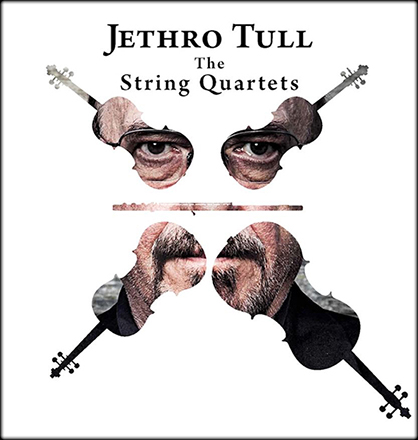
From humble beginnings in the northeastern town of Luton, England to its rightful place in the anthology of rock music, Jethro Tull’s name has come to bare a legacy synonymous with the bands’ uncompromising nature. Amidst the ever-changing lineup and through stylistic choices persevering through the scrutiny of ephemeral trends, the group led by Ian Anderson has made its indelible mark on the genre on its own terms. With Jethro Tull nearing five decades of musical history under its name, frontman and main songwriter Ian Anderson has embarked upon a new musical endeavour, one that combines his rich musical legacy with his love for the classical music repertoire. Recorded in Worcester Cathedral and St Kenelm’s Church in the UK, Jethro Tull - The String Quartets gathers a magnificent set of rearrangements of the bands’ back catalog, performed by the Carducci String Quartet. 

It’s been 3 years since the last release bearing the Jethro Tull name. How did this project come about?

The repertoire of Jethro Tull can be realised and performed in different ways, whether it be in their original form or through reworked arrangements, like in a “concert” setting. This String Quartet project came about because, although I had worked with string quartets before, I had never really done a dedicated album with a string quartet and no rock band instruments. This was looking at the far more poignant, sparsely instrumented classical string quartet with a judicious degree of involvement by me in terms of flute, acoustic guitar or vocals from my end. It was about avoiding the temptation of having bass and drums and electric guitars. We got the sessions on the way in September when my preferred string quartet, the Carducci Quartet, John O’ Hara and I were available for 3 days. 

This current release is listed solely as a “Jethro Tull” record, whereas certain of your solo releases were listed as “Jethro Tull’s Ian Anderson”…
(Laugh) Oh dear, we’re back on the old “Ian Anderson vs. Jethro Tull” story are we? I don’t really need to comment on it. You decide what YOU want to call it. Jethro Tull is a band of some 32 musicians variously involved in the recordings over a period of 49 years. I’m the guy who’s written almost all of the music, produced the records, organised things, the tours… YOU decide what you want to call it (laugh). I have little interest in the marketing and the billing. The music of Jethro Tull is the repertoire, it’s not necessarily about a specific group of musicians. They’ve all been an important part of the band. Some members were involved for only a few months or sometimes a few years. 

Do you see this record as a retrospective record or rather a new chapter for the “band”?
Well it’s not about the “band”. There’s no “band” involved in this. It’s a string quartet and Jethro Tull’s repertoire. It’s like when you come across Beethoven string quartets. It’s not Beethoven playing the violin or cello, it’s his compositions that are being played by string quartets. We’re talking about the repertoire of Jethro Tull here. If you say to me “I love the Beatles”, I don’t think you mean you love John, Paul, George or Ringo. What you really mean is that you love the music of the Beatles. When you look at the historical perspective, when you express admiration or joy and a pleasure of listening, it’s not about the individuals but rather about the music that was created and left behind, which is part of their legacy. So it is for the music of Jethro Tull.

How did the arranging process come about? How did this all come together?
Well I started by looking up my list of songs on my laptop computer. I refer to this file containing over a hundred song titles quite often, namely when I put together a tour or a one-off concert. I went through them and sorted out those who would work in this new context. Some of them didn’t seem to work and others were chosen because I had already done them in a similar context; certain songs already had strings in the original arrangements for instance.

John O’ Hara, our keyboard player, came up with a few suggestions of his own and I came up with a few suggestions that maybe he wasn’t so keen on but seemed to me like more of a challenge. I also didn’t want it to be too “esoteric” or clever, we needed to have a few straightforward songs that aren’t too different from the feel of the original recordings. I tried to mix things up a bit.

Each song had to have a different approach. It’s not a factory production line where you come up with a methodology and apply it to all of the songs. I wanted each song to have a different starting point, a different rationale and a different way of being developed as an alternative to the original performance. Above all, what I wanted to do, was to prove to me first and to our fans second that the elements of music, harmony, melody and rhythm, are the crucial element of any piece of music, and you can preserve them whilst presenting the music in a completely different genre and styling. It’s not beyond the bounds of reason that I could jump on a plane to Nashville, book a studio and embark upon “Jethro’s Best of Country Hits”.I don’t want to do it, I’m not a fan of the country music genre, but I could. Classical music, Folk music, Jazz or Blues or other forms that I do have a greater affinity could also accommodate to my music. It may not ALWAYS work but usually it would. I’ve proved that time and time over the years. I mess around with my own songs and sometimes rearrange them for live stage performances. Some songs have 3 or 4 different arrangements to pick from. I always have to be sure, when I put on a setlist, to remind the band which version we’re playing, or else they might embark upon the wrong arrangement (laugh).

Were there any particular challenging parts when it came to revisiting or re-arranging some parts of your back-catalog?
I occasionally tried to avoid the obvious. Sometimes the violin would carry the melody line that would typically have been sung or played by the flute on the original version. It’s not about me and a string quartet in the background, that was never the idea. I really wanted this to focus on the string quartet. They came first; If there was any “accompaniment”, it would be from me rather than them. 
The first violin usually carries the melody lines and key lines, and the second violin typically constructs the harmonies. The viola has its own solo and pieces along with the cello, supporting it in a more rhythmic fashion. I’d find alternative and counter-melodies that might work a little differently to the harmonies for the second violin and viola. I had to sit and work out some ideas, some of which were worked out at the time of doing the arrangements with John O’ Hara, others were deliberately left until the very end when it came to adding my parts and doing the mixing. 

Can you tell as bit about the choice of location for the recordings?

I was looking for something that had a little more ambience than a sterile contemporary recording studio. I wanted to capture some kind of a feel. I had a concert coming up in support of Worcester Cathedral, one of our great medieval cathedrals and they were kind enough to give me the use of the crypt underneath the main body to record for a day. After searching many churches in the countryside of Southwest England, I found the church that offered the best chance of not being interrupted by either the public or any extraneous noise. Even so, both in the cathedral crypt and in the historic churches in the countryside you will find the occasional aeroplane flying overhead or at a distance, the sound of a train, a truck or just the wind rattling the windows. There were many times where we would be in the middle of the take and we would have to stop because of the noise that was being picked up by the microphones. We’d have to stop, wait for it to go away and start again. We had a few interruptions like that which were frustrating but we ended up with two or three takes of each of the songs to choose from. We got it done on time thankfully, as we didn’t have any “spare time”.

The Jethro Tull repertoire has seen a number of reinterpretations and covers versions. Are there any in particular that struck your attention in particular?
I’ve heard lots of people doing the music, from tribute bands in far away countries through to famous artists like Iron Maiden for instance. My preference is for when someone does it in a completely different way. I think it’s much more interesting if they take a piece of my music and really make it their own, not just using the same arrangements and copying the way I did it. 

I’m much more interested in doing something really radical with it. I’ve heard bits of Jethro Tull music that have been sampled and put into hip-hop records and I’ve heard people do my music where they really deconstruct it and put it back together again. I’m more interested in that, because I think that would be my approach. If you asked me to work out an arrangement for a piece by Iron Maiden, what I would do would sound nothing like original; I would see no point in doing that because they’ve done it much better than I ever could do it in that style.

When somebody else does my music I want to hear it done a different way, just as I would hope that mister Bach would be more interested in hearing me play a couple of his pieces of music in a 
very different to the way he originally wrote them for classical musicians. I could be wrong; maybe Bach would be really angry, pissed off and insulted that I would take his music and change some notes and harmonies. However, my gut feeling is that Bach, along with Beethoven and Mozart for example, who were great improvising musicians, would have maybe been appreciative and understanding of the fact that there are no real absolutes in music. Bach could have been feeling very different one morning and done a piece of music in a different way. In that sense, the way I might hear his piece of music and retranslate it to suit me is what I hope he would be appreciative of. We get bored of hearing the music of Bach, Mozart or Beethoven again and again in the same way in every classical venue. They’re simply performing it the way it was written at the time. If Bach heard me playing one of his pieces, he would at least go “oh! What’s that? That sounds like a bit of my music!”. My gut feeling is he might go along with it, at least for the first couple of minutes.

Speaking of reception: have you noticed an evolution in the reception of Jethro Tull’s music over the years?
I don’t think much changes over the years. It just depends where you’re playing and what you’re doing. If I’m playing outdoors in the summer, the audiences look the same as they did back in 1969, it’s a mixture of people of my age and people a lot younger. If it’s an indoor concert hall, the audience will generally be much older and behave in a much more calm and disciplined way. It’s the same in Germany, Switzerland, Britain the US…
I try to avoid national stereotypes when I think about the audience reaction, and I also try to avoid the stereotypes that we would associate with age-ism. The stereotypes exist and perhaps with some good reason, but I don’t think it’s appropriate to dwell on that and just assume that all young people are a bit more silly and louder whereas older people fall asleep halfway through in their chairs and have to be woken up by their wives to be told it’s time to go to the toilet during the intermission.I think there’s a danger that we create and reinforce these stereotypes unnecessarily. Overall, I wouldn’t say there’s a huge amount of difference. When I cast my mind back to one of our very first concerts in the USA, playing at a Jazz festival in 1969, the audiences there were basically aged from 15 to 60. Jethro Tull’s audience was always quite broad demographically. It’s always been very mixed. 
Interestingly, I was at one of Black Sabbath’s last shows in London at the O2 a few weeks ago, and while I wasn’t surprised to see that the audience was 90% male, I was surprised to see a lot of people in their late 30s. I expected the audience to be people in their 50s or 60s along with some people in their teens and 20s. I was quite surprised to find that missing middle group, as they’re not so often at my concerts. We tend to have the old and the young and they tend to be a full generation apart, with a missing generation in the middle: those who grew up listening to music in the 80s and 90s who wouldn’t have picked up on Jethro Tull. The younger folks look at the history of pop and rock and get excited about the origins of the genre and are more appreciative of the classic rock bands from the 60s or 70s, so it’s not unusual to see them in the audiences, especially in the outdoor shows and in the mediterranean and latin countries. When we do an outdoor show there it seems like everyone in the audience is aged 20, the old folks are all at the back.

What is next for Ian Anderson and Jethro Tull?
We’re starting rehearsals and then recording the first 6 songs for a new studio album for 2018. All of it is written, we just have time to do the first piece of the recording before we head off to Australia and New Zealand on tour. When we get back, we’ll soon head off for the first of 3 US tours this years. Later on this year there will be a few days here and there where I can carry on working on the new album. So that’s the main project at the moment. I also have all of the master tapes from several concerts of the Jethro Tull Rock Opera which we filmed during a few shows last year in Europe. At some point during the year I will attend my attention back to that to piece together a live DVD. It will include 5 new songs which have never been released, which is something some of the fans will find interesting to listen to.

To finish off : could you name one of your favorite albums, movies and books?
It’s a bit of a boring answer I suppose, but one piece that entertains me the most and is the most inspirational is Beethoven’s 9th Symphony. It’s so magnificent, it contains such huge dramatic expression of melody and powerful ensemble playing. It’s the complete Beethoven “album”. It would have been wonderful to have known what the 10th Symphony would have turned out, but as it turned out we’ve only got the 9th. That would probably be my favorite album. Close behind that might be a compilation album of Muddy Waters’ music as recorded live towards the latter part of his performing by Johnny Winter (note: Ian is most likely referring to Muddy "Mississippi" Waters – Live from 1979). Winters recorded some of Muddy Waters’ greatest hits live in the studio and this release is an album I tend back to because it’s the opposite of Ludwig Van Beethoven. However, it has the same swagger, the same overt sexuality that I find in some of Beethoven’s music. There’s something almost a little “cock-rock” about some of the key melody ensemble pieces from Beethoven, it’s a little bit “macho” (laugh).
I suppose one of my favorite books, which is about to be made into a movie again, is by my favorite author John Le Carré. He’s known as the thinking man’s thriller writer. I think his first classic novel of the genre that achieved commercial success is The Spy who Came in from the Cold. It’s a book that really defines the cold war years of the early 60s. In a way, we are moving back to that kind of uneasy status quo, an almost cold-war relationship with Putin’s Russia. I think it’s quite ‘a propos’ that we reexamine the genres of that era. So I guess you could also pick the movie starring Richard Burton and you could pick the book.
Besides that, if I get bored I can always watch my son-in-law in The Walking Dead, which I sometimes tune in to and watch, just to connect to what’s happening in that weird Zombie thriller genre (laugh). When my son-in-law is away making another season of the series, I can always wave at the television screen and say “Hi, are you doing Andy!”.

Special thanks go out to Ian Anderson and HIM Media for making this interview possible!

Jethro Tull / Ian Anderson
Official Website
Facebook
Twitter
Youtube
Instagram
Soundcloud

Sunday, August 21, 2016

The Pineapple Thief - Your Wilderness


Your Wilderness is the kind of prog record that really makes you think. It's not lost in its own pretentious delusions nor is it trying too hard to be something that it isn't. Rather - Your Wilderness is a tasty and cinematic piece of music that captures the imagination and repeatedly reminds us of the power of music. It shows us that The Pineapple Thief are among the great rock bands of our time and their unique brand of soft rock is going to keep you fascinated - coming back time and time again for more ethereal beauty.

I can't help but to be in love with the gentle soundscapes that the band has created here. These songs are powerful, full of virility but also wonderfully subdued. While they certainly are chock full of potent ideas it's the general vibe of Your Wilderness that gets to me. It's the bands ability to touch on concepts that many of their peers would scurry away from and their willingness to take exotic left turns in their songwriting. The Pineapple Thief are more than just a rock band - they are artisans of volume cultivating the sort of music that nerds like me can't help but to sit back, relax and fall in love with. 

The musicianship behind Your Wilderness is thrilling and The Pineapple Thief leave you smiling, in love with the strangely driven sounds that they have cultivated for so long. Your Wilderness is a personal journey and one that lets you find out more about yourself than anything else. It gives you a path and a key and from there asks you to find your own way. I can't help but to love this record, I'm just curious to hear the band grow and use their bombast to its absolute finest and maybe even change the world.

Find them on Facebook!

Wednesday, August 17, 2016

Interview with Matt Page from Dream the Electric Sleep


In an age where the music trends in rock and metal music seems to center around a gold-rush towards any possible angle and interpretation of the term “progressive”, dare I say we’ve reached a point where its significance seems worn off. More than a mere trivial label tagged on to mindful, creative compositional approaches, “progressive” sometimes seems to be losing its edge as it slowly draws towards structural and tonal standardisation. Fortunately, Lexington’s Dream the Electric Sleep serve as an exception to the trend, restoring the thrills brought by music born from truly creative minds. Returning here with a 3rd record under their belt, the band pulls no punches and gives us an album that is bound to thrill rock enthusiasts in search for something new. Borrowing from the likes of Shoegaze, Pop, psychedelic and metal, Dream the Electric Sleep merges its influences on Beneath the Dark Wide Sky and offers us an album that is both accessible and forward-thinking in its approach. Here to answer a few questions on their latest release, I was thrilled to get a hold of Matt Page for a quick interview.

The first thing I noticed in your music is the impressive range of musical influences weaved into one coherent sound. Could you tell us a few words about your musical upbringing (what music you first got into, what got you into first picking up an instrument etc…)
As a band we really work to create a space where each member can bring their diverse influences to the writing process. Since we are all a big part of the writing process it is imperative we be open, generous and supportive of this kind of genre bending experimentation. That being said, the overarching mantra of the writing process is “nothing is sacred”. Though we all bring these different ideas to the table, we all are willing to drop any part or rewrite any part that needs it. In the end it is all about the overall song and as long as we are all happy with that, we move forward to recording it. For me, my earliest influences were Metallica, U2, GNR, Simon and Garfunkel, and Rush. I was probably around 12-14 when I was listening to these things. Of course there were many more but those are the standouts. I never intended to play music. I was an art kid in school but my mom decided to get me an acoustic guitar for my twelfth birthday. I started poking around on it and then one day something just started to click and it was like wildfire spreading. I never looked back!

Last month you released your 3rd full-length record, titled Beneath the Dark Wide Sky. First off, could you give us a quick word about the albums title and album art?
Beneath the Dark Wide Sky is inspired by photographs taken of the Dust Bowl in the 1930’s by American photographer Dorothea Lange. Lange worked for the United States Works Progress Admiration and hoped her photographs could be used to educate the masses (via photo essays in major news publications and magazines) to the poverty and desperate living conditions of thousands of farming families and migratory workers who lived and worked in the drought-struck American Great Plains. Lange believed photographs had the ability to shine an objective light on issues of social justice and environmental degradation and could be used to persuade and motivate social and political change.
Much of what motivated Lange motivates me as the lyricist of the band. How does art inform the way we understand the world we live in and can it motivate us to challenge and change our assumptions? I am not sure there is an easy correlation, but I am very interested in those who try to bridge the gap between art and life.

A Dust Bowl farm - Photo by Dorothea Lange
One of my good friends from graduate school, Nil Karsten (http://www.nilskarsten.com/) is a fantastic collage artist. A couple years ago I saw him give a slide presentation of new work and I thought it was amazing. He had been a long-time supporter of the band and I asked if he would be interested in making some collages for the album cover and he was thrilled by the idea. I sent him some really rough demos and he began sending me collages. He probably sent 15 or 20 of them over a two-month period. When I saw the collage we finally decided to use, I knew it was the one, and the rest of the band agreed. We are so happy with what Nils has contributed to this project. He really captured the feel of what we wanted the album to look and feel like.

This record marks somewhat of a stylistic shift for the band. Was there a particular goal or idea in mind when it came to shaping this album?
We always start with the idea that whatever we write has to feel good to us first, then we can step back and ask if it is the kind of direction we want to move in artistically. Sometimes we write a good song and are happy with it but then after a few weeks, we might get rid of it because it isn’t taking us in the direction we want to go overall. For this album, we knew wanted it to be a little tighter and more deliberate. We felt the past albums were a little out of our grip, like we couldn’t hold onto the thing we were after. This time we really tried to keep a sharper focus and try to capture more of the bombastic nature of the band. We are a loud band with a little edge and we wanted it to feel like that. More focused on the performances and capturing the sonic nature of what we do.

For this record you decided to call upon Nick Raskulinecz to produce the record. What first got you familiar with his work and which aspect of his work drew you towards working with him?
Nicks albums are big and bombastic and like I mentioned in the previous answer, that was something we wanted to bring to the sound. We weren’t sure he would work with a smaller, less known band like us, but he was really into the demos and the sounds we were making and after spending a weekend with him we all agreed it was a great fit. We all liked we he had done on the Ghost album he produced as well as with Big Wreck. It just seemed like there might be a cool chemistry there and we were thrilled to get in a studio to see what would happen!

Being a sucker for all dream-related matters myself, could you tell us about one of your most noteworthy dreams?
I have reoccurring dreams of tornados. I have had them my whole life. They are vivid and wide open. I can feel the wind beating down and in the distance I always see a funnel dropping from the sky. I am always outside watching as it barrels towards me. In my dream I am always looking for a ditch or low-lying land. I fall to the ground and grab the grass with my hands. Often the tornado takes me and I forget everything after that. As I have gotten older the tornado takes me less and the dream will continue on. I know it is about overwhelming fear, the unknown, the faceless onslaught of things out of my control. Maybe I have learned to accept much of what happens in waking life is beyond my control and the tornado passes like all bad weather now. 

To finish off : could you each name one of your favorite albums, movies and books?
Chris:
Album: Times of Grace by Neurosis
Movie: Papillon by Franklin J. Schaffner
Book: Frankenstein or the Modern Prometheus by Mary Shelley

Joey:
Album: Superunknown by Soundgarden
Movie: Fear and Loathing In Las Vegas
Book: The Exorcist by William Peter Blatty

Matt:
Album: Pet Sounds by the Beach Boys
Movie: The Shining by Stanley Kubrick
Book: Camera Lucida by Roland Barthes

Interview by Robin ONO

A huge thank you goes out to the band as well as to the staff at HIM Media for making this interview possible!

Be sure to check out the band via their website and social media pages listed below

Dream the Electric Sleep
Facebook:
Official Website
Instagram
Twitter
Youtube

Thursday, February 25, 2016

Obsidian Kingdom - A Year With No Summer


Season of Mist have regularly impressed in recent months with their willingness to put out some truly weird and unique music. Such is the case with one of their latest offerings - the truly fascinating A Year With No Summer. The weird and chaotic sounds of the latest Obsidian Kingdom record are certainly challenging (I mean, they do have a song about Wassily Kandinsky after all) but they are also strangely triumphant. They speak to what this and has the potential to become and shows us how far they have journeyed.

I think what strikes me about A Year With No Summer is its ability to fuse a myriad of interesting musical ideas into something almost transcendent. While yes, there is a huge Pink Floyd and general prog influence on the record, A Year With No Summer also sees the touches of extreme metal that have defined previous work from the band, as well as a few other seemingly disparate musical ideas being united under the same banner. So yes, this is a fairly dense listen, and yes, it's primarily for music nerds, but if you are in that much maligned group I think you are going to find that A Year With No Summer is a cut above most other experimental rock.

Despite everything Obsidian Kingdom still maintain a few ties to 'real music' making this not as intimidating as many other things Season of Mist will put out this year. Yet, with its weird drones and spaced out vocals there are definitely moments on A Year With No Summer that will get the casual listener asking, 'Is this even music?' Losing yourself in the reassuring throb and finding peace in the otherworldly sounds at hand though is surprisingly easy and the more I come back, the more I love it. Obsidian Kingdom are going to open your mind whether you like it or not, so why not just sit back and enjoy the ride?

Find them on Facebook!
https://www.facebook.com/obsidiankingdom/?fref=ts

Thursday, November 26, 2015

Coheed and Cambria - The Color before the Sun

Coheed and Cambria is a band I can quite surely qualify as an instant crush at first listen. Ever since having heard the first few minutes of “Domino the Destitute” off of The Afterman : Ascension, I’ve frequently and consistently found myself having a hard time laying off of their extensive catalog. It’s now been 2 years since the release of The Afterman: Descension and Coheed and Cambria are back with a new record titled The Color before the Sun, their first to break away from the band’s lineage of concept albums centered around the Armory Wars universe and storyline.

It wouldn’t be inappropriate to say that TCBTS marks a more direct and less ambitious approach to writing from the behalf of the band, though that is not to say that this album marks any sort of radical stylistic shift for Coheed and Cambria. It is thus not so much in the way of the bands’ instantly recognisable progressive pop-rock formula than in the overall pacing and flow of the album that we may notice somewhat of a break in the band's’ tradition. Rest assured for those fans out there, Claudio Sanchez’ serenading voice and the band's’ dynamic and theatrical compositions are still present on this record, most notably illustrated by the epic single Here to Mars. The album also has a fair share of Coheed and Cambria's’ upbeat and straightforward tracks such as with the chiming You’ve got spirit, kid or the sunny and irresistibly catchy pop-punk opener to the album Island. The track Atlas that was first introduced as an acoustic track on the band's’ youtube page is present on the album, though rearranged revamped as a overdriven rock song that fails to captivate me as much as its first form.  Overall, all of the elements of a solid Coheed and Cambria record are present on TCBTS, however it seems to be the pacing and overall balance in the track list that seems to be lacking for this record. Though the production and performances on this album are top notch as always, I couldn’t help but feel as though some of the songs were missing the sense of “direction” that seems to guide most Coheed and Cambria compositions, be it through their catchier songs or through their epic and compositionally ambitious tracks.

While The Color before the Sun may serve as an introduction to Coheed and Cambria in their most “radio-friendly” format for some, as an avid fan of the band I can’t help but feel a sense of redundancy upon hearing some of the tracks on the album.  As harsh as it may seem, while there isn’t so much as anything inherently bad in TCBTS, I doubt the album will leave a lasting impression on its audience, it’s fair quality being greatly overshadowed by the band's’ extensive back catalog.

Coheed & Cambria
Official Website
Facebook
Twitter

Friday, August 21, 2015

Pseudo/Sentai - Bansheeface


It's rare that I really listen to weird proggy stuff these days - but every once in a while I stumble into something so exceptional that I have to give it a write up. Pseudo/Sentai's new record Bansheeface is one such record. Though I wasn't previously familiar with this artists work I met the mastermind behind the project last week at a show and I have to say - now I have fallen deeply in love. There is no denying the unending power of Pseudo/Sentai and it speaks to the bands power to create glorious sounds that carry forward and speak to the soul.

There is a very distinct sense of artistry on Bansheeface that speaks to the brilliance behind the music. The audacity of these tracks is stunning. They bring in a Faith No More type weirdness alongsides Buckethead-esque guitar lines that feel off kilter and brilliant. The bass playing courtesy of Bangladeafy's John Ehlers (Who has rapidly become one of my favorite bassists in the world) is top notch too and helps to establish a stunning bottom end. Bring in the fact that dudes like the great Colin Marston were involved in this project and it becomes hard to deny that Pseudo/Sentai is avant garde metal brilliance for the twenty first century.

Bansheeface is one of those records that I sincerely hope breaks out of the metal underground and gets the recognition it deserves. It's such a massive epic involving a clearly enormous travail - transcending genre boundaries and instead speaking to a more profound reality that everyone can relate too - even if the music might initially be alienating. The point is - if you can crack the surface of Bansheeface then it is well worth it - this is music taken to a strange new level and digging into it will never leave me bored.

Find them on Facebook!
https://www.facebook.com/PseudoSentai?fref=ts

Wednesday, July 29, 2015

Agent Fresco - Destrier


One thing starting this blog has really turned me on to has been the ability of music to take you on a journey. The sonic wonderment that defines Agent Frescos new record Destrier is the perfect example of this, coming in on a monolithic and eerie drone and ebbing and flowing until the records eventual conclusion with the beautifully crafted Mono No Aware. Along the way you are treated to moments of technical ecstasy, shocking brutality and delicate prettiness. It's the kind of bizarre polymerization that makes a record worth multiple listens.

The thing is, Agent Fresco are extremely talented musicians, a fact made clear from even just the first song on the record. However, unlike many of their peers they don't take advantage of this to write inaccessible music. Instead they are able to refine far more unique, artsy and vivid soundscapes that have helped them to establish an extremely iconoclastic sound that will have you dissecting the aural paradise that these guys have created, a task that could keep you occupied for weeks on end. Despite the vast complexities of Destrier there is still something distinctly listenable to them that keeps the whole thing moving forward with a potent energy.

SPV Records has always done a great job of signing truly unique bands who inspire listeners and come from a diverse background of styles, Agent Fresco are merely another example of that. Beyond that though they take musical beauty to a new level putting avant garde ideals alongside pop ones and making something truly special. The way that these guys have been able to find a unique sound in a crowded scene is endlessly interesting to me and Destrier is the kind of record a band can base their career off of.

Find them on Facebook!

Saturday, June 13, 2015

Dreadnought - Bridging Realms


So what happens if you take artsy doom metal and add a layer of prog? Such seems to be the guiding question behind Dreadnought's monolithic and awe inspiring Bridging Realms which uses epic soundscapes and fantastic songwriting to create doom metal that would appeal to music majors. Gloriously intelligent and joyously refined this is the sort of incredibly dense and thought provoking doom metal that forces you to spin the record again and again in desperate hope that in time will come a better understanding of what the music means.

The instrumentation on Bridging Realms defies words, there is a variety of non-rock instruments implemented which is a big part of what makes Dreadnought so darned interesting, and beyond that dare I say Subrosa-y? The classical elements employed on tracks like Odyssey give the whole thing an important sense of gravitas. The vocals on this record are spot on, interweaving powerful growls with intricate female vocal harmonies. On top of that Dreadnought have figured out how to perfectly balance dark and light, finding a sense of hope even in the most bleak moments that the music carries out. The journey that you find yourself enjoying on Bridging Realms forces you to reconsider your place in reality and leaves you with a smile on your face.

Bridging Realms has rapidly become one of my favorite heavy records of the year and I am so glad that Cat Jones saw fit to send it back around. The thing is, this is the sort of record that needs coverage because it is advancing the genre in a way that none of its peers are even dreaming of. Bridging Realms brings in a little bit of everything to its gloriously iconoclastic sound. I've fallen in love and I see myself vibing out to this for days to come. Dreadnought have crafted a masterwork and now we need to see them grow.

Find them on Facebook!
https://www.facebook.com/dreadnoughtband

Sunday, May 31, 2015

Lothloryen - Principles Of A Past Tomorrow


The Brazilian has long been one of the best in the world, but to my knowledge it has only been fairly recently that more progressive elements have been fully embraced by the scene. Among the best in these Brazilian power metal and prog bands is Lothloryen who have an anthemic sound filled with all sorts of fancy frills that helps to make their latest masterwork Principles Of A Past Tomorrow a prog metal gem that is worth many a spin. Twelve tracks of brilliantly nerdy heavy music, Lothloryen have created something truly exciting.

The thing is Lothloryen have figured out how to use cerebral prog ideas with fanciful solos and sampling Stephen Hawking, while simultaneously using power metal concepts to keep things hooky and fun. Principles Of A Past Tomorrow shows the band harnessing these notions to create a surprisingly addictive record. It's hard not to pump your fist to these tracks, but they will also dazzle you with their technicality. Lothloryen are clearly master songwriters and it's pure pleasure to dig into the high art that they have been able to refine on Principles Of A Past Tomorrow. It evidences the bands ability to look to the future of prog and help guide us there.

What I'm trying to say is that Lothloryen know how to scoop up the listener and take them on a veritable journey. There highly polished sound is the product of a group of truly top flight musicians delivering material at the top of their game. Principles Of A Past Tomorrow is endlessly replayable and will make you smile with its hooks and occasionally cheesy moments. The thing is, Lothloryen understand the simple joy of progressive metal and they simply want to reach out and share that with the world.

Find them on Facebook!
https://www.facebook.com/lothloryenofficial?fref=ts

Friday, May 8, 2015

My Sleeping Karma - Moksha


Remember back in like, 2012 or so when instrumental heavy music was all the rage? Whatever happened to those bands? I hope at least some of them have started listening to My Sleeping Karma a band who fuse Eastern mysticism with progressive rock to create something utterly incredible. There is an otherworldly might in the sounds of My Sleeping Karma that have rapidly won them a place in my heart. Iconoclastic and unafraid to craft their own path Moksha sees stellar compositions coming into capture the listeners imagination and guide them into a magical soundworld.

The think that I think makes Moksha so interesting is the sense of forward momentum that these songs have. It's really hard to deny the impetus that these compositions have, their teleological approach is entrancing to say the least. Interestingly, the band choose to put interludes between every set of tracks. Upon first listen this seemed a little bit extraneous, yet as I got a deeper understanding of the record I realized that these interludes actually provide the listener a much needed break from the understated intensity of the main tracks. In some ways it actually reminds me of Swans, until the interludes kick in you don't realize the spiritual heaviness of what you're listening too and it makes the record that much more powerful.

It's easy to find yourself lost in Moksha, in fact I think that's kind of the point. A band who leave you scraping your jaw off the floor Moksha shows that My Sleeping Karma have truly found themselves. There is something meditative about this record, it opens up the third eye and forces you to consider strange new realities that I'm not sure I'm always ready to face. My Sleeping Karma are a truly exciting musical force who defy genre definitions in order to craft something that goes straight into the soul.

Find them on Facebook!

Thursday, May 7, 2015

Godbless Thee, Mooseheart - The Prison Pt. II


Following up the narrative of the previous full-length effort, Godbless Thee, Mooseheart mark their return with the second installment of The Prison. For those unfamiliar with this project, Godbless Thee, Mooseheart is a rock band from Laguna Hills, California fronted by singer-songwriter and multi-instrumentalist Brent Vallefuoco, whom some of you might be familiar with from his position as lead guitarist for Cinematic black metal act Xanthochroid (Quick anecdote: lead vocalist and keyboardist Sam Meador of Xanthochroid contributes as a keyboardist on the album). With this current project, the band borrows elements from a wide array of musical styles such as Post-rock, Shoegaze, Folk,  Midwestern Emo and even Metal within a progressive rock framework to deliver a distinct and eclectic sound carrying a strong sense of experimentation. After nearly 3 years since the previous full-length effort, The Prison, Pt.II continues and concludes the story that follows a boy as he grows up and learns to find his own path in life.

With this current album, Brent's eclectic range of musical influences are yet again on full display and carefully blended into a coherent whole. Both the narration as well as the compositions are marked by a strong sense of progression, illustrating the characters' moods and phases along his introspective journey. Each song on this LP tweaks around and draws from various musical backgrounds while still retaining its core Godbless Thee, Mooseheart DNA. From the magnificent sounds of Perdu, the post-rock inspired build ups up to the tortured, chaotic yet operatic The Monster Overlooking Everything Else, this album also covers a lot of different moods and states of mind.
The album starts off with the peaceful acoustic sounds of Mountain Song, which reintroduces the listener into the story arc before swelling up and transitioning into the next song,  Perdu, one of the most straightforward progressive rock tracks off the album.
One of the great things on this track which we'll come to find on a great deal of the LP is the songs' tendency to build up within a certain stylistic framework before taking an unexpected turn and evolving into something else by the time the song reaches its end. For this reason, The Prison Pt.II is an album that seems to constantly evolve and never lingers too long in one place. The album manages to keep your utmost attention all the way throughout its runtime thanks to its constant sonic exploration fitted within a remarkably paced set of songs.
The whole album is characterized by a strong, ever present sense of bittersweet melancholia, supported by hazy, dreamy, shoegaze-inspired effects and crystalline sonicscapes and ambiences throughout the album. Thanks to this meticulous attention to detail and atmosphere, we get a profound sense of depth and immersion, as if we were sucked into the protagonists' unconscious and presented with Polaroid pictures of his childhood memories floating and slowly drifting away into the distance.

Through its' honest and deeply personal lyrics, its' oneiric soundscapes and it's down-to-earth, heart-to-heart delivery, Godbless Thee Mooseheart delivers a highly introspective full-length effort that is sure to strike a chord with your inner childhood memories while at the same time baffling you with its' compositional ambition and grandeur. From its' catchy, bittersweet melodies to its' heartwrenching moments, The Prison pt.II will draw you in and captivate you with its nuanced display of personality, innovation and soulfulness.

Robin

Godbless thee Mooseheart – The Prison, Pt.II
To be released on July 21st (digital and physical pre-orders already available through bandcamp)


Saturday, May 2, 2015

Haken, Next To None, Tungsten and In The Presence of Wolves in Philadelphia


Rolling up to the venue two hours early to load in your friends band is honestly one of the best ways to experience live music. Not only do you get the satisfaction of helping out a friend but you also get a chance to watch the night evolve If you hang out in a venue for seven hours you get a sense of who's a regular, whose trying to break into the scene, and, at this kind of show, whose a prog dork. And let me just say, the prog dorks were out in full force last night at the Bullshooters Saloon and it was actually kind of glorious to watch them try so hard to look cool. The point being, the bands were rad, the crowd primarily nerds, and some of the memories timeless.

First up were the Rush-inspired In The Presence of Wolves. There sound was surprisingly heavy and they were a lot of fun to watch play. The band clearly has a good time up on stage, with lots of stage moves being thrown ad heads being whipped around. There is something distinctly charming about this band, through their multilayered sound and strong songwriting they are able to entrance the listener with something fairly different than what most Philly bands offer. They were a blast to watch and seem to be on the rise in what is traditionally a very tough scene to break in to.

Tungsten took the stage next, and while their six piece lineup had a hard time fitting on stage they were a lot of fun to watch. Replacement keyboardist Renée fit in perfectly to the finely crafted and exquisitely honed sounds that Tungsten are known for. Though the band had one or two minor mixing issues they put on a highly entertaining show with flawless execution. The bands vocalist, the indomitable Titi was charming as usual, her powerful voice ringing out over the crowd and entrapping them in an exquisitely crafted soundworld that I just want to visit again and again. These guys have a lot of really exciting ideas, and judging by how their new song went down I feel that soon they'll really be going places.

I wasn't sure what to expect from Next To None, sure they're all like 14, but their drummer is Mike Portnoy's son and they're still a touring band. There's got to be at least some level of tightness and musical interest going on here right? I was actually pretty impressed with the bands entire presentation and music. They seemed distinctly aware of their own limitations and managed to play some very solid metalcore that had a couple unique twists of its own. Max Portnoy's drumming is fucking phenomenal too, even if Next To None doesn't work out, he certainly already has a career lined up for himself as a session musician if nothing else. The band had a fun youthful stage presence and it was hard not to be charmed by their youth, as they closed out, I couldn't help but smile at this next generation act who threaten to one day break the mainstream.

And finally it was time for the almighty Haken (Sounds like bacon, as evidenced by their Kevin Bacon/Haken crossover t-shirts. Despite not having multi-instrumentalist Richard Henshall they put on a great show and mnaged to build on the sounds they have on the record. Though they did drag on a little bit towards the end they were still abe to mix in some more classic tracks to keep things interesting. One thing that really struck me about these guys is that even though I haven't really listened to their music in a couple of years I still recognized most of the songs. Given the amount of music I listen too on a daily basis that's really saying something. The point being, these guys, though their presentation is a little corny (Lots of hand waving and the like) these guys are a lot of fun to watch and seem destined to be able to have much greater success in America as time goes on..


As the night closed after Haken's two hour (!) set, I could'nt help but smile at all that had ensued. Sure, Haken played for a realy long time, but in a lot of ways it was worth it. Theband ha sa very deep discography that is easy to dig in to. Beyond that Tungsten and In The Presence of Wolves porudly repped their scene and gave evidence that Philly prog will never die. With the next generation also very preset at the show in the form of Next To None it seemed like this was one of those nights that encapsulated the love, majesty, and simple joy of progressive music.

Find the bands on Facebook!