Chuck Schuldiner Project

Showing posts with label classical. Show all posts

Monday, March 20, 2017

Interview with Ian Anderson (Jethro Tull)


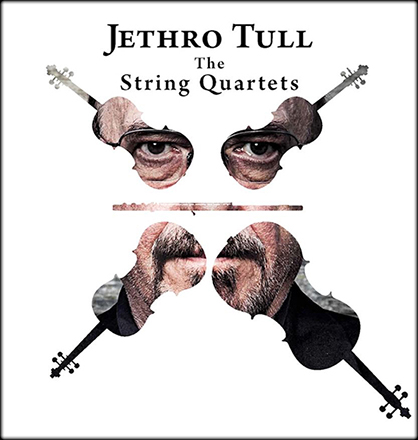
From humble beginnings in the northeastern town of Luton, England to its rightful place in the anthology of rock music, Jethro Tull’s name has come to bare a legacy synonymous with the bands’ uncompromising nature. Amidst the ever-changing lineup and through stylistic choices persevering through the scrutiny of ephemeral trends, the group led by Ian Anderson has made its indelible mark on the genre on its own terms. With Jethro Tull nearing five decades of musical history under its name, frontman and main songwriter Ian Anderson has embarked upon a new musical endeavour, one that combines his rich musical legacy with his love for the classical music repertoire. Recorded in Worcester Cathedral and St Kenelm’s Church in the UK, Jethro Tull - The String Quartets gathers a magnificent set of rearrangements of the bands’ back catalog, performed by the Carducci String Quartet. 

It’s been 3 years since the last release bearing the Jethro Tull name. How did this project come about?

The repertoire of Jethro Tull can be realised and performed in different ways, whether it be in their original form or through reworked arrangements, like in a “concert” setting. This String Quartet project came about because, although I had worked with string quartets before, I had never really done a dedicated album with a string quartet and no rock band instruments. This was looking at the far more poignant, sparsely instrumented classical string quartet with a judicious degree of involvement by me in terms of flute, acoustic guitar or vocals from my end. It was about avoiding the temptation of having bass and drums and electric guitars. We got the sessions on the way in September when my preferred string quartet, the Carducci Quartet, John O’ Hara and I were available for 3 days. 

This current release is listed solely as a “Jethro Tull” record, whereas certain of your solo releases were listed as “Jethro Tull’s Ian Anderson”…
(Laugh) Oh dear, we’re back on the old “Ian Anderson vs. Jethro Tull” story are we? I don’t really need to comment on it. You decide what YOU want to call it. Jethro Tull is a band of some 32 musicians variously involved in the recordings over a period of 49 years. I’m the guy who’s written almost all of the music, produced the records, organised things, the tours… YOU decide what you want to call it (laugh). I have little interest in the marketing and the billing. The music of Jethro Tull is the repertoire, it’s not necessarily about a specific group of musicians. They’ve all been an important part of the band. Some members were involved for only a few months or sometimes a few years. 

Do you see this record as a retrospective record or rather a new chapter for the “band”?
Well it’s not about the “band”. There’s no “band” involved in this. It’s a string quartet and Jethro Tull’s repertoire. It’s like when you come across Beethoven string quartets. It’s not Beethoven playing the violin or cello, it’s his compositions that are being played by string quartets. We’re talking about the repertoire of Jethro Tull here. If you say to me “I love the Beatles”, I don’t think you mean you love John, Paul, George or Ringo. What you really mean is that you love the music of the Beatles. When you look at the historical perspective, when you express admiration or joy and a pleasure of listening, it’s not about the individuals but rather about the music that was created and left behind, which is part of their legacy. So it is for the music of Jethro Tull.

How did the arranging process come about? How did this all come together?
Well I started by looking up my list of songs on my laptop computer. I refer to this file containing over a hundred song titles quite often, namely when I put together a tour or a one-off concert. I went through them and sorted out those who would work in this new context. Some of them didn’t seem to work and others were chosen because I had already done them in a similar context; certain songs already had strings in the original arrangements for instance.

John O’ Hara, our keyboard player, came up with a few suggestions of his own and I came up with a few suggestions that maybe he wasn’t so keen on but seemed to me like more of a challenge. I also didn’t want it to be too “esoteric” or clever, we needed to have a few straightforward songs that aren’t too different from the feel of the original recordings. I tried to mix things up a bit.

Each song had to have a different approach. It’s not a factory production line where you come up with a methodology and apply it to all of the songs. I wanted each song to have a different starting point, a different rationale and a different way of being developed as an alternative to the original performance. Above all, what I wanted to do, was to prove to me first and to our fans second that the elements of music, harmony, melody and rhythm, are the crucial element of any piece of music, and you can preserve them whilst presenting the music in a completely different genre and styling. It’s not beyond the bounds of reason that I could jump on a plane to Nashville, book a studio and embark upon “Jethro’s Best of Country Hits”.I don’t want to do it, I’m not a fan of the country music genre, but I could. Classical music, Folk music, Jazz or Blues or other forms that I do have a greater affinity could also accommodate to my music. It may not ALWAYS work but usually it would. I’ve proved that time and time over the years. I mess around with my own songs and sometimes rearrange them for live stage performances. Some songs have 3 or 4 different arrangements to pick from. I always have to be sure, when I put on a setlist, to remind the band which version we’re playing, or else they might embark upon the wrong arrangement (laugh).

Were there any particular challenging parts when it came to revisiting or re-arranging some parts of your back-catalog?
I occasionally tried to avoid the obvious. Sometimes the violin would carry the melody line that would typically have been sung or played by the flute on the original version. It’s not about me and a string quartet in the background, that was never the idea. I really wanted this to focus on the string quartet. They came first; If there was any “accompaniment”, it would be from me rather than them. 
The first violin usually carries the melody lines and key lines, and the second violin typically constructs the harmonies. The viola has its own solo and pieces along with the cello, supporting it in a more rhythmic fashion. I’d find alternative and counter-melodies that might work a little differently to the harmonies for the second violin and viola. I had to sit and work out some ideas, some of which were worked out at the time of doing the arrangements with John O’ Hara, others were deliberately left until the very end when it came to adding my parts and doing the mixing. 

Can you tell as bit about the choice of location for the recordings?

I was looking for something that had a little more ambience than a sterile contemporary recording studio. I wanted to capture some kind of a feel. I had a concert coming up in support of Worcester Cathedral, one of our great medieval cathedrals and they were kind enough to give me the use of the crypt underneath the main body to record for a day. After searching many churches in the countryside of Southwest England, I found the church that offered the best chance of not being interrupted by either the public or any extraneous noise. Even so, both in the cathedral crypt and in the historic churches in the countryside you will find the occasional aeroplane flying overhead or at a distance, the sound of a train, a truck or just the wind rattling the windows. There were many times where we would be in the middle of the take and we would have to stop because of the noise that was being picked up by the microphones. We’d have to stop, wait for it to go away and start again. We had a few interruptions like that which were frustrating but we ended up with two or three takes of each of the songs to choose from. We got it done on time thankfully, as we didn’t have any “spare time”.

The Jethro Tull repertoire has seen a number of reinterpretations and covers versions. Are there any in particular that struck your attention in particular?
I’ve heard lots of people doing the music, from tribute bands in far away countries through to famous artists like Iron Maiden for instance. My preference is for when someone does it in a completely different way. I think it’s much more interesting if they take a piece of my music and really make it their own, not just using the same arrangements and copying the way I did it. 

I’m much more interested in doing something really radical with it. I’ve heard bits of Jethro Tull music that have been sampled and put into hip-hop records and I’ve heard people do my music where they really deconstruct it and put it back together again. I’m more interested in that, because I think that would be my approach. If you asked me to work out an arrangement for a piece by Iron Maiden, what I would do would sound nothing like original; I would see no point in doing that because they’ve done it much better than I ever could do it in that style.

When somebody else does my music I want to hear it done a different way, just as I would hope that mister Bach would be more interested in hearing me play a couple of his pieces of music in a 
very different to the way he originally wrote them for classical musicians. I could be wrong; maybe Bach would be really angry, pissed off and insulted that I would take his music and change some notes and harmonies. However, my gut feeling is that Bach, along with Beethoven and Mozart for example, who were great improvising musicians, would have maybe been appreciative and understanding of the fact that there are no real absolutes in music. Bach could have been feeling very different one morning and done a piece of music in a different way. In that sense, the way I might hear his piece of music and retranslate it to suit me is what I hope he would be appreciative of. We get bored of hearing the music of Bach, Mozart or Beethoven again and again in the same way in every classical venue. They’re simply performing it the way it was written at the time. If Bach heard me playing one of his pieces, he would at least go “oh! What’s that? That sounds like a bit of my music!”. My gut feeling is he might go along with it, at least for the first couple of minutes.

Speaking of reception: have you noticed an evolution in the reception of Jethro Tull’s music over the years?
I don’t think much changes over the years. It just depends where you’re playing and what you’re doing. If I’m playing outdoors in the summer, the audiences look the same as they did back in 1969, it’s a mixture of people of my age and people a lot younger. If it’s an indoor concert hall, the audience will generally be much older and behave in a much more calm and disciplined way. It’s the same in Germany, Switzerland, Britain the US…
I try to avoid national stereotypes when I think about the audience reaction, and I also try to avoid the stereotypes that we would associate with age-ism. The stereotypes exist and perhaps with some good reason, but I don’t think it’s appropriate to dwell on that and just assume that all young people are a bit more silly and louder whereas older people fall asleep halfway through in their chairs and have to be woken up by their wives to be told it’s time to go to the toilet during the intermission.I think there’s a danger that we create and reinforce these stereotypes unnecessarily. Overall, I wouldn’t say there’s a huge amount of difference. When I cast my mind back to one of our very first concerts in the USA, playing at a Jazz festival in 1969, the audiences there were basically aged from 15 to 60. Jethro Tull’s audience was always quite broad demographically. It’s always been very mixed. 
Interestingly, I was at one of Black Sabbath’s last shows in London at the O2 a few weeks ago, and while I wasn’t surprised to see that the audience was 90% male, I was surprised to see a lot of people in their late 30s. I expected the audience to be people in their 50s or 60s along with some people in their teens and 20s. I was quite surprised to find that missing middle group, as they’re not so often at my concerts. We tend to have the old and the young and they tend to be a full generation apart, with a missing generation in the middle: those who grew up listening to music in the 80s and 90s who wouldn’t have picked up on Jethro Tull. The younger folks look at the history of pop and rock and get excited about the origins of the genre and are more appreciative of the classic rock bands from the 60s or 70s, so it’s not unusual to see them in the audiences, especially in the outdoor shows and in the mediterranean and latin countries. When we do an outdoor show there it seems like everyone in the audience is aged 20, the old folks are all at the back.

What is next for Ian Anderson and Jethro Tull?
We’re starting rehearsals and then recording the first 6 songs for a new studio album for 2018. All of it is written, we just have time to do the first piece of the recording before we head off to Australia and New Zealand on tour. When we get back, we’ll soon head off for the first of 3 US tours this years. Later on this year there will be a few days here and there where I can carry on working on the new album. So that’s the main project at the moment. I also have all of the master tapes from several concerts of the Jethro Tull Rock Opera which we filmed during a few shows last year in Europe. At some point during the year I will attend my attention back to that to piece together a live DVD. It will include 5 new songs which have never been released, which is something some of the fans will find interesting to listen to.

To finish off : could you name one of your favorite albums, movies and books?
It’s a bit of a boring answer I suppose, but one piece that entertains me the most and is the most inspirational is Beethoven’s 9th Symphony. It’s so magnificent, it contains such huge dramatic expression of melody and powerful ensemble playing. It’s the complete Beethoven “album”. It would have been wonderful to have known what the 10th Symphony would have turned out, but as it turned out we’ve only got the 9th. That would probably be my favorite album. Close behind that might be a compilation album of Muddy Waters’ music as recorded live towards the latter part of his performing by Johnny Winter (note: Ian is most likely referring to Muddy "Mississippi" Waters – Live from 1979). Winters recorded some of Muddy Waters’ greatest hits live in the studio and this release is an album I tend back to because it’s the opposite of Ludwig Van Beethoven. However, it has the same swagger, the same overt sexuality that I find in some of Beethoven’s music. There’s something almost a little “cock-rock” about some of the key melody ensemble pieces from Beethoven, it’s a little bit “macho” (laugh).
I suppose one of my favorite books, which is about to be made into a movie again, is by my favorite author John Le CarrĂ©. He’s known as the thinking man’s thriller writer. I think his first classic novel of the genre that achieved commercial success is The Spy who Came in from the Cold. It’s a book that really defines the cold war years of the early 60s. In a way, we are moving back to that kind of uneasy status quo, an almost cold-war relationship with Putin’s Russia. I think it’s quite ‘a propos’ that we reexamine the genres of that era. So I guess you could also pick the movie starring Richard Burton and you could pick the book.
Besides that, if I get bored I can always watch my son-in-law in The Walking Dead, which I sometimes tune in to and watch, just to connect to what’s happening in that weird Zombie thriller genre (laugh). When my son-in-law is away making another season of the series, I can always wave at the television screen and say “Hi, are you doing Andy!”.

Special thanks go out to Ian Anderson and HIM Media for making this interview possible!

Jethro Tull / Ian Anderson
Official Website
Facebook
Twitter
Youtube
Instagram
Soundcloud

Friday, March 8, 2013

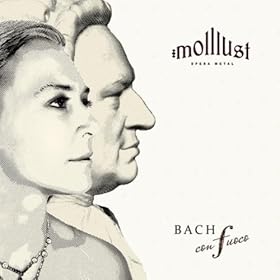
Molllust-Bach Con Fuoco


I have always loved the bombast of Bach. His music is filled with twists and turns and is very influential in the world of heavy metal. So what better way to celebrate Bach's bombast and virtuosic work than by having a metal band re-arrange it? That is exactly what Mollust seek to do on their latest EP Bach Con Fuoco. It is a tribute to the masterful music of the great Johann Sebastian Bach himself. their musical artistry has seemingly reached its zenith as they take these baroque masterpieces to a whole new level.

The arrangements are not heavy handed at all, instead the use of metal instruments is very tasteful and keeps the spirit of the music. I really like how the guitars and keys work in tandem to craft Bachs intricate melodies. Meanwhile the vocals give credit to the original spirit of Bach while adding the operatic quality that defines Molllusts sound. Bach Con Fuoco is a work full of promise and hope for the symphonic metal genre. In brief, Molllust manages to make the songs very much their own while paying respect to one of the greatest musical masters of all time.

To conclude, Bach Con Fuoco is a beautiful piece of classical artistry that makes for some very intelligent and majestic metal. It pays full tribute to one of the most influential musicians of the second millennium. Clearly the work of virtuoso musicians who know how to create some wonderful work that will surely stand the test of time Mollust continues to drive their music forward and prove that classical music and metal really aren't that far apart at all!

Find them on Facebook!
https://www.facebook.com/molllust?fref=ts


Saturday, July 28, 2012

Interview with Peter Tomis of Bloodmoon

First of all, apologies for no posts yesterday... don't expect any tomorrow, the hotel I am in promised wifi but they lied :C
 So I must see the wonders of Amsterdam and not post on two guys. I am sorry

.

Anyway..
Bloodmoon is an up and coming black metal band who are VERY kvlt. I got the chance to interview their singer/guitarist Peter Tomis recently. Here is the transcription.

Also, be sure to like their facebook page HERE


So, Peter, can you introduce Bloodmoon?

We're a 3 piece band from San Luis Obispo California, we like all stuff heavy. We just play whatever sounds good to us. We our art looks kind of black metal. But if a riff isn't very black metal we'll still use it. I play guitar and vocals. We have Patrick Mullholland on bass. And then Jason Goldie plays drums and does backing vocals for us.

Can you give us a brief history of the band?

Orginially I had been a musician in my area for years doing little bads with my friends. As they all started moving away or went to other interests. I was left looking trying to configure a band because I had so many songs I was trying to get out of there. And just as I was about losing faith I started working a telemarketing job. My manager ended up seeing that I was wearing a Burning Witch shirt and immediately recognized the Southern Lord logo on the side and he said “Oh you play music, do you want to come with me to jam with this other guy tonight.” I went and jammed with them that night and everything worked out amazingly. There was an instant chemistry and we knew we would be able to do a lot of stuff together. From then on we decided to push forward and do whatever we could. They learned a few songs that I had written and we started modifying them with a few parts we came up with on our own. We still didn't have a name yet, but we had a list of names. We had the list going and we really liked the name Bloodmoon but we where really kind of unsure. There where a couple of other bands named that and they really didn't do much. Then we heard the news that there would be the first rare Bloodmoon caused by an eclipse in a really long time. We took that as a sign that maybe we needed to take on that name. So we started doing that, just playing shows whenever and wherever possible. We spent some time trying to record our demo ourselves but we weren't getting the results we wanted. We wanted people to take us seriously we wanted to have something that was at least decent to show to people. So late last year we went into the studio and started recording and we did Orenda. We're coming up on about 4 years as a band now.

Who are the big influences on Bloodmoon?

For myself I have a lot of big influences. My biggest influence in music over my entire life is Tony Iommi.the first Black Sabbath record that my dad played for me when I was a little kid I just wnet nuts for it and I loved it. So as a guitarist I really love that. Then when I was about 12 my friend got me really into Opeth. I really identified with it. I really liked that he could achieve such a brutal guttural vocal and still have such good clean singing. And at the time I had been formally trained in clean singing but I didn't know how to do the raspy vocals at that point. So that was always a goal. Doing both, and playing guitar at the same time. As far as guitar playing goes, there's so many guitarists that I'm into. The classics Tony Iommi, Jeff Beck, i'm really into the shred scene of the 80s I really like Marty Friedmans style. I'm really into David Gilmour too. I liket that wafty psychedilc aspect. That you don't need to play crazy to be good. So and then the guitarist that really pushed me to want to take it to another level was Chris Amott from Arch Enemy. Just his style, and some of his scale runs just blew my mind. I needed to know to play like that.

Can you tell us about Orenda?

As we're trying to name out album. We didn't really have any preconceived notion about what we wanted to name it. Our huge philosophy is letting it come to us. Which was actually pretty funny when our drummer Jason ended up suggesting we call the album Orenda. He said he just stumbled across the word one day looking through a dictionary. It really just stood out to him. The context that he learned it in was as an Iroquois term, which is an Indian tribe here in America. It was their word for the magical force that they felt was within everything in the universe. Within every human and living thing and every non living thing. In all matter. They felt that humans could connect with it was a special kind of force that you could draw power from. Later on the artist Christoohe Spjazdel (He did the Emperor, Immortal and Enthroned logos) told me the meaning was slavic in origin. It was kind of akin, it was tapping in to that force to utilise it for your own self betterment. Once he explained that we really felt that it kind of explained our outlook on things and how we approach music and how we approach a lot of the basic things in our life. Not that we definitely believe in this force that surrounds us all but we definitely believe that it could exist and that if it does it could be a driving force behind the band.

Deep stuff. Can you tell us a little bit about how the songwriting went?

I wrote the basic versions of As a Wind and Come Whatever Storm and Shallow Berth myself. I pretty much had the layout for those. Thats' pretty much what we started to work on when we first got together. Me teaching them those songs. OF course they kind of evolved. Pat had his own bass style rather opposed to my kind of bass style that I write. Jason has such a unique drum style that I can not write a riff at home and then come play it for him and then it stays the same. Whatever he does on the drums just changes it in my mind. It makes it better. So we had those compositions and they started changing more into the band. Once we had that kind of idea as a basis to go on we started writing the song Orenda. First off by just jamming. We had a riff that sounded cool and we would just jam on that riff for about an hour. To see how many riffs would come out of that one. To see how far we could take the one idea. We listened back on that and took the ones we thought flowed best and worked those into a song. The last song we wrote, What Lies Beyond that was our first 100% we composed together while jamming together song. We needed a shorter song on the album We don't really care about how long as song is as long as it is what it needs to be. But we were trying to keep it more open ended so that if someone wanted to listen to a full version of our song they didn't have to sit through the first 8 minutes. So if they liked that one they could go further on. Then we have Riding Eternity, we came up with the concept for that one night the idea is for it to kind of be an eternal jam that we wrote that riff as the album fades out. Nobodies really noticed yet but it's Riding Eternity Part One. The plan is to have part 2 on the next album etc... The plan is to continue that as long as we can. That's pretty much it. Once we had all those songs down we just rehearsed them as much as we could in our studio. Then we started playing them line to get that aspect down. Playing local shows then went out of town. Finally we decided to record these songs because we were getting such a great response. That's pretty much how it went.

What are the other main concepts on that album asides from Orenda?

Well, What Lies Beyond the main concept is is that us as humans for how many thousands of years have wandered around trying to figure out what lies beyond this life. It's a crutch mankind has come to lean on. And nobody is totally free of it. You can leave yourself open to where you don't believe there's a god or a force or anything and that's as far as you can get (away from searching for a god). You can not understand what is beyond this life. And there are people who end up wasting their entire lives dwelling on that fact. Its a commentary on how ridiculous and sad that concept is. The concept behind As a Wind is actually from a Stephen King series called the Dark Tower. Theres a line “As a Wind Kaah.” In those books Kaah is the wheel that turns all of mankind. Its the interdimensions and all that is a part of our world. A part of our us all in the here and now. Come Whatever Storm is about, no matter what comes, no matter what size of the storm you just have to persevere. Its my tribute to Chuck Schuldiner. Not really stylistically but lyrically, because I was hugely influenced by the album The Sound of Perseverance. And so that was kind of a cryptic way of saying persevere no matter what. And then Orenda we just went over to that concept. As for Shallow Berth, not a lot of people know the term Berth with an E in it. A lot of people have been confused by so we can clear it up here I guess. Berthing used to be a term for where your ship was moored. So basically a shallow berth is the concept of berthing yourself in waters that are too shallow. Its an unwillingness to go beyond your local area because you've rooted yourself to shallow. If you've rooted yourself deep and you find a good berthing spot you have a potential to utilise that area to your advantage.

It's interesting that your lyrics have an idea of having something more. Whereas a lot of black metal bands are like, you're here, you're a sack of meat you're going to die.

The funny thing is that a lot of black metal bands are anti-christian but push the whole Satan thing. And you can't present yourself as an atheist and then say “Hail Satan”. It just doesn't work. The second you say “Hail Satan” you're saying that the christian religion is right, that that stuff actually exists. That's kind of what we say with What Lies Beyond. I feel like there's something beyond us that we don't understand at this point. It's something that everyone is capable of coming to understand on their own. But within this life and within this reality we will never come to an agreement on because its different for every person.

What are the touring plans for this album now?

Well, we've got one show coming up next month. We've already played 4 or 5 shows going on. We all work full time so we work it in when we can. We plan tours well in advance. We've got a show coming up on the 27th of August we're going to be playing with Kayo Dot and Author and Punisher. Then in November we'll be doing the a Pacific Northwest tour. Starting in our hometown. Then we're going to drive up to Seattle and play a couple of shows on the way up there. Then drive back down the way and play shows all the way down. And that's going to be between November6th and 13th. No breaks, every day a show. We were going to be touring in front of a band that unfortunately had some difficulties that arose. It was a bummer because we're huge fans of the band and it would have been col to see them play every night. So we decided to keep going on our own. Playing the shows that where already booked. So, hopefully it goes well!

What other future plans do you have with Bloodmoon?

We'll sit here and we'll talk about Bloodmoon when we're 60. We project even that far. We're all so about this it doesn't matter what level it reaches too. We're just going to keep doing this. We've all kind of rooted ourselves well in this area. We've got a good studio place that we'll be able to afford for years to ome. Basically we're going to go until we physically can't if that ever happens. We're already writing the second album which is going to be a full length which we hope to release next year. We're just going to keep writing doing our best. Trying to make each record better and a little bit more interesting. We're all constantly getting better at our instruments and learning new techniques and scales and constantly stuff we can apply in our music. So at this point, you can expect us to be around for another 20-30 years.

Can you tell me a bit more about the album a year plan?

So far that's the goal. Being that we've been together for 4 years and only released one album at this point obviously we haven't done that. But the goal was that, once we released the first album we would do an album every year. I'm a firm believer in that if you leave the songs sitting around too long and don't record them and leave the idea sitting in your head. You have the potential to forget them or they could end up irrelevant. You're just slowing yourself down if you wait to long between those. So now we're going to be doing an album a year, that will force us to be in that state of mind. Always looking to create. It was a big goal for me because I'm always writing new riffs and If ii don't work them into a song I kind of forget them too easily. Because if I don't use them, I forget them because I kind of have a bad memory.


That's really a good goal. So what is the ultimate goal of Bloodmoon?

The ultimate goal, I'm speaking for myself, but I suspect ti could be similar for Jason and Pat. The ultimate goal for me, I don't want money or anything like that. I just want to be able to sit at home in my studio and work on music all day. I want to get a few new toys for my amplifier here and there. The ultimate goal is just ot have a home studio where we can record everything ourselves which will make the 1 hour a year goal a lot easier. I just don't want to work a normal job. I know it's hard to use music as your only source of income but if theirs anything that I have to say about it. I want it to get to a point where we wake up, meet up at the studio, work on our music, better ourselves, do band business for the rest of the day and just repeat. Go on tour whenever we can and play live. We just love doing this. It's something that each of us has spent a good deal of time on. We've all been musicians for 10+ years. We've spent so much time on it it's become an addiction, an obsession.. I'll be sitting at work thinking about all the riffs that I haven't translated to guitar yet. That I need to keep looping in my head until I can get to my guitar to play it. The ultimate goal is to always be in a pot every day so that when this idea pops into my head I can immediately stop what I'm doing and start working on that idea.

What band's got you into metal and black metal?

Well, originally, the originals Burzum and Mayhem. I stumbled across the mayhem album after listening to Opeth and searching online for new music and everything. I stumbled across the Deathcrush album and I found the whole Mayhem story and was really intrigued by it. I was at a point where my family was extremely Christian and I was forced into Christianity my whole life. When I found mayhem it was like “There ARE people who want to reject and blaspheme as much as I do”. I really felt something there and rea;ly got into it. I was really into mayhem and absolutely loved the Osk album by Burzum. It pulled me in from their. With mayhem the raw power with it and Burzum, Vargs' vocals always sent chills down my spine. It was like, how do you do this with music How can it be so evil?

The first time you listen to it...The first time I listened to Mayhem I was like, 15. And it scared me, how it sounded. Did you get that?

No, not at all! It was the first time I'd ever heard something I could truly identify with actually. I finally found acceptance that someone else could think such fucked up evil shit. It gave me hope that, you can be profane and be whoever you want as long as you believe in it. I don't necessarily agree with all of the Philosophies of black metal and everything like .. I don't try and adopt them as my own. It was a case of them believing so much in what the did and in fighting their country and the Christians that made it such a huge deal. And without that passion behind it I don't think it would have gotten as far as it did. It inspired me that people were creating music like this. The really terrible guitars that just feel like they're cutting off through your ears. It's like audio with soul. It says “Fuck you if it hurts your ears, don't listen to it” and that's what I liked. These guys are cool enough to say “We don't care if you listen to it or not”

That's definitely true. Because you're pretty much the first black metal guy I've gotten the chance to interview. What is your stance on church burning?

Myself, for self preservation, I wouldn't take part in it. I do understand the frustration. I feel it every day .Christianity controls every aspect of everyone's life. I'm not saying I'm in support of it or anything. But I do definitely understand the motives behind it. People do what they feel needs to be done. And that's the whole philosophy of Satanism anyway. Varg believed that he needed to burn th churches down and he did. There's nothing we can do to change that. It's a legend now almost. It's just kind of a story that you tell. I do understand that they where churches built on sacred sites. I can't say that if I were brought up in a country that had such a deep running history erased by a religion. I can't say I wouldn't feel the need to one day lash out against it.

Pretty much my opinion exactly.... So how do you feel about the modern day scene?

I don't really pay attention to scenes or much like that. I know what bands I like but... to me the word “Scene” is kind of the same as the word “Formula”. There's like a formula you can follow to write music. And there's a formula you can follow to write successful music. It just never really appealed to me. I like what I like and that's all that I like. I prefer heavy music over other schools of music, but I'm not going to not listen to a band because they're not metal, or they're not heavy or anything. It's just a matter of being good. It's become a lot about instant gratification these days, especially with the speed that things can happen over the internet. It's all about “We're going to start this band, we're going to go on tour, we're going to get signed, we're going to be huge”. Those are good goals to have, but it seems like a lot of people's expectations are a lot higher than they should be when it comes to that. I'm of the philosophy too where it's just beat yourself up, tear yourself down. Our drummer Jason is always telling me “I don't care how good anyone tells me I am, because the second I believe it is the second I stop being good” That's a philosophy a lot of musicians these days lack and they just get comfortable within their abilities and they're stuck with that same understanding that they had 10 years ago rather than pushing themselves further. It;s a lot about attention these days too, its like “I'm not receiving attention in this aspect of my life and anyway to bring the attention to me is good” Their definitely are a lot of bands with better intentions, that do have an original mentality of “Work hard, play good music, learn your instrument, and do it because you love it” it's all about doing that. Then the possibility of getting signed is just a by product and the possibility of success is just a by product after the fact because you worked so hard. It makes the music better and the bands tend to be a lot better. They're more secure within themselves, instead of thinking about what's going to sound good to this person and what's going to sound good to this person, they're trying to get to that point. “What sounds good to me? If I got this would I like it and listen to it on a regular basis?”. People are to narrow.. I think the music scene kind of has the potential of pulling itself back up. Because I've noticed that it kind of... I can't speak for every scene but i've noticed things getting a little bit slower than they have been in the past. I feel like if people could accept all Metal as one Metal we'd be a lot better off.

And how do you feel about the US vs European scene in 2012?

I remember when I was in middle school and high school and it being all about European metal and if you weren't European you weren't cool. But now I'm starting to like more American bands. Maybe it's because of an axis level that I didn't have at that point and the knowledge of the scenes/ I think in 2012 it's shifted a bit more over to the American bands. There's a lot more of a saturation of them. And I can't comment on the status of the scene but there are more American bands that I like these days than I did back then.

What is the future of Metal for you?

Just, everyone sticking together. One of the things I've always thought is the coolest thing about metal is that no matter what country you're in, there is a group of people that is into metal. Its a culture. Once I saw Metal a Headbangers Journey, and how that anthropologist was looking at it as a culture. That's when I got to thinking that we really are just one giant tribe. That is split up among every continent and every country. And I'd just like to see that continue. I hope that there is no rift that could break that. There probably isn't but I just hope that everybody sticks together. I want to hear new music too,. A good future of metal for me would be a high saturation of new and fresh ideas. Instead of rehashing the same thing over and over.

What made you want to be in a metal band?

I don't think there's anything that made me want it. It was always there. My dad is a very prolific guitar player. He never really went anywhere with it. But it was always just his thing. I'm the oldest kid so he was always pushing me towards guitar. Its a release for me. I'm a very angry cynical person. I hate a lot of people for no good reason. There's a lot of things I don't like in people. Those aren't good qualities to have especially when you don't have a release for them. Whereas playing metal with the wattage of power you have the mental relief... all of that. I go to a place where I just channel my anger and frustration. And if I wasn't in a metal band I'd probably be a miserable asshole who talks shit to people on the internet all the time.

Would you attest to the therapeutic power of a metal concert? You go into a good pit and feel better afterward?

I would attest to it. I don't really hit the pits anymore. There was a period in high school when I was more about that stuff. But now I go more to see the musicians playing, and the effect of the music on them. I even get to the point where if I don't go see a good live show at least once every two weeks I start getting angry. I just need to go to shows. It's instilled in me at this point. It's something that my mind is addicted to in order too feel right again. Shows have a power to change lives. There's been plenty of shows for me where I come out as a different person than when I went in. Most notable is Sleep, when I see Sleep I always come out better for it. You come out feeling like you where in there for 5 minutes and your mind was just.... they put you to sleep and you wake up back in reality and you're left with that atmosphere with you. Aggalloch was a huge band for me to see. That was very cathartic and the sound was amazing. So yes, I definitely believe in the therapeutic power of music.

What do you love so much about music?

That's a tough one. I just like the escape. It's a complete alternate dimension for one of your senses. IT dissasociates. I like hearing emotion in it. I like being able to feel something that whoever was singing or playing was try to purvey. I like heavy big souding guitars. I like analyzing what effects he could be using here or what type of distortion is this? High gain distortion or classic fuzz? I'm really intrigued by audio and I really want to dedicate my life to learing everything about it. It's a compulsion within me that I can't totally explain. Maybe years down the line I can explain a bit better. It's almost like my god, I'm just putting all my chips on it.

Finally, final comments?

Thanks fr doing the interview, it rules! I'm very happy to do it, it;s my first interview actually, so thanks for asking me.

Thursday, July 26, 2012

Moongate Open

 Moongate Open
So today I'm going to start off with a review of Moongate Open. They are a fascinating band that combines a lot of different elements to get a singularly unique sound. With a combination of pop ballads, symphonic metal epics and general electronic insanity I'm not quite sure what to make of these guys. I know for a fact that I like their sound, but they are just so hard to define. Their are a lot of different elements that come into play on this bands record and they are all excellent. The musicianship is great and I really like the classical element to the songs. It gives everything a feel of power that hearkens back centuries. The singing is brilliant and beautiful. They do a good job of capturing the sheer majesty and uniqueness of this record. I really like the contrast between the male and female vocals, it truly is incredible. I have never heard anything more different in my life, yet it somehow manages to stick everything together and sound great. I think part of this might be the absolutely stellar production on the record. It's impressive to hear this level production on a band of this level of popularity. Moongate Open is a mindblowing act and they can do it all. You must listen to them!

https://www.facebook.com/MoongateOpen/app_178091127385

Thursday, May 24, 2012

Back to the Basics: 5 Finger Tapping

So I have been looking at various tapping articles to improve my 8 finger and, though there's not a lot out there, the little out has helped. But it's also had me realize I don't have it down enough to teach it, so what I've decided to do is go back and teach how to do basic 5 and 6 finger tapping and 7 finger in a lesson or two. Without further adieu, onto the lesson!

5 Finger Tapping
One Finger on the Picking Hand

5 Finger tapping is an elusive woman, easy to see all around you but hard to get. You can see her everywhere from certain touchstyle artists, modern Jazz soloists, to metal and all the way around. There are a bunch of different techniques that people have to do this, but I'm going to look at the two most prominent ones, only one today, and the other the next lesson:

1) Middle finger (a la any sweep tapping variation in most metal/-core bands)
2) Pointer finger (a la Michael Romeo)

1) Middle Finger
This one itself isn't too complicated and I, personally, don't use it too often, but it's good to know considering it's used in basically any sweep tapping lick in existence. Another place you'll find them is in thrash or speed metal solos post-Halen (like Metallica's "One", which I'll show later).

As for the actual technique it's pretty simple but it takes awhile to really master it or do it without notes ringing out, but the basics of it are pretty easy. The hardest part is learning to mute with your right hand. I'm going to give you a quick tapping exercise that can be done at any tempo. The chords are going to be a basic Classical style progression: Dm - Bb - Edim - G - A - Dm (i - VI - iio - IV - V - i).

In this exercise all you have to do is tap the first note of every triplet sequence. I have it at 80 bpm just to hear what it sounds like, but you could easily get this up to a decent speed. The only hitch is that the last triplet of the first bar is a tap slide (that I forgot to add): tap the D (12), pull off to the F (3), tap the A (7) and slide to the Bb (8).

You could easily change keys by changing the string your playing on. I find that the lower strings tend to be slightly easier to to tap on just cause they're thicker and therefore take up more space and are easier to hit. They also have a warmer/thicker tone to them. At least on my guitar.

Once you get good at this you should try some sweep tapping. I'll give a couple examples and then I'll move on... it doesn't need to be too detailed as it's a pretty easy thing to pick up on:

There's quite a lot you can do with it once you begin to play around with it. It's pretty easy. Only problem you might run into is making sure you have properly muted all the strings you sweep once you start getting into the higher tempos. But the key I've found to making sure every note doesn't ring out is to start slow, and build up steadily. You could also use your picking arm forearm to help mute the strings, but if you're too rough with it you could run into problems with scraping against the strings and creating noise, but, again, that comes down to slowly practicing it.

I actually think this is enough for now, I can get into the finer, harder details at a later date. This will be good practice though. Just start slow and build up to whatever tempo you'd like! I'll have harder stuff next time.

Enjoy!